
If you're staring at a sofa with mystery marks on the arms, flattened cushions, or that dull grey film that only shows up once the room is empty, you're in the same spot as a lot of Melbourne renters right before vacate day. The couch looked fine while life was happening around it. Then the boxes come out, the light changes, and every stain suddenly matters.
That matters more than most tenants realise. Upholstery often gets left off the cleaning checklist, even though Victorian rental data discussed by Hello Steam Cleaning says upholstery stains contribute to 15-20% of disputed bond claims in Melbourne. A sofa isn't just furniture at end of lease. It's part of the overall presentation of the property, especially if it's included in the tenancy or inspected as part of the condition report.
Your Guide to Sofa Steam Cleaning in Melbourne
A typical call starts the same way. Someone has already booked the oven clean, bathrooms are sorted, windows are getting attention, and then they notice the sofa. There might be pet hair woven into the fabric, a spill mark on one cushion, or darker head and arm areas from everyday use. They ask the same question. “Will this matter for the inspection?”
In many cases, yes.

Melbourne tenants are usually under time pressure. Keys need to be returned, movers are booked, and there isn't much room for trial and error. That's why sofa steam cleaning melbourne searches tend to spike right before inspections. People aren't looking for a luxury extra. They're trying to remove visible grime, freshen the fabric, and avoid an avoidable deduction.
Why sofas get missed in bond prep
Sofas sit in a strange category during vacate cleaning. They're used every day, but many tenants treat them as separate from the bond clean until the last minute. That can backfire because agents and landlords don't only notice major damage. They also notice odour, visible staining, embedded hair, and that general unclean look that upholstered fabric gets over time.
A few common problem areas show up again and again:
- Arm rests and head rests where body oils darken the fabric
- Seat cushions with drink spills, food marks, or tracked-in soil
- Pet zones where fur, dander, and odour settle deep into the upholstery
- Creases and piping that hold dust and crumbs long after vacuuming
Practical rule: If a sofa looks different once the cushions are removed and daylight hits it, it probably needs more than a surface tidy.
Good steam cleaning addresses the issue tenants care about. It helps bring the upholstery closer to inspection-ready condition. If you're working through a full vacate checklist, it also helps to read practical cleaning advice from the Melbourne end of lease cleaning blog, especially if you're coordinating timing across carpets, kitchen work, and final inspection prep.
What tenants usually need from the service
Most renters don't need a theory lesson. They need straight answers:
| Concern | What matters in practice |
|---|---|
| Bond return | The sofa needs to look clean, smell fresh, and present well |
| Time pressure | The method has to suit the inspection schedule |
| Fabric safety | The cleaner should identify what the upholstery can handle |
| Value | The cost needs to make sense compared with a possible deduction |
That's where professional cleaning earns its keep. A proper upholstery clean isn't just about making the sofa look brighter. It's about removing the material that inspection photos and walk-throughs pick up straight away.
Understanding the Hot Water Extraction Process
The service is commonly known as steam cleaning. In the trade, the standard method for fabric upholstery is usually hot water extraction.
The easiest way to think about it is this. Wiping a sofa by hand is like washing your face with a damp cloth. Hot water extraction is closer to a deep professional clean that reaches below the surface. It doesn't just touch the top layer. It flushes out what has settled into the fibres.
Heat, solution and suction
The process works because three things happen together. Heat helps loosen built-up soil. The cleaning solution breaks down oils and residues. Strong extraction pulls that loosened material back out of the fabric instead of leaving it there.
According to Couch Cleaning Melbourne's explanation of hot water extraction, the process operates at 100-120°C and penetrates upholstery fibres up to 10mm deep. The same source says removing abrasive accumulated grime can extend fabric lifespan by 20-30%.
That depth is the difference between a quick refresh and a genuine clean. Surface methods can improve appearance for a short time, but they often leave behind the material causing odour, dullness, and repeat marking.
What happens on the fabric
A proper upholstery clean usually follows a sequence like this:
Fabric check first
The cleaner identifies whether the sofa is a sturdy synthetic, a blended fabric, or something more delicate that needs a different approach.Dry soil removal
Loose grit, crumbs, hair, and dust need to come out before wet cleaning starts. If they don't, they can turn into muddy residue.Pre-treatment of marks
Heavier body oil, food spots, and traffic areas get targeted attention before extraction.Hot water extraction pass
The machine applies heated solution and immediately recovers the suspended soil.Post-clean grooming and drying setup
The fabric is reset, moisture is managed, and airflow helps the sofa dry evenly.
The best result usually comes from patience at the pre-treatment stage, not from making the fabric wetter.
Why DIY rarely matches it
Hire machines and handheld cleaners have their place, but they often struggle with two things. First, they don't always generate the same combination of heat and recovery. Second, people tend to over-wet the sofa while chasing one stubborn spot.
That creates its own problems. Too much moisture can leave browning, slow drying, or a musty smell if airflow is poor. Professional hot water extraction works when the operator uses the right chemistry, controls moisture, and extracts thoroughly instead of flooding the upholstery.
The Health and Hygiene Benefits of Steam Cleaning
A sofa can look decent and still hold a lot of material you don't want in the house. Upholstery traps dust, skin particles, pet residue, pollen, and bacteria because it acts like a filter. Every time someone sits down, some of that material shifts back into the air.
Professional cleaning offers a value that goes beyond appearance. In homes with children, pets, allergy concerns, or NDIS supports, cleaner upholstery can make the room feel noticeably fresher and easier to live in.
What a proper clean can remove
According to Maid to Clean's upholstery and steam cleaning service information, professional sofa steam cleaning removes up to 98.1% of typical household allergens, including dust mites and pet dander, and eliminates 99.9% of bacteria.
Those numbers matter because sofas collect exactly the contaminants people rarely see. Pet owners notice the smell before they notice the source. Families often notice sneezing or stale air without linking it to the couch. Tenants moving out notice it most when the room is emptied and the upholstered furniture is one of the only soft surfaces left.
Why this matters in Melbourne homes
Melbourne households deal with a mix of indoor and outdoor mess. Dust comes in from the street, pollen works its way through open windows, and pets spend time on the couch whether they're allowed to or not. Upholstery holds onto all of it.
A deeper clean can help with:
- Pet-heavy households where dander and odour settle into seat cushions
- Family living rooms where food spills and body oils build up gradually
- NDIS-supported homes where hygiene standards need to be practical and consistent
- Post-winter refreshes when homes have been closed up and soft furnishings feel stale
For readers who want to see the process in action, this short video gives a useful visual overview:
Clean-looking isn't the same as clean
A sofa can pass the “quick glance” test and still be carrying odour and fine debris. That's why vacuuming alone often doesn't solve the problem. It picks up loose material from the surface, but it won't flush out what has bonded to the fabric through oils, moisture, and daily use.
A sofa doesn't need to look filthy to affect the feel of the room. Often the giveaway is the smell, the heaviness in the fabric, or how quickly dust seems to return.
For end-of-lease tenants, this hygiene benefit has a second advantage. A cleaner, fresher sofa doesn't just support indoor comfort while you're there. It also presents better on inspection day.
Steam vs Dry Cleaning Which is Right for Your Sofa
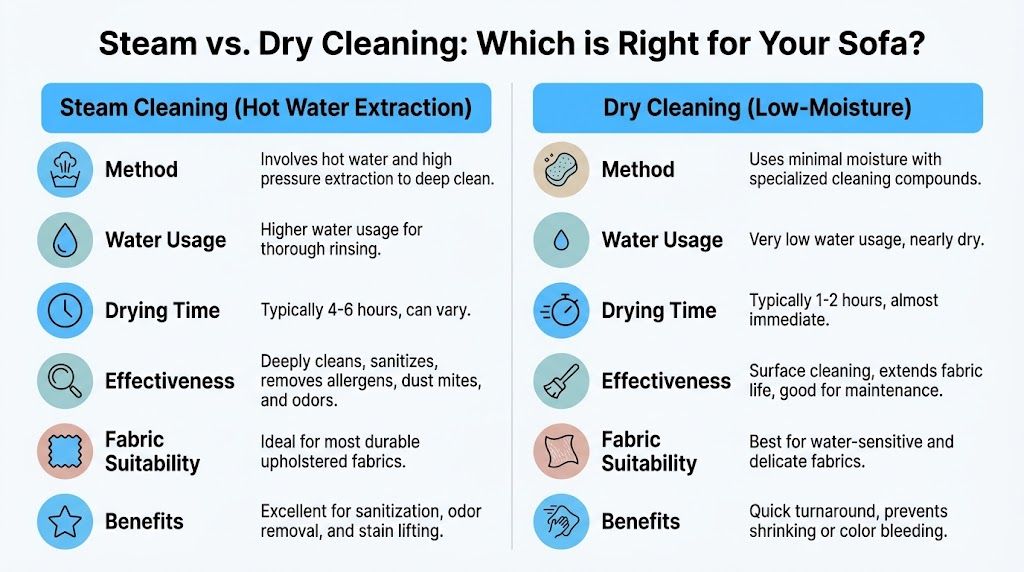
Steam cleaning isn't always the automatic winner. It usually gives the deeper result, but the right method depends on the fabric, the timeline, and how much soil is in the upholstery.
If a tenant is handing back keys soon, drying time can matter just as much as cleaning depth. If a household has a delicate fabric or a sofa that doesn't respond well to moisture, a low-moisture method can be the smarter choice.
The main trade-off
Clean House Melbourne's upholstery guide notes that steam cleaning offers a deeper clean, but it can take 4-24 hours to dry. In Melbourne's humid climate, that can create mould risk if drying conditions are poor. The same source says low-moisture options can dry in 1-2 hours, which makes them appealing for certain fabrics or tight schedules.
That doesn't mean low-moisture cleaning is “better”. It means each method has a job.
Side by side comparison
| Criteria | Steam cleaning | Dry cleaning |
|---|---|---|
| Depth of clean | Better for embedded soil and heavier build-up | Better for lighter maintenance cleaning |
| Drying time | Slower, especially in cool or humid conditions | Faster turnaround |
| Stain work | Stronger option for many common fabric issues | Useful where moisture needs to stay low |
| Fabric suitability | Good for many durable upholstered fabrics | Often preferred for more moisture-sensitive materials |
| Bond prep use | Strong when the sofa needs a visible reset | Handy when inspection timing is tight |
When steam cleaning makes sense
Choose hot water extraction when the sofa has obvious build-up, odour, pet residue, or several marks across the seating areas. It's usually the better fit for durable everyday upholstery where the goal is a proper restorative clean rather than a quick maintenance pass.
This is often the right choice for:
- Vacate cleans with visible wear that needs a stronger result
- Family sofas that get daily use and collect food and body oils
- Pet-owning households where odour removal matters
- Long-overdue upholstery cleaning after months or years of build-up
When dry cleaning is the safer call
Low-moisture cleaning can be the better answer when the sofa fabric is delicate, the weather is damp, or the property inspection is close enough that a long dry time creates stress. It's also useful when the upholstery is generally clean and just needs freshening.
If the sofa is moisture-sensitive or the handover window is short, ask about low-moisture options before booking. The best cleaner won't force one method onto every fabric.
The right question isn't “steam or dry?” The better question is “what method suits this specific sofa, in this specific home, with this specific deadline?”
What to Expect When We Clean Your Sofa
A professional sofa clean should feel organised from the first minute. Not rushed. Not vague. If someone turns up, sprays a mystery product everywhere, and starts extracting without checking the fabric, that's not careful upholstery cleaning.
A good service follows a method.
Step one is inspection, not spraying
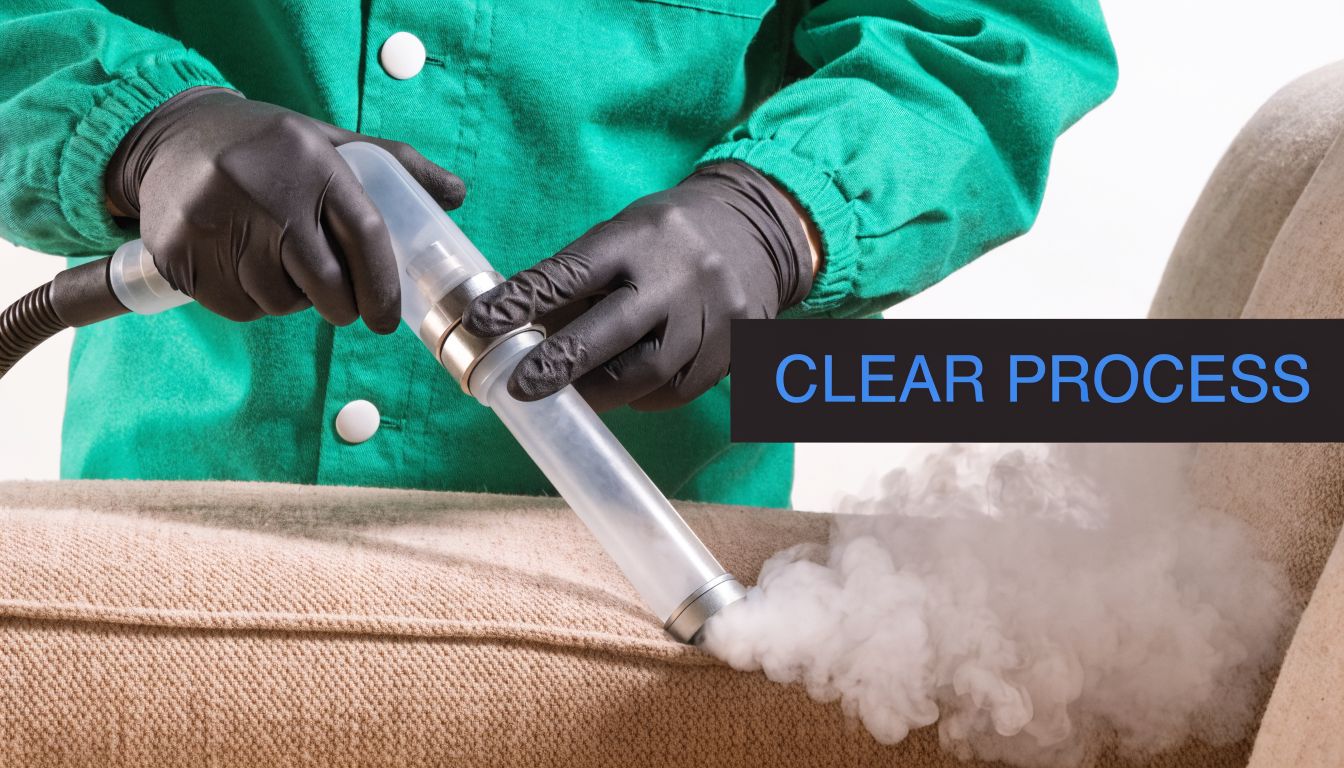
Before any cleaning starts, the cleaner should inspect the sofa closely. That includes checking the fabric type, looking at wear patterns, identifying stains, and deciding whether hot water extraction or a lower-moisture approach is more suitable.
This part matters because different marks behave differently. Food residue, body oil, pet accidents, ink, and old water marks don't all respond to the same treatment. A proper inspection also helps set realistic expectations, especially with older stains.
The usual cleaning sequence
Most quality upholstery jobs follow a pattern like this:
Initial assessment
The cleaner checks cushions, arms, back panels, skirt areas, and any detachable components. Fabric condition comes first.Dry preparation
Loose debris, dust, and hair are removed before moisture is introduced.Targeted pre-treatment
Stained sections get the right spotting treatment instead of a one-product-for-everything approach.Main clean
The upholstery tool works through the fabric in controlled passes to clean and recover soil.Finishing work
The pile is reset where needed, and the sofa is left positioned for better airflow.
What a careful operator looks for
The difference between an average clean and a strong one usually comes down to restraint and detail. Good cleaners don't over-saturate. They don't chase every stain aggressively if that risks damaging the fabric. And they don't ignore the hidden sections that collect the most grime.
A few signs of a thorough job:
| Service detail | Why it matters |
|---|---|
| Fabric identification | Prevents using the wrong method |
| Cushion-by-cushion cleaning | Avoids patchy results |
| Controlled extraction passes | Reduces excess moisture |
| Honest stain advice | Protects the fabric and manages expectations |
Some stains can be improved a lot, but not erased completely. Dye loss, bleach damage, heat setting, and age can leave permanent marks even after a strong clean.
For tenants combining upholstery care with a full vacate service, it helps to understand how this fits into the broader moving checklist. The complete Melbourne end of lease cleaning guide for 2026 is useful if you're trying to sequence the sofa, carpets, kitchen, bathrooms, and final inspection timing properly.
What you should see at the end
You should expect cleaner fabric, fresher odour, and a more even appearance overall. You shouldn't expect magic on every stain, and any cleaner who promises that is overselling it.
What does work is a methodical clean that improves presentation, removes a lot of hidden soil, and gives the sofa the best chance of passing scrutiny during a final walk-through.
Sofa Steam Cleaning Prices in Melbourne
Price matters, especially during a move when every booking adds up. The key is to look at sofa cleaning as protection against a larger cost. A modest upholstery charge can make sense if it helps prevent a bond deduction or saves a good sofa from being replaced sooner than it should be.
For Melbourne pricing, the market is fairly easy to read once you know how cleaners quote.
Typical price range
Industry pricing cited by Maid to Clean puts professional sofa steam cleaning in Melbourne at around $55 per seat with a typical minimum charge of $110. The same source notes Airtasker data showing a median price of $120 for upholstery cleaning tasks across the city. This gives you a realistic baseline without assuming every sofa will cost the same.
What changes the final quote
The per-seat guide is useful, but quotes still vary based on the job in front of the cleaner.
Common pricing factors include:
Size of the sofa
A compact two-seater is very different from a large modular with chaise sections.Fabric type
Some materials clean easily. Others need slower, more careful handling.Level of soiling
Light maintenance cleaning is simpler than heavy pet hair, odour, and staining.Access and scheduling
Apartment access, parking, and combining the sofa with other cleaning work can affect how the job is planned.
Cheap quotes can cost more later
The lowest price isn't always the best value. A very cheap upholstery clean often means limited stain treatment, weak extraction, or a rushed technician trying to get through too many jobs in one day.
If you're booking around a vacate, ask direct questions. What method will be used? How will drying be managed? Has the cleaner handled your type of fabric before? If you want a quote or booking window, use the End Of Lease Cleaning Melbourne contact page to arrange details for your suburb and timeline.
A clear quote, a realistic scope, and the right method are worth more than a bargain clean that leaves the sofa damp and still marked.
Your Sofa Steam Cleaning Questions Answered
Tenants and homeowners usually ask the same few questions once they decide the sofa needs professional attention. The right answers are practical, not salesy.
How long will my sofa take to dry
Dry time depends on the fabric, the method used, airflow in the room, and the weather outside. As covered earlier, steam cleaning can take much longer to dry than low-moisture cleaning. If the day is cool or humid, allow extra time and keep windows open where possible if conditions suit.
To help things along:
- Use airflow well by opening the room and running fans
- Avoid putting throws back on too early because they trap moisture
- Keep people and pets off the sofa until the fabric feels properly dry
- Ask about the best method before booking if you have a same-day inspection
Are the products safe for kids, pets, and supported households
In professional upholstery cleaning, product choice matters as much as technique. Blue Sky Carpet Cleaning's Melbourne upholstery cleaning page notes that professional services often use pH-neutral, eco-friendly agents with a pH of 6-8 and that these can reduce bacterial loads by up to 99.99%, which is especially relevant for NDIS-supported homes.
That doesn't mean every product suits every fabric or person. It does mean a proper cleaner should be able to explain what they're using, why they're using it, and whether any extra precautions are needed before the sofa goes back into normal use.
Will every stain come out
No. Some stains are removable. Some are permanent. The difference usually depends on what caused the mark, how long it has been there, whether anyone tried to scrub it before, and whether the fabric itself has changed colour.
A good cleaner will tell you the likely outcome before starting. That's a sign of experience, not pessimism.
“Improvement” is the honest goal with older or set stains. The best operators aim high, but they don't promise what the fabric can't deliver.
How often should a sofa be professionally cleaned
That depends on how the sofa is used. A formal sitting room might need occasional maintenance. A family couch with pets, snacks, and everyday traffic benefits from more regular professional attention.
If the sofa is part of a rental property handover, the timing is simpler. Clean it before inspection if it shows staining, odour, embedded hair, or obvious wear. Waiting usually doesn't make the job easier.
If your sofa needs attention before an inspection, a move, or just a proper reset, End Of Lease Cleaning Melbourne can help with practical, bond-focused cleaning across Melbourne and greater Victoria. Their family-owned team handles end of lease, deep cleaning, regular house cleaning, and NDIS-supported services with eco-friendly products, clear communication, and flexible bookings seven days a week.
