
You’re a few days from a final inspection. The walls are done, the oven is sorted, the bathroom looks decent, and then you notice the roller blinds. Dust along the edges. Finger marks near the chain. A faint mould patch in the bathroom or bedroom window.
That’s where many bond cleans start to wobble.
Roller blinds look simple, but they’re easy to damage with the wrong method. In Melbourne rentals, they also get checked more closely than most tenants expect. A blind that still rolls but shows grime, water marks, mould, or fabric distortion can quickly turn into an argument about condition.
After years in end-of-lease cleaning work, the pattern is consistent. The tenants who do well are not always the ones who scrub hardest. They’re the ones who clean the right way, dry properly, and avoid turning a cleanable blind into a damaged one.
Getting Your Blinds Ready for a Flawless Clean
Start with identification. If you skip that, you can ruin the blind before you’ve even removed the first mark.
Most roller blinds in Melbourne rentals fall into a few broad groups. Standard fabric, sunscreen fabric, and hard-surface styles such as PVC or vinyl. Each one reacts differently to moisture, friction, and detergent.
Identify the material before you touch water
A quick visual check usually tells you enough.
- Fabric roller blind: Feels soft or slightly textured. Often has a woven face and some flexibility.
- Sunscreen blind: Has a visible weave and small perforations. It looks delicate because it is.
- PVC or vinyl blind: Smoother, less porous, and more tolerant of wiping.
- Blackout-coated blind: Often fabric-based, but the backing or coating needs gentle handling.
If you’re unsure, treat it like fabric until proven otherwise. That is the safer mistake.
Build a simple cleaning kit
You do not need a trolley full of specialty products. You need control.
A practical kit includes:
- Vacuum with soft brush attachment: Best for removing loose dust without grinding it into the fabric.
- Microfibre cloths: Use separate cloths for dusting, damp wiping, and drying.
- Soft sponge: Good for controlled cleaning on marked areas.
- Mild dish soap: Keep the solution light.
- White vinegar: Useful for mould treatment when appropriate.
- Lukewarm water: Not hot.
- Dry towel: For blotting and catching drips.
- A stable step stool: For the top tube, brackets, and headrail.
Tip: Clean with the blind fully lowered and the area around the window cleared. Furniture pushed underneath the blind almost guarantees missed bottom edges and dirty base bars.
Check the blind’s weak points
Before cleaning, inspect the chain, brackets, bottom bar, and any curled edges. A worn blind can often survive dusting and light spot work, but heavy handling can finish it off.
This is also the right time to test a mild solution on a hidden corner. If colour lifts, texture changes, or the fabric roughens, stop and switch to a drier method.
Your Three Levels of Roller Blind Cleaning
End-of-lease blind cleaning is about choosing the lowest-risk method that still gets the blind inspection-ready. That matters in Melbourne rentals, where agents look closely at visible dust lines, kitchen grease, water marks near windows, and early mould around damp rooms. Go too hard and you can leave rub marks, rippling, or a tide line that gets flagged at the final inspection.
Use three levels. Start with the lightest method and step up only if the blind still looks dirty.
The regular dust-down
This is the upkeep clean. It suits blinds with surface dust, light lint, and no obvious staining.
Road dust, traffic grime, and general household fallout settle fast in Melbourne, especially in older rentals with drafty windows or bedrooms left open for airflow. For many blinds, this level does enough to lift presentation from dull to clean.
- Lower the blind fully.
- Vacuum both sides with a soft brush attachment.
- Work top to bottom with light, even passes.
- Wipe the bottom bar and edges with a barely damp microfibre cloth if needed.
Sunscreen blinds and lightly textured fabrics benefit from frequent dry cleaning because dust sits in the weave. Leave it too long and a simple vacuum job turns into spot cleaning.
For broader rental cleaning advice, the End Of Lease Cleaning Melbourne blog covers the other areas property managers check just as closely.
The targeted spot-clean
Use this level when the blind is generally presentable but has a few obvious marks. Common examples are finger marks near the chain side, cooking residue on a kitchen blind, insect spotting, or a splash line near a bathroom window.
Control matters more than product strength here. Vacuum first, then use a lightly damp microfibre cloth or sponge with mild soapy water and blot the mark gently. Work in small sections. Dry each treated area with a clean cloth before moving on.
Do not scrub. Scrubbing roughs up fabric, shifts the coating on blackout blinds, and can spread one mark into a larger patch.
This level often makes the difference at bond-clean stage. A blind can look acceptable from the middle of the room, then fail inspection because of hand marks at eye level once the agent stands beside the window.
The seasonal deep clean
Use a deeper clean for widespread grime, built-up kitchen residue, stale marks, or the early signs of mould that show up in Melbourne’s damp weather. This is the level tenants usually leave too late.
A deeper clean takes patience. Some blinds can be cleaned in place with repeated light passes. Others may need to come down, but only if the brackets release cleanly and the blind is stable enough to handle without creasing. If the tube feels loose, the chain mechanism is worn, or the fabric already has edge curl, keep it installed and clean conservatively.
In trade work, the decision is simple. Dirty and sturdy can handle a careful deep clean. Fragile and dirty needs a safer approach, even if that means improving it rather than chasing perfection and causing damage.
Key takeaway: The right result comes from matching the cleaning level to the blind’s condition. At end of lease, a controlled clean is far more useful than an aggressive one that leaves damage behind.
Custom Cleaning for Your Blind's Material
Material decides the method. Get that part wrong and a blind that only needed a careful clean can end up creased, fuzzy, or water-marked enough to draw attention at an end-of-lease inspection.
In Melbourne rentals, that matters more than people expect. Property managers do not assess blinds by effort. They assess the final condition. A fabric blind with tide marks or a stretched edge can be noted as damage, even if the original grime is gone.
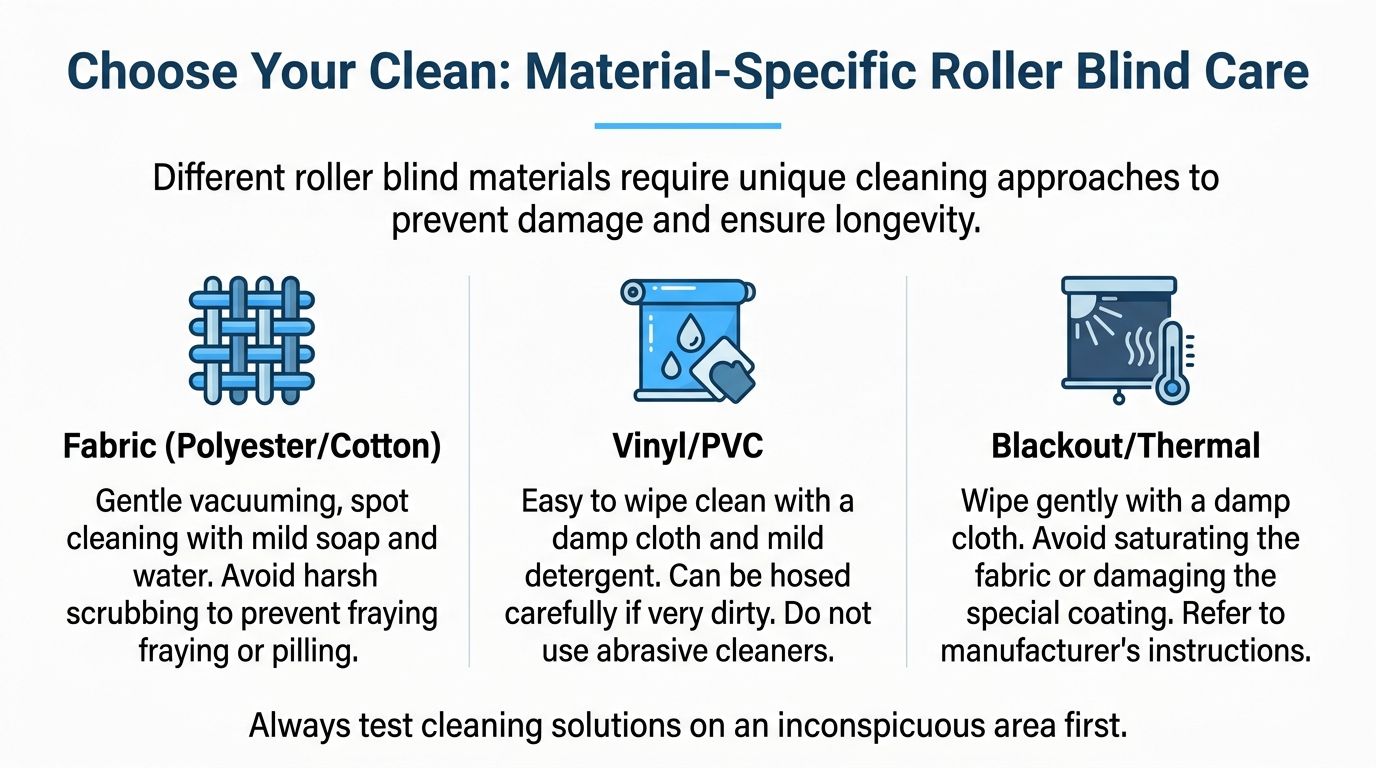
Fabric roller blinds
Fabric blinds need restraint. They hold dust well, show finger marks quickly, and react badly to too much water, especially older blinds in rentals where the backing has already dried out from years of sun.
According to AAA Blind & Shutter Factory’s step-by-step guide, pre-vacuuming removes a large amount of loose dust before any damp cleaning starts. That same advice lines up with what works on bond cleans. Remove the dry soil first, and the damp work stays controlled instead of turning dust into grey streaks.
Best method for fabric
- Lower the blind fully and lock it in place.
- Vacuum gently with low to medium suction and a soft brush head.
- Test mild dish soap in lukewarm water on a hidden area first.
- Blot marks with a clean microfibre cloth.
- Clean in small sections from top to bottom.
- Keep moisture light and even.
- Dry the blind fully while extended.
If the blind can be removed safely, support the full width during handling. Letting one side hang puts stress on the tube and can stretch the edge. On older rental blinds, that stretch often shows up as a permanent wave near the bottom bar, which is exactly the sort of thing an agent notices in strong daylight.
What not to do
| Action | Likely result |
|---|---|
| Hard scrubbing | Frays the surface and leaves fuzzy patches |
| Over-wetting one area | Causes tide marks or local distortion |
| Strong chemicals | Strips coatings, fades colour, or stiffens the fabric |
| Rolling up while damp | Traps moisture and can lead to odour, spotting, or mould |
PVC and vinyl roller blinds
PVC and vinyl are easier to clean, but they still reward a steady hand. They tolerate damp wiping better than woven fabrics, which makes them common in kitchens, laundries, and older Melbourne units where landlords want a low-maintenance finish.
Use a microfibre cloth with diluted mild detergent. Wipe in straight, overlapping passes, then follow with a second cloth dampened with clean water to remove any soap film. Dry the surface by hand rather than leaving it to air-dry.
That last step helps more than people realise. Soap residue catches light, and under a routine inspection it can look like grease that was never removed.
Sunscreen and sheer roller blinds
Sunscreen and sheer blinds need the lightest touch. They look tough because of the woven finish, but rough cleaning can snag the fibres, flatten the texture, or leave a rubbed patch that stands out from the rest of the window.
Use as little moisture as possible. Dust them first, then wipe gently with a barely damp cloth or sponge and a mild soap mix if needed. Avoid soaking, avoid solvents, and keep pressure even across the weave.
In end-of-lease work, these are often the blinds I clean most slowly. A tenant usually wants every mark gone. The better result is often a blind that looks even, fresh, and inspection-ready, without damage caused by chasing one faint stain too aggressively.
Safe method for sunscreen blinds
- Remove dry dust with a vacuum brush or dry microfibre cloth.
- Use very light moisture only where needed.
- Wipe with the weave, not across it.
- Support the fabric with your free hand near the mark.
- Clean both sides if you can reach them safely.
- Leave the blind fully lowered until completely dry.
Tip: On woven sunscreen blinds, the bottom bar and side edges often carry the most visible grime. Clean those areas first, then reassess. In many rentals, that is enough to lift the overall appearance to inspection standard without risking the centre panel.
Removing Stubborn Stains and Mould
A blind can look clean from the doorway and still fail at inspection distance. That happens a lot in Melbourne rentals, especially around bathroom windows, bedroom reveals, and any room that stayed shut through winter.
Some marks need more than soap and a quick wipe. Grease, mould, water rings, fly spots, and chain-side finger marks all behave differently. Treat them the same way and you can lock the stain in, strip the coating, or leave a pale patch that stands out even more under natural light.

Mould on roller blinds
Mould is the one issue tenants underestimate. In Melbourne, cooler months, condensation, poor airflow, and older window frames create the right conditions for it, especially in rentals where blinds stay down for privacy. The Bureau of Meteorology climate summaries for Melbourne show why moisture control matters here, and that local pattern is a big reason mould comes up so often during end-of-lease cleans.
For bond work, the standard is simple. The blind needs to look clean, smell clean, and show no active mould growth. If the mould has stained the fabric permanently or eaten into the backing, cleaning may improve it without restoring it fully. That distinction matters during a final inspection and under Victorian tenancy rules. For the broader inspection standard, see our Melbourne end-of-lease cleaning guide for tenants.
A safe mould method:
- Lower the blind fully so you can see the full spread.
- Vacuum with a brush attachment first to lift loose spores and dust.
- Test a mild detergent mix on a small hidden area.
- Blot the moulded section with a barely damp sponge or microfibre cloth.
- Wipe gently without scrubbing hard into the fabric.
- Repeat in light passes instead of soaking the spot.
- Dry the blind fully extended with good airflow in the room.
Do not spray heavily. Do not roll it up damp. That is how mould comes back inside the wrap, and that stale smell is often what property managers notice first.
If mould is heavy, black, or has spread across the tube side and rear face, I usually tell tenants to stop before they cause damage. At that point the issue may be beyond routine cleaning.
Greasy marks and fingerprints
Kitchen blinds, blinds near balcony sliders, and blinds beside chains pick up body oils fast. These marks usually respond to a mild dish soap mix because it cuts the oily film better than plain water.
Use a damp microfibre cloth, not a wet one. Blot first, then wipe in one direction with light pressure. Finish with a second cloth dampened with clean water so you do not leave soap behind. Residue attracts dust, and on white or light blockout blinds it shows up quickly.
Water marks and mystery spots
Water marks are usually self-inflicted. They form when a spot is over-wet, cleaned in a tight circle, or left with detergent sitting in the fabric.
The fix is to treat the whole affected area lightly, not just the ring. Re-dampen the section evenly, blot across the mark and just beyond it, then let it dry flat. Chasing the edge of a water ring usually makes the outline sharper.
This walkthrough can help if you want to see general stain-removal technique in action:
Insect marks and edge grime
Fly spots and edge grime are common in Melbourne apartments and older weatherboard rentals. They usually sit on the surface, especially along the bottom edge, side hems, and bottom bar where dust settles and hands make contact.
Clean from top to bottom so you do not drag grime into a clean section. Give the lower edge extra attention. That is often where an agent runs a finger during an inspection, and it is one of the easiest places to miss if you only clean at eye level.
If a mark stays after two or three careful passes, stop and reassess. A faint stain is easier to explain than fabric damage. After twenty years doing end-of-lease work, that trade-off comes up all the time. Bond return depends on a blind looking properly cleaned and well cared for, not on forcing every last mark out at any cost.
The Art of Drying and Rehanging
A decent clean can be ruined in the final hour. Most water rings, edge curling, and post-clean odour problems come from poor drying, not poor washing.
If the blind stayed installed, leave it fully lowered until every damp section is dry to the touch. Not nearly dry. Completely dry.

Drying without damaging the blind
Airflow is your friend. Direct heat is not.
According to the AAA Blind & Shutter Factory guide already noted above, spot cleans succeed at a high rate when the blind is dried fully extended, and improper soaking contributes to shape-retention failures. That shows up in practice as rippling, uneven roll-up, and side tracking.
Use this drying approach:
- Keep it extended: Never roll the blind up while moisture remains.
- Use cross-ventilation: Open windows where practical or run gentle room airflow.
- Avoid sun blasting: Strong direct sun can dry some areas faster than others.
- Skip hairdryers and heaters: Heat can warp coatings and exaggerate water marks.
Rehanging and checking the roll
If you removed the blind, rehang only when the fabric is fully dry. Refit both sides evenly. Then test the mechanism slowly.
Watch for three things:
- Straight tracking: The blind should roll without drifting to one side.
- Smooth chain movement: No jerking or grinding.
- Flat hanging: No fresh ripples caused by dampness or twisted rehanging.
Pro finish: Wipe the chain, bracket covers, and the top exposed tube before you call the job done. Inspectors notice dusty hardware even when the fabric panel looks clean.
Long-Term Care and End-of-Lease Savvy
You get to the final week of a Melbourne tenancy, the windows look good, the carpet is booked, and then the roller blinds give the place away. Dust on the bottom bar, a few greasy finger marks near the chain, a faint mould bloom in the bathroom. At inspection, those small misses stand out fast.
Routine care keeps you out of that position. A light dust every couple of weeks, quick spot cleaning when marks appear, and better airflow in wet rooms will usually stop blinds from turning into an end-of-lease problem. In Melbourne rentals, bathroom and laundry blinds cop the worst of it because condensation sits on the fabric and mould follows if it is ignored.
What property managers notice
Agents and property managers rarely assess blinds as a separate item. They look at presentation, operation, and whether the blind adds to a general impression of poor upkeep. A blind that is dusty, stained, mould-specked, or dragging badly on the chain can trigger closer scrutiny across the whole room.
For tenants, the standard to keep in mind is "reasonably clean", not "brand new". The official Victorian law is the Residential Tenancies Act 1997. Fair wear and tear still applies. Age fading, minor sun change, and older fabric that has lost some brightness are different from grime, untreated mould, grease build-up, or damage caused by rough cleaning.
Use that distinction properly:
- Usually fair wear and tear: light fading, slight age-related yellowing, minor long-term discolouration
- Usually a cleaning or damage issue: visible mould, greasy residue, food splashes, pet marks, bent bottom rails, chain damage, tide marks from over-wetting
That line matters during a bond dispute.
Clean well, then document it
Good cleaning helps. Good evidence helps too.
Take clear photos after the blind is fully dry and lowered straight. Photograph the fabric face, the bottom bar, and the chain side if the mechanism runs smoothly. If a mark remains and pushing harder would risk damage, photograph it up close and from a normal room distance. I recommend this often for older white blinds in Melbourne units, where sun fade and age staining are common and tenants make things worse by scrubbing too hard right before handover.
For the wider inspection checklist, this Melbourne end-of-lease cleaning guide covering what agents commonly check gives the broader vacate context.
When DIY stops making sense
Some blinds are better left alone or handled by a professional. That includes fragile sunscreen fabrics, heavy mould, water staining that has set into the material, and blinds with brackets or chains that already feel loose.
I have seen tenants save a light mark and lose a blind. The usual mistake is over-wetting the fabric, using bleach too aggressively, or rubbing one patch until the coating changes colour. If the blind is already close to failure, the cheapest option is often careful documentation and a measured conversation with the agent, not another round of hard cleaning.
The goal is simple. Leave the blind reasonably clean, working properly, and free from tenant-caused grime so it does not become a bond deduction point under Victorian rental standards.
Frequently Asked Questions About Cleaning Roller Blinds
Can I use a steam cleaner on roller blinds
In most rentals, no.
Steam adds heat and moisture at the same time, and that is a poor mix for many roller blind fabrics, backings, and glued parts. I have seen tenants turn a dusty blind into a wavy one in a few minutes, then face questions at the final inspection about damage rather than dirt. For a Melbourne bond clean, steam is usually more risk than reward.
How do I clean the roller mechanism and chain
Keep the mechanism dry and keep the method simple. Wipe the chain, bracket covers, and any exposed hardware with a dry microfibre cloth. A soft brush or a short burst of compressed air helps with dust packed into corners.
Do not spray cleaner into the headrail or soak the chain. Once moisture gets into the mechanism, the blind can start sticking, slipping, or grinding, and agents do notice blinds that no longer run properly.
What if my white blind looks yellow
White blinds often yellow from age, UV exposure, old grease, nicotine residue, or long-term moisture. Surface grime may lift with a mild soap solution and careful wiping, but age staining usually stays.
That matters at end of lease. Victorian inspections focus on cleanliness and condition, not restoring an older blind to showroom white. If the fabric has changed colour over time, aggressive scrubbing often leaves a bright patch, removes the coating, or frays the surface. A blind that is evenly aged usually presents better than one damaged by last-minute cleaning.
Can I take roller blinds down and wash them in the bath
Only in a few cases, and only if you know the fabric can handle it.
Bath washing sounds practical, but it often creates more work. The blind can crease, the tube can be awkward to remove, and slow drying can lead to water marks or mould, which is a real problem in Melbourne properties with poor ventilation. If the brackets feel stiff, the fabric feels brittle, or there is already mould spotting, leave the blind in place and clean it with control.
How often should I clean them during a lease
Light maintenance beats heavy recovery every time. Dust them regularly, deal with kitchen residue early, and check bathroom or bedroom blinds for mould before it spreads.
Tenants who leave blind cleaning until vacate week usually run into two problems. The marks have had time to set, and there is no margin for a drying mistake before the agent walks through. If you need help with a final clean or want a second opinion on a mouldy, delicate, or inspection-risk blind, book a roller blind cleaning assessment with End Of Lease Cleaning Melbourne.
Will mould on roller blinds affect my bond
It can.
Property managers in Melbourne commonly treat visible mould as a cleanliness and maintenance issue, especially in bathrooms, laundries, and colder south-facing rooms. If the mould is light and recent, careful cleaning may be enough. If it has stained the fabric, spread into the backing, or keeps returning because of poor ventilation, document the condition and clean what is reasonably removable without damaging the blind. For bond return purposes, a working blind that is clean, dry, and free of tenant-caused grime puts you in a far better position than a blind damaged by over-cleaning.
