
You’re probably reading this with a half-packed unit, keys due back soon, and a property manager’s final inspection sitting in the back of your mind. The carpets might look “not too bad” at a glance, but end-of-lease inspections in Melbourne rarely happen at a glance. They happen under light, at the doorway, along walk paths, and right where old marks seem to come back to life.
That’s why steam cleaning for carpet matters so much at move-out. It isn’t just about making the place look fresher. It’s about removing the grime, odours, and traffic marks that trigger comments on condition reports and bond deductions. If your lease or agent has mentioned professional carpet cleaning, or if the carpet shows tenancy wear, this is one of the few parts of the vacate clean where the method really does matter.
Why Steam Cleaning is Your Ticket to a Full Bond Return
You hand the keys back, the agent walks straight to the bedroom doorway, and the first thing they notice is the carpet. That is a very normal Melbourne final inspection. If the pile is matted, there is a faint pet smell, or an old spill has dried with a watermark, the bond conversation starts there.
A proper steam clean, meaning hot water extraction, gives you the best chance of avoiding that argument. It deals with the issues property managers write down on exit reports. Visible marks, traffic lanes, odour, and that dull, tired look that carpets get near the end of a tenancy.
For Melbourne tenants, this is really about evidence as much as cleaning. Under Victorian end-of-lease expectations, carpets generally need to be left reasonably clean, allowing for fair wear and tear. REIV guidance and the way these disputes usually play out at VCAT both point to the same practical lesson. If a carpet looks dirty, smells off, or shows untreated staining, the tenant is in a weaker position, especially if there is no receipt showing the work was done properly.
Property managers are not expecting old carpet to look brand new. They are checking whether it presents as clean and ready for the next renter. In practice, they tend to focus on a few predictable trouble spots:
- Walk paths that still look grey after vacuuming
- Bedrooms and lounge areas with flattened pile and patchy appearance
- Spots and spill marks that reappear once the carpet dries
- Pet odour that lingers even when the room looks tidy
- Edges near skirting boards where dust and soil collect
Those are the issues that hold up a bond.
Steam cleaning works better for bond-back jobs because it flushes out soil from below the surface and extracts it, instead of just freshening the top. That matters at inspection time. A carpet can look acceptable for an hour after a quick pass with a rental machine, then fail once residues dry, smells come back, or damp areas show up in the light.
I tell tenants to judge the result the way an agent will. Stand at the doorway. Look across the pile, not straight down. Smell the room after the windows have been shut for ten minutes. If the carpet still carries odour, visible marks, or a crunchy detergent feel, it is not inspection-ready.
There is also a simple risk trade-off. Steam cleaning costs money, but bond deductions, return visits, and urgent re-cleans usually cost more, especially when keys are already due back. If you are coordinating the full vacate, this end of lease cleaning guide for Melbourne tenants helps line up carpets, access, drying time, and receipts in the right order.
For bond return purposes, the best cleaning method is the one that leaves the carpet clean, dry, and easy to defend if the agent raises a question. Hot water extraction is usually that method.
DIY vs Professional Carpet Cleaning The Definitive Comparison
Some tenants should absolutely hire a professional. Some can get through with DIY if the carpet is lightly soiled, they use the machine correctly, and they leave enough drying time before inspection. The key is being honest about the carpet you have, the time you’ve got, and how much bond risk you’re willing to carry.
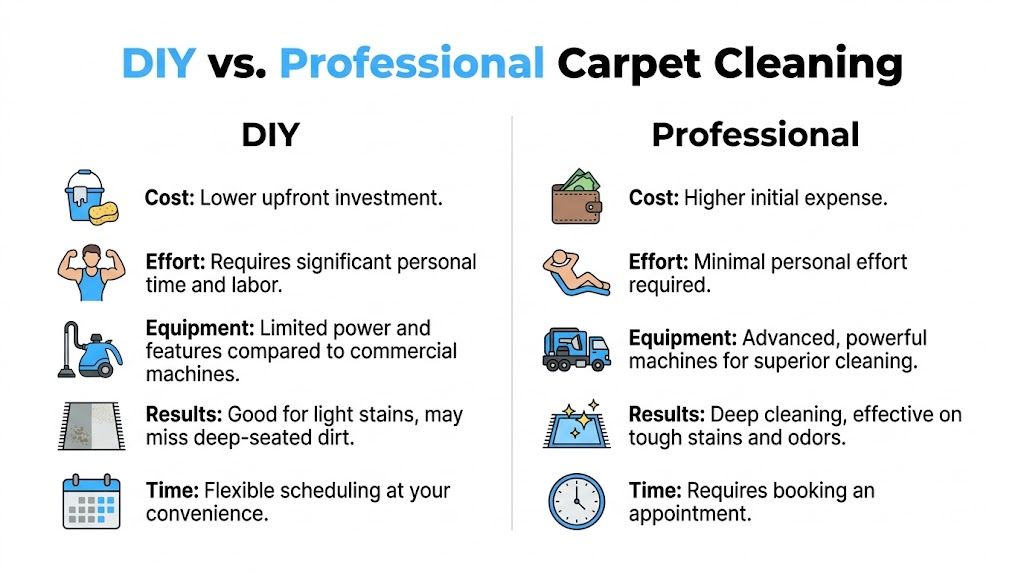
DIY vs Professional Steam Cleaning at a Glance
| Factor | DIY Steam Cleaning | Professional Service |
|---|---|---|
| Cost | Lower upfront spend, but you carry the risk if the result isn’t inspection-ready | Higher upfront cost, but usually less risk of redoing the job |
| Time | You collect the machine, prep rooms, clean, empty tanks, and manage drying | You book a time and supervise access |
| Equipment | Rental units are usually weaker and less forgiving | Pros often use stronger systems and better extraction |
| Drying | Often slower if too much water is used | Typically faster when extraction is stronger |
| Stain handling | Fine for light marks if treated correctly | Better for odours, traffic marks, and deeper soiling |
| Bond outcome | Depends heavily on technique | Usually the safer path when the carpet is under scrutiny |
What the numbers say about the trade-off
If allergies, pet odours, or heavy use are part of the picture, professional cleaning has a clear edge. Steam cleaning’s hot water extraction reduces allergens by up to 95% and is preferred by 46.5% of homeowners. Professional services yield drying times of 6-12 hours, versus 12-24 for many DIY efforts, minimising mould risk which can develop in 24-48 hours, according to Angi’s comparison of steam cleaning and shampooing.
For bond returns, that drying point is a big deal. A carpet can look acceptable right after cleaning and still fail you if it’s damp when the agent walks through. Damp carpet can smell musty, feel tacky underfoot, or show fresh tracking from shoes. None of that helps at inspection.
When DIY can work
DIY usually makes sense when the carpet has:
- Light general soil rather than set-in staining
- No strong odour problem
- No major pet urine issue
- Enough time to dry fully before the final inspection
It also helps if you’re methodical. Steam cleaning for carpet rewards slow, controlled passes and punishes rushing.
When hiring a pro is the safer call
Professional cleaning is the better move when:
- the lease specifically asks for professional carpet cleaning
- there are visible stains in main walking areas
- you’re moving out of a larger property
- you’ve got limited time between cleaning and key handover
- you don’t want to gamble your bond on a rental machine result
A reputable provider should also be open about how they work, who they are, and what standards they follow. Before booking anyone, have a look at the company background, equipment approach, and service coverage on their about page for Melbourne end-of-lease cleaning.
The cheapest quote often becomes expensive when the carpet still looks patchy and you have to book a second clean under deadline.
Your Step-by-Step Guide to DIY Steam Cleaning Success
If you’re doing it yourself, the goal isn’t “good enough for me”. The goal is clean enough for inspection day. That means avoiding the two DIY traps that cause most problems: weak prep and too much water.
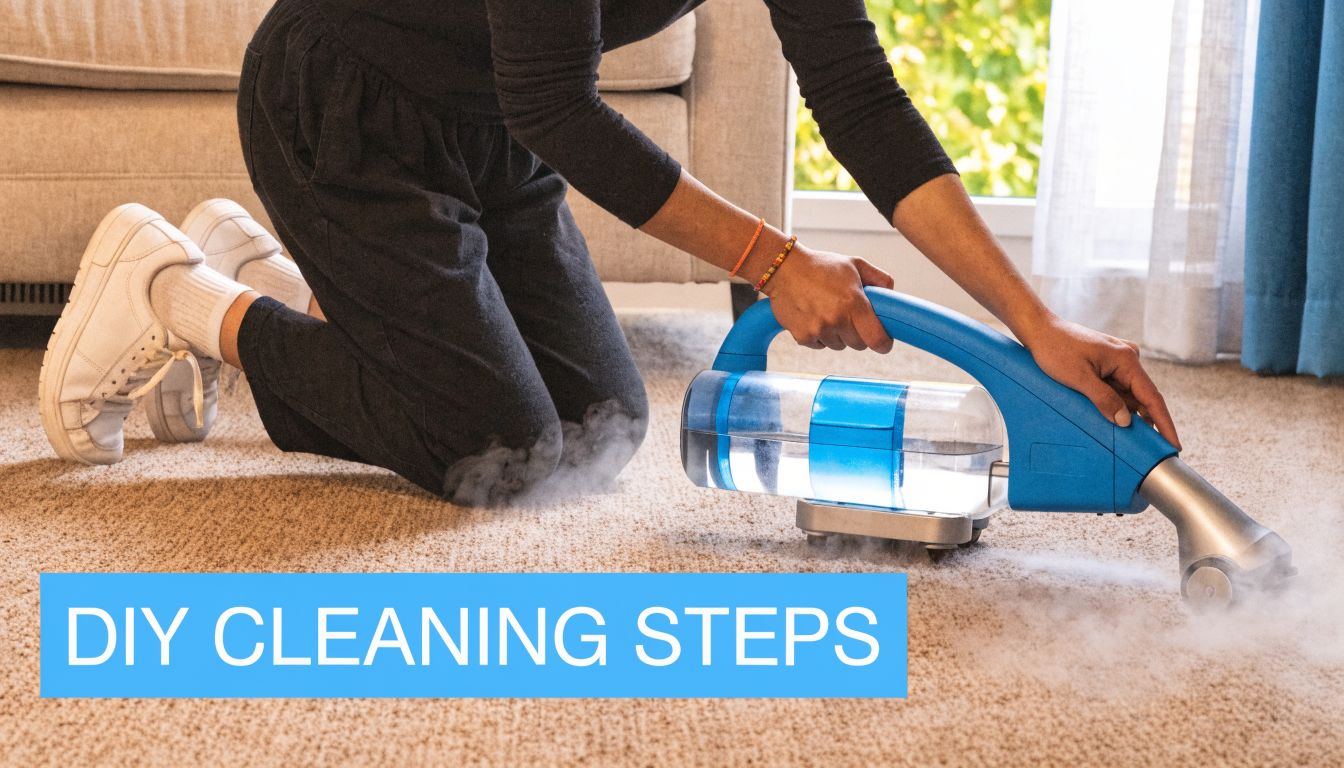
The prep work that changes the result
Start by emptying the room properly. Don’t clean around boxes, don’t leave small furniture in corners, and don’t assume the visible centre of the room is all that matters. Inspection issues often show up where furniture used to sit, especially around bed edges and lounge fronts.
Vacuum slowly before any steam cleaning starts. This step removes loose grit and hair so the machine can focus on embedded soil instead of dragging dry debris into wet fibres. Pay attention to edges, wardrobe lines, and traffic lanes from the front door to living spaces.
Then inspect the carpet under side light if you can. Open curtains. Crouch low. Marks that disappear from standing height often show clearly from an angle.
Treat stains before you reach for the machine
Don’t flood stains with random supermarket products. For DIY steam cleaning for carpet, the bigger risk is leaving residue behind. Residue grabs fresh dirt and can make a cleaned room look dirty again within days.
Use a carpet-safe pre-treatment sparingly, and test it first in a hidden spot. If the mark is greasy, spend more time blotting and loosening it before extraction. If it’s an old spill, accept that improvement is the realistic goal, not always full invisibility.
A simple check helps here:
- Use a white towel: Blot after pre-treatment to see whether the stain is still transferring.
- Watch the edges: If a mark spreads outward, you’re using too much solution.
- Stop scrubbing hard: Aggressive scrubbing can rough up the pile and make the patch more noticeable.
The cleaning pass that actually works
Professional-grade results depend on machine capability and technique. Professional-grade results require 350-450 psi pressure and 200°F temperatures. A common DIY pitfall is over-saturating the carpet, which occurs in 30% of attempts and leads to mould growth. A proper technique involves overlapping passes, first injecting solution and then extracting without added water, according to this carpet steam cleaning method guide.
That tells you what to copy from the trade, even if your rental machine isn’t as strong.
Use this rhythm:
- Clean from the far corner back toward the door.
- Work in manageable strips.
- Make one pass that applies solution.
- Follow with another pass that extracts only.
- Overlap slightly so you don’t leave dirty lines between lanes.
Move slower on extraction than on spraying. The point is to remove moisture, not just lay it down.
This walkthrough gives a decent visual of wand movement and pacing:
How to avoid over-wetting
Most DIY mistakes happen because people think more water equals a deeper clean. It doesn’t. Too much water pushes soil deeper, slows drying, and can leave that sour damp smell you definitely don’t want before inspection.
Watch for these warning signs:
- Dark streaks staying glossy-wet after the machine passes
- Squishing under shoes
- A heavy detergent smell that means solution hasn’t been extracted well
- Patchy drying, where some lanes remain darker much longer
If you see that happening, stop adding solution and do extra dry passes only.
Aftercare that protects your bond
Open windows. Run fans. Keep people off the carpet. Don’t drag furniture back too early. If you must replace anything before handover, use protection under legs and wait until the carpet is dry enough that pressure won’t create fresh marks.
For a bond clean, I’d always rather see a tenant finish carpet cleaning earlier in the day and give it breathing room than try to squeeze it into the last hour before the agent arrives. A fully dry carpet presents better, smells better, and gives you a fairer read on whether any stains need a second spot treatment.
How to Hire a Carpet Cleaning Pro in Melbourne
You hand back the keys, the agent walks through, then pauses at the carpet and asks for the receipt. That moment is why hiring the right cleaner matters. For a Melbourne bond clean, the job is not just making the carpet look fresher. It is making sure the result, the paperwork, and the drying time all line up with a Victorian property manager’s inspection.
Start with end-of-lease requirements, not the cheapest quote
A low quote can still cost you bond money if the cleaner leaves the carpet too wet, skips stain treatment, or fails to issue a proper receipt. In Melbourne, agents and property managers care about proof and presentation. If the lease says carpets must be professionally steam cleaned, the cleaner needs to be able to document that clearly.
Ask what system they use, but keep the focus on the outcome. A truck-mounted setup can dry faster and extract more strongly. A portable machine can still do a satisfactory job in an apartment or high-rise if the operator knows how to manage moisture and does enough dry passes. The trade-off is access versus extraction power. For bond return purposes, either method is fine if the carpet dries properly and looks even by inspection time.
Questions worth asking before you book
Good operators answer these without dodging:
- Do you handle end-of-lease carpet cleaning regularly? Vacate work is different from a casual maintenance clean.
- Will you provide a tax invoice or receipt that states steam cleaning or hot water extraction? That wording can matter if an agent asks for proof.
- What drying time should I allow in this property? Ground-floor units, shaded rooms, and Melbourne winter weather all change the answer.
- Do you pre-treat stains and traffic lanes? Those are the areas agents notice first.
- Can you tell me which marks are likely permanent? A straight answer is better than a promise that creates an argument later.
- Have you cleaned wool carpet before? Some rentals still have older wool blend carpet, and that needs a more careful approach.
- What do you need from me before you arrive? Parking, lift access, power, and empty rooms all affect the result.
I’d also ask when they want the job booked relative to handover. A cleaner who does a lot of bond work will usually tell you to avoid leaving carpet cleaning until the final hour.
What a reliable cleaner sounds like
The right cleaner usually speaks in specifics. They mention room count, fibre type if known, stain expectations, drying conditions, and whether receipt wording will suit an end-of-lease file. They do not just say “yeah, no worries” and throw out a flat price.
They should also be careful with guarantees. No honest cleaner can promise every stain will come out, especially with bleach spots, pet urine damage, rust, or old spill wick-back. What they can promise is a professional attempt, realistic advice, and documentation that shows the carpets were cleaned properly for vacate purposes.
Red flags that should slow you down
A few warning signs come up again and again in failed bond cleans:
- Quotes given with no questions about rooms, carpet condition, or access
- No clear answer on drying time
- No mention of receipts or invoices
- Claims that every stain will be removed
- Booking arranged only through DMs or text with no business details
- No explanation of how they avoid over-wetting
If a cleaner cannot explain how they control moisture, I would keep looking. Damp carpet on inspection day creates more bond stress than an average-looking carpet that is clean, dry, and documented.
When you’re comparing bookings, use a proper Melbourne end of lease cleaning contact page so timing, access, and invoice details are confirmed in writing. That paper trail helps if an agent questions anything after handover.
Common Steam Cleaning Mistakes That Can Cost You
You finish the carpet clean the night before handover, the rooms smell damp in the morning, and a traffic mark has crept back near the hallway. That is the sort of detail a Melbourne property manager notices fast. For bond return, the problem is rarely “was any effort made?” The question is whether the carpet looks clean, feels dry, and presents well at inspection.
Over-wetting the carpet
Over-wetting causes more bond trouble than almost any other DIY mistake. A carpet can look fine right after extraction, then dry unevenly and show wick-back, browning, or a musty smell a few hours later. If the agent walks in and the pile still feels damp underfoot, you have given them a reason to question the whole job.
This matters even more in Melbourne units and older homes where airflow is poor. I have seen tenants do a decent clean, then lose time and money because the carpet stayed wet too long and the finish looked worse by the next day.
For vacate cleaning, over-wetting usually leads to three inspection problems:
- damp feel underfoot
- odour as the carpet dries
- marks reappearing after the surface looked clean
Using too much detergent
Too much product creates its own mess. The carpet may look brighter for an hour, then dry with a sticky residue that grabs new soil fast. By inspection time, walkways can already look patchy again.
That is one reason some DIY jobs fail even when the machine seemed to work well. The rinse and extraction handle the actual cleaning. Detergent should be controlled, not poured in as insurance.
Scrubbing stains aggressively
Hard scrubbing can damage the pile before it removes the stain. On darker carpet, that often leaves a fuzzy or lighter patch that stands out more than the original mark. Property managers may not know the technical reason, but they do see that the carpet looks damaged.
Use a calmer method. Blot. Apply the right spotting product sparingly. Extract. Then reassess once the area is dry, because a stain that looks improved while damp can either disappear properly or return at the edges.
Cleaning too late
Timing catches tenants out all the time. If you clean too close to the final inspection, you leave no room for slow drying, wick-back, or a second pass on one stubborn area. That is how a carpet cleaning job turns into a bond dispute.
A safer approach is simple:
- clean at least a day earlier if possible
- keep windows open and airflow moving
- check every room again once the carpet is fully dry
- photograph the final result in daylight for your records
That last check matters. Under REIV-style vacate expectations, presentation on the day counts. A receipt helps your file, but dry carpet, no obvious odour, and no returning marks are what protect the bond.
Melbourne End of Lease Cleaning FAQs
How soon before my final inspection should I get my carpets cleaned?
Leave enough time for full drying and a final check in daylight. If you clean too close to inspection, you lose the chance to spot wick-back, lingering odour, or slow-drying areas. Earlier is usually safer than later, provided the carpet won’t be walked over again heavily.
Do I need to be home during the clean?
Not always, but someone should manage access clearly. The important part is that the cleaner can reach every carpeted area, and you know when the job is finished so you can ventilate properly and keep foot traffic low afterwards.
Is a receipt enough for the property manager?
A receipt helps, especially if your lease asks for professional carpet cleaning, but it isn’t magic. The carpet still needs to present well on the day. Documentation supports you. Condition gets judged in person.
What if a stain reappears after the carpet dries?
That can happen with older spills and deeper contamination. Check the area once it’s fully dry, not while it’s still damp. If it has wicked back, a targeted re-treatment may fix it. If you hired a professional, contact them promptly and send a photo while the issue is clear.
Should I steam clean if the carpet doesn’t look very dirty?
If the lease requires it, yes. If it doesn’t, use judgment based on wear, odour, and visible traffic lanes. “Looks okay to me” isn’t the same standard a property manager uses at vacate.
What if the carpet has old damage, not dirt?
Cleaning won’t repair burns, tears, bleach marks, or permanent wear. In that case, steam cleaning still improves the overall presentation, but you should separate cleaning issues from damage issues and be realistic about what inspection notes may still mention.
Can I move furniture back straight after cleaning?
It’s better not to. Putting furniture back too early can trap moisture, leave indentations, and create marks on a carpet that was just cleaned for inspection. If the property is vacant, leave it vacant until handover.
What matters most if my bond is on the line?
Three things: the carpet must be properly cleaned, properly dried, and properly presented on inspection day. Miss any one of those, and the result can fall short even if you put real effort into the job.
If you want the safer option for a move-out, End Of Lease Cleaning Melbourne can help with bond-focused vacate cleaning and professional carpet steam cleaning across Melbourne and greater Victoria. Their team understands what property managers check, provides clear communication and transparent quotes, and works with the timing pressure that comes with key returns and final inspections.
