
You’re probably reading this with boxes half-packed, a final inspection date in the calendar, and one nagging question in the back of your mind: will the carpet cost you part of your bond?
In Melbourne, that worry isn’t overblown. Carpet condition is one of the first things property managers notice at vacate, especially in bedrooms, hallways, and living areas where traffic builds up over a lease. A carpet can look “pretty clean” to a tenant and still fail an end-of-lease standard because of stains, odour, embedded grit, pet hair, or a lease clause requiring steam cleaning.
Good end lease carpet cleaning isn’t just about making the place look fresh for an hour. It’s about handing over a property with evidence, the right method, and no obvious reason for an agent to raise a claim against your bond.
Why End of Lease Carpet Cleaning Is Critical for Your Bond
Moving out creates rushed decisions. Tenants leave carpet cleaning until the last day, run a vacuum over it, and hope the rest will pass. That’s where a lot of bond problems start.
In Victoria, cleaning disputes are common at handover. Up to 70% of rental disputes at VCAT involve cleaning issues, and properties with professionally cleaned carpets achieve full bond returns in 92% of cases, compared with 65% for DIY attempts, according to Victorian end-of-lease carpet cleaning data summarised here. That doesn’t mean DIY never works. It means carpets are one of the areas where standards, proof, and method matter.
What reasonable wear and tear actually means
A lot of tenants misunderstand this point. Reasonable wear and tear doesn’t mean “I lived here, so any carpet issue is acceptable.” It usually covers the sort of ageing that comes from ordinary use. Flattened pile in a walkway. Minor dulling in a room that got regular foot traffic. General use over time.
It does not usually cover:
- Fresh stains from drinks, food, makeup, or pet accidents
- Ground-in dirt that lifts with proper extraction
- Heavy odour from pets, smoke, or spills
- Lease-required steam cleaning that wasn’t done
If your lease says carpets must be steam cleaned at the end, treat that as a document issue as much as a cleaning issue. Property managers often ask for a receipt, not just a clean-looking floor.
Practical rule: If a mark, smell, or traffic lane would stand out during a slow inspection with blinds open, assume it needs attention before key return.
Why carpets trigger deductions so often
Carpet problems sit in an awkward middle ground. They’re visible enough to be flagged, but technical enough that tenants often guess instead of checking the lease, documenting condition, or using the right process. That’s why carpet claims keep appearing in bond disputes.
What works is boring, but effective:
- Check the lease wording early
- Compare the carpet to entry condition
- Photograph everything before and after
- Use hot water extraction when the carpet needs a true end-of-lease clean
- Keep the receipt with the property address and service details
The bond risk isn’t just the cleaning itself. It’s the lack of proof.
Your Pre-Cleaning Timeline and Photo Checklist
Most end lease carpet cleaning jobs go wrong before the machine even arrives. Tenants run out of time, forget to check the lease, or clean first and document later. If you want a smoother handover, start earlier than you think.

A broader vacate plan helps. If you want a full room-by-room sequence, use an end of lease cleaning checklist for Melbourne tenants and then build the carpet work into it instead of treating it as a separate last-minute task.
Four weeks before moving out
Pull out your lease and read the carpet clause properly. Don’t rely on memory. Look for wording around steam cleaning, professional cleaning, receipt requirements, and any note about pets.
Then compare that with your entry condition report and entry photos. The most important question is simple: what condition was the carpet in when you moved in? If it was already worn, faded, or marked, that matters. If it was freshly cleaned or new-looking, expect a stricter comparison at exit.
Do this while you still have time to decide between DIY and professional cleaning.
Two weeks before moving out
Walk through each carpeted room in daylight. Open blinds and turn on ceiling lights. Kneel down and inspect from different angles because side lighting shows traffic lanes, spots, and residue much better than standing at the doorway.
Create a short room list:
- Living room: traffic lanes, drink spots, furniture indentations
- Bedrooms: bed-edge marks, makeup spills, wardrobe dust build-up
- Hallway: darkened footpaths, entry grit, edge dust near skirting
- Stairs if carpeted: nose darkening, compacted pile, hair build-up
This is also the right time to move light furniture and check under beds, side tables, and desks. Hidden carpet damage is still carpet damage.
Don’t take just one wide photo per room. Agents zoom in. Tribunals look at detail. Your evidence needs both context and close-up shots.
The photo checklist that actually helps in a dispute
Take photos before cleaning and after cleaning. Use your phone, but do it methodically.
Before cleaning, capture:
- Doorway wide shot: Show the full room layout
- Window-side angle: This catches pile shading and traffic lanes
- Close-ups of stains: Include one photo from standing height and one near floor level
- Edges and corners: Dust lines near skirting boards often get missed
- Thresholds: Bedroom doors and hallway joins attract grime
After cleaning, capture:
- The same angles again: Matching before-and-after images are far stronger than random photos
- Freshly cleaned pile: Especially in high-traffic areas
- Any stain that improved but didn’t fully lift: This shows effort and honesty
- Receipt next to room list if relevant: Keep the digital copy as well
Final days before the clean
Vacate the rooms as much as possible. Carpet cleaning around boxes, bed frames, and packed bags always produces patchy results. If you’re using a professional, confirm access, parking, and whether the property must be empty. If you’re doing it yourself, make sure the cleaning happens late enough in your move that no one walks dirt back across damp carpet.
The best handovers feel organised because they are. Lease checked. Condition compared. Photos taken. Cleaning method chosen before panic sets in.
The DIY Method A Realistic Cleaning Guide
DIY can work well when the carpet is lightly to moderately soiled, the lease doesn’t demand a professional receipt, and you’ve got enough time to do the job properly. It fails when tenants treat a deep clean like a quick tidy-up.
A practical option is hiring a Britex 3-in-1 Deep Cleaning Machine for around $43.60 per 24 hours, as noted in Britex’s guide to saving money on end-of-lease carpet cleaning. The same guide points out the most common mistake: poor preparation. That part is absolutely true in real vacate cleans.
If you need a separate breakdown of steam cleaning basics before you hire a machine, this guide to steam cleaning for carpet is useful background.
Start with dry soil removal
This is the part most renters rush, and it’s the part that decides whether the machine helps or just creates muddy residue.
Vacuum the carpet in two directions, first one way, then across it. Britex describes this as North-South, then East-West in its rental machine advice. That crossing pattern lifts hair, grit, and dry debris from different angles so the wet clean can target embedded soil instead of pushing surface dirt deeper.
Do this slowly, especially:
- Along skirting boards
- At bedroom doorways
- Under where the bed sat
- In corners where lint collects
- On traffic lanes between sofa, kitchen, and hall
Treat stains before you flood the carpet
A machine won’t magically remove every stain in one pass. Pre-treatment matters.
Here’s the practical approach:
- Identify the stain type if you can
- Use a product suitable for that stain and carpet fibre
- Blot, don’t scrub aggressively
- Test in a small hidden area first
- Give the product time to work before extraction
Coffee, wine, and food spills often need patience more than force. Over-wetting and over-scrubbing are common DIY mistakes. Both can spread the stain, damage the pile, or leave detergent behind.
If you can still feel stickiness after spot treatment, you’ve used too much product. Residue attracts dirt fast and can make a carpet look worse again by inspection day.
How to run the machine properly
Consumer hire machines can give decent results, but only if you use them like a cleaner, not like a lawnmower. Slow overlapping passes work better than quick wide sweeps.
Basic method:
- Fill the machine as directed
- Work in a logical path from the far end of the room back toward the door
- Overlap each pass slightly
- Don’t soak one patch repeatedly
- Extract as much moisture as possible on return passes
The aim isn’t just to apply water and solution. The aim is to remove suspended soil and leave the carpet as dry and residue-free as possible.
For many renters, seeing the process once helps before doing it at home:
Where DIY works and where it doesn’t
DIY usually makes sense when:
- The carpet was in average condition at move-in
- There are no major stains or odours
- You can clean after the property is mostly empty
- Your lease allows a non-professional clean
- You’re confident documenting the result
DIY is a poor bet when you’re dealing with pet odour, heavily darkened traffic lanes, mystery stains, or a tight handover schedule. It’s also risky if the carpet was presented to you in very clean condition and the agent is known to inspect closely.
The biggest hidden DIY cost isn’t machine hire. It’s redoing the job under time pressure after a failed inspection.
DIY vs Professional Cleaning Making the Right Choice
The right choice depends less on ideology and more on carpet condition, lease wording, timing, and how much risk you can tolerate. Some tenants save money and pass inspection with a careful DIY clean. Others spend less overall by hiring a professional once instead of attempting a rushed job, buying products, hiring equipment, and still getting called back.
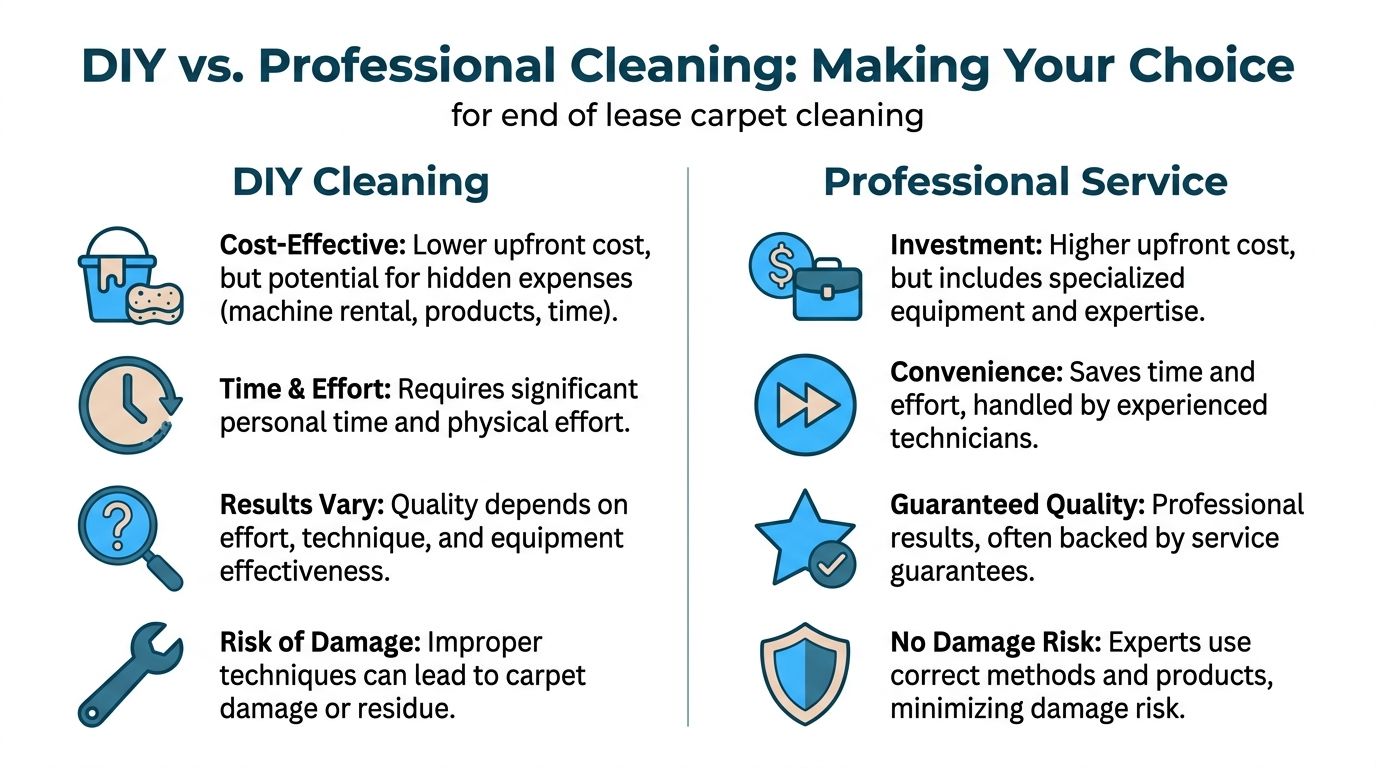
The cleanest way to decide is to compare the job across the factors that affect bond outcomes.
DIY and professional side by side
| Factor | DIY Approach | Professional Service |
|---|---|---|
| Upfront cost | Lower initial outlay if you hire a machine and do the labour yourself | Higher initial spend, usually bundled into a per-room or package quote |
| Time required | You handle pickup, setup, stain treatment, cleaning, and drying management | Faster for the tenant because the technician handles the process |
| Equipment strength | Consumer hire equipment can do a solid job, but performance depends on prep and technique | Commercial-grade equipment is built for repeated deep extraction work |
| Inspection proof | You may have photos and a hire record, but not always the receipt some agents want | A proper invoice can help when the lease or agent expects documented steam cleaning |
| Risk level | Higher if stains, odours, or residue remain | Lower when the provider understands bond-clean expectations |
| Best fit | Light to moderate soil, no strict lease clause, enough time to do it properly | Pets, staining, odour, larger homes, stricter agents, or lease-required professional clean |
Choose DIY if these conditions are true
DIY is the better choice when your carpet problem is mainly dirt, not damage or odour. If the rooms are lightly soiled, you’ve kept the carpet reasonably well over the lease, and the agreement doesn’t insist on a professional invoice, there’s a fair argument for doing it yourself.
It also suits tenants who can control the timing. The job goes far better when the property is mostly empty, the weather helps with drying, and you’re not cleaning at midnight before key return.
Choose professional cleaning if these signs are present
Professional cleaning is usually the safer choice when:
- Your lease specifically mentions steam cleaning
- The carpet has pet smells or recurring stains
- You need a receipt for the property manager
- There are multiple carpeted rooms and limited time
- The carpet looked newly cleaned at the start of the tenancy
A professional is also the sensible option if you know you won’t have the energy to do a careful DIY job while managing removalists, utility changes, keys, and final paperwork.
The most expensive option is often the one you do twice. If there’s a real chance your DIY clean won’t satisfy the inspection, it stops being the cheaper route.
The hidden trade-off tenants miss
Tenants often compare only invoice price versus machine hire. That’s incomplete. A complete comparison is this:
- your time
- your confidence with stain treatment
- your ability to dry the carpet properly
- your need for a receipt
- your chance of being asked to return and fix the result
If the carpet is straightforward, DIY can be a smart move. If the carpet is borderline, professional cleaning buys certainty, speed, and documentation.
Hiring a Pro What to Expect from Melbourne Services
Once you decide to book a cleaner, the next problem is filtering out vague quotes and generic promises. End lease carpet cleaning in Melbourne isn’t the same as a routine maintenance clean. The standard is tighter because the work has to satisfy an inspection, not just freshen the room.
The baseline method to ask for is Hot Water Extraction, which is the industry standard for Australian end-of-lease carpet cleaning. For moderately soiled carpet, cleaning rates are around 600 square feet per hour, and commercial contractors may charge 12 to 16 cents per square foot, although one-off end-of-lease work is usually quoted per room or as a package, according to this Australian carpet cleaning industry guide.
If you’re still comparing local operators, this list of carpet cleaning services near Melbourne tenants can help you frame what to ask before booking.
Questions worth asking before you lock in a booking
A decent provider should answer clearly without dancing around the details.
Ask:
- What method do you use for end-of-lease carpet cleaning
- Is Hot Water Extraction included in the quoted service
- Does the quote cover stain treatment
- Will I receive a tax invoice or receipt showing the property address
- Do you regularly handle vacate cleans and agent-facing work
- How long should I allow before the final inspection
You’re not being difficult. You’re checking whether they understand a bond clean standard rather than a generic “freshen up”.
Red flags that usually cause problems
Some warning signs show up early:
- A price given with no questions about room count or carpet condition
- No mention of drying time
- No written confirmation
- No clear receipt details
- Claims that every stain will definitely vanish
No cleaner can guarantee every stain will disappear, because some marks have already altered the fibre or backing. What a good operator can do is assess the carpet properly, explain likely outcomes, and document what was done.
What happens on the day
A proper vacate carpet service usually follows a predictable sequence. The technician inspects the carpet, checks for staining and wear, pre-treats problem areas, then carries out extraction cleaning across the rooms booked. They may also comment on issues that are wear-related rather than cleanable.
You should prepare the property by:
- Removing furniture and boxes from carpeted areas
- Providing access and parking details in advance
- Making sure power and water are available if needed
- Keeping pets and foot traffic off the cleaned carpet afterwards
The receipt matters as much as the clean
For bond purposes, the receipt often carries real weight. Ask for a document that clearly identifies the property and service. If your lease refers to steam cleaning, the wording on the invoice should reflect that work.
A vague docket that says “cleaning completed” is weaker than one that clearly states the address and end-of-lease carpet service performed. Save the invoice digitally the same day. Don’t wait until after keys are returned and emails start going missing.
Special Considerations for Your Clean
Most end lease carpet cleaning advice stops at DIY versus professional. In Melbourne, that misses two issues that matter to a growing number of renters: low-VOC cleaning needs and eco-friendly methods that still satisfy bond expectations.
A 2025 RACV survey of Melbourne renters found eco-steam cleaning methods achieved a 92% bond recovery rate, and the NDIS Quarterly Report from July 2025 showed 22% of Victorian participants require low-VOC cleaning for health reasons, according to this summary of eco-focused end-of-lease cleaning data. Those figures won’t apply to every property, but they do show that “stronger chemical smell” isn’t the same thing as “better result”.
When low-VOC and eco options make sense
Eco-focused or low-VOC cleaning is worth discussing if anyone in the household has:
- Asthma or respiratory sensitivity
- Allergies triggered by standard cleaning products
- NDIS-supported care requirements
- Young children spending time on the floor
- A preference to avoid heavier chemical residues before handover
The key is not to ask for a “green clean” in vague terms. Ask exactly what products are used, whether they’re low-VOC, and whether the provider can note that on the invoice if needed for your records.
If health needs are part of the job, mention them at booking stage, not when the technician is already at the door.
Practical points for NDIS households
For NDIS participants, carers, and support coordinators, the cleaning method can affect comfort as much as compliance. A provider who already works with NDIS households is often easier to deal with because they understand communication, sensitivity to chemicals, and the need for clear service records.
Before booking, confirm:
- whether low-VOC products are available
- whether the cleaner can work around access or support needs
- what documentation will be provided afterwards
The best final check is still simple. Walk through the property slowly, look at the carpet in daylight, and compare it to your move-in records before handing the keys back.
If you want help from a local team that understands Melbourne vacates, bond standards, and practical carpet cleaning requirements, End Of Lease Cleaning Melbourne offers end-of-lease cleaning, carpet steam cleaning, and NDIS-supported services across greater Victoria. They supply their own equipment and eco-friendly products, provide clear quotes, and help tenants leave the property inspection-ready without the usual last-minute scramble.
