
A proper deep clean in Melbourne goes well beyond a standard tidy-up, and for many rental properties it can directly affect bond outcomes because 28% of bond claims are disputed in Victoria, often over cleaning standards. In practical terms, a typical deep clean for a 3-bedroom house in Melbourne can range from $400-$700 and take 4-6 hours, depending on the home’s condition and the add-ons selected.
If you’re reading this, there’s a good chance your place looks “mostly clean” but still doesn’t feel right. The benches are wiped, the floors are vacuumed, and the bathroom has had a once-over, yet the oven still smells, the grout is dull, dust is sitting on the skirting boards, and the whole home feels tired rather than fresh.
That gap matters in Melbourne. It matters for tenants trying to hand back keys without an argument. It matters for homeowners who want a genuine reset, not a quick cosmetic clean. It matters for landlords, support coordinators, and office managers who need a property to look, smell, and present properly.
A real deep clean is methodical. It targets grease, soap scum, dust build-up, grime around fittings, neglected corners, and embedded mess in carpets and upholstery. It’s less like a routine wipe-down and more like restoring a property to a near-new, inspection-ready standard.
Beyond Tidy Understanding the Need for a Deep Clean
A home can be tidy and still not be clean in the true sense of the word. That usually shows up in the details. The rangehood filter feels sticky, the shower screen stays cloudy no matter how often it’s wiped, window tracks hold black grit, and the skirting boards carry a fine layer of dust that regular weekly cleaning never quite removes.
That’s where deep cleaning services melbourne make sense. A deep clean is a reset, not maintenance. It deals with the work that gets skipped when life is busy or when a cleaner only has enough time to keep the obvious areas under control.

What people usually miss
In Melbourne homes, the problem spots are predictable:
- Kitchens: Grease builds on splashbacks, cupboard fronts, oven glass, and around cooktop edges.
- Bathrooms: Soap scum, mineral build-up, and mould staining collect around grout lines, silicone, taps, and screens.
- Living areas: Dust settles on blinds, sills, light fittings, and behind furniture.
- Bedrooms: Wardrobes, corners, and skirting boards hold a surprising amount of dust.
- Wet zones and hidden moisture areas: If there’s any history of dampness, musty smells or spotting, it’s worth understanding when cleaning stops being enough and mould remediation in Melbourne becomes the more appropriate service.
A deep clean should change how the property feels the moment you walk in. If it only looks slightly better, the job was too light.
There’s also a broader shift behind this. The Australian cleaning services market was valued at AUD 18.97 billion in 2025 and is projected to grow at a 5.10% CAGR until 2035, while the residential cleaning segment grew at an 8.3% CAGR from 2020-2025. That lines up with what many Melbourne households already know from experience. People are outsourcing the hard reset jobs because higher hygiene standards take time, tools, and skill.
When a regular clean isn’t enough
A proper deep clean is usually the right call when:
- You’re moving out: You need inspection-level detail, not a casual tidy.
- You’re moving in: You want someone else’s grime removed before your furniture arrives.
- The home hasn’t had professional attention in months: Dirt has moved from visible to embedded.
- There’s been illness, renovation dust, or heavy use: Surface cleaning won’t deal with the residue properly.
The difference is simple. A tidy home looks presentable. A deep-cleaned home feels reset.
The Anatomy of a Professional Deep Clean Checklist
A professional deep clean should run like a major service on a car. A regular clean keeps things going. A deep clean deals with the built-up problems that affect hygiene, appearance, and inspection results.
Kitchen work that actually matters
Most failed DIY deep cleans happen in the kitchen because people underestimate grease. Wiping the front of an oven isn’t the same as cleaning inside it. The same goes for rangehood filters, splashbacks, cabinet faces, kickboards, and the narrow edges around a cooktop where burnt-on residue hardens over time.
A proper kitchen deep clean usually includes:
- Oven detailing: Inside glass, racks, trays, door seals, and burnt residue removal.
- Cooktop edge cleaning: Built-up carbon around burners or ceramic edges.
- Rangehood degreasing: External surfaces and removable filters.
- Cupboard exterior washing: Especially around handles where oils build up.
- Sink and tap descaling: Removing marks that ordinary detergent leaves behind.
Bathrooms need more than disinfectant
Bathrooms are where people confuse sanitising with deep cleaning. Spraying a disinfectant is useful, but it doesn’t remove soap scum, scale, hair product residue, or the grime that sits in grout lines and around fittings.
Technique matters. Microfibre cloths, non-scratch pads, grout brushes, descalers, and patience get better results than harsh chemicals used in a rush. If tiled areas are looking tired, a focused approach to cleaning floor tile grout often makes a bigger visual difference than people expect.
Practical rule: If the bathroom still looks dull after being “cleaned”, the issue is usually build-up, not a lack of spray.
Carpets and soft furnishings
Carpets, rugs, and upholstered furniture hold what hard surfaces don’t. Dust, odours, spills, allergens, and fine debris settle below the surface, which is why vacuuming alone often leaves a room feeling stale.
According to Melbourne Wide Cleaning’s deep cleaning overview, professional deep cleaning often involves steam cleaning at 100°C (212°F), which can eliminate 99.9% of pathogens like E. coli and norovirus from carpets and upholstery, and reduce airborne allergen levels by as much as 70%. That’s the kind of result household machines usually can’t match.
The top-to-bottom approach
Professionals don’t clean in a random order. The sequence matters because dust falls, grime spreads, and wet work needs controlling.
| Area | What a real deep clean targets |
|---|---|
| High points | Light fittings, tops of frames, shelves, cornices, vents |
| Mid-level surfaces | Doors, switches, handles, sills, mirrors, cabinetry |
| Low areas | Skirting boards, corners, kickboards, floor edges |
| Soft surfaces | Carpets, rugs, upholstery, fabric headboards |
| Detail zones | Tracks, hinges, grout lines, tap bases, behind toilets |
What doesn’t work? Rushing room to room with one cloth and one spray bottle. That just moves dirt around. Real deep cleaning is slower because it’s restorative work.
Deep Clean vs Regular Clean vs End of Lease Cleaning
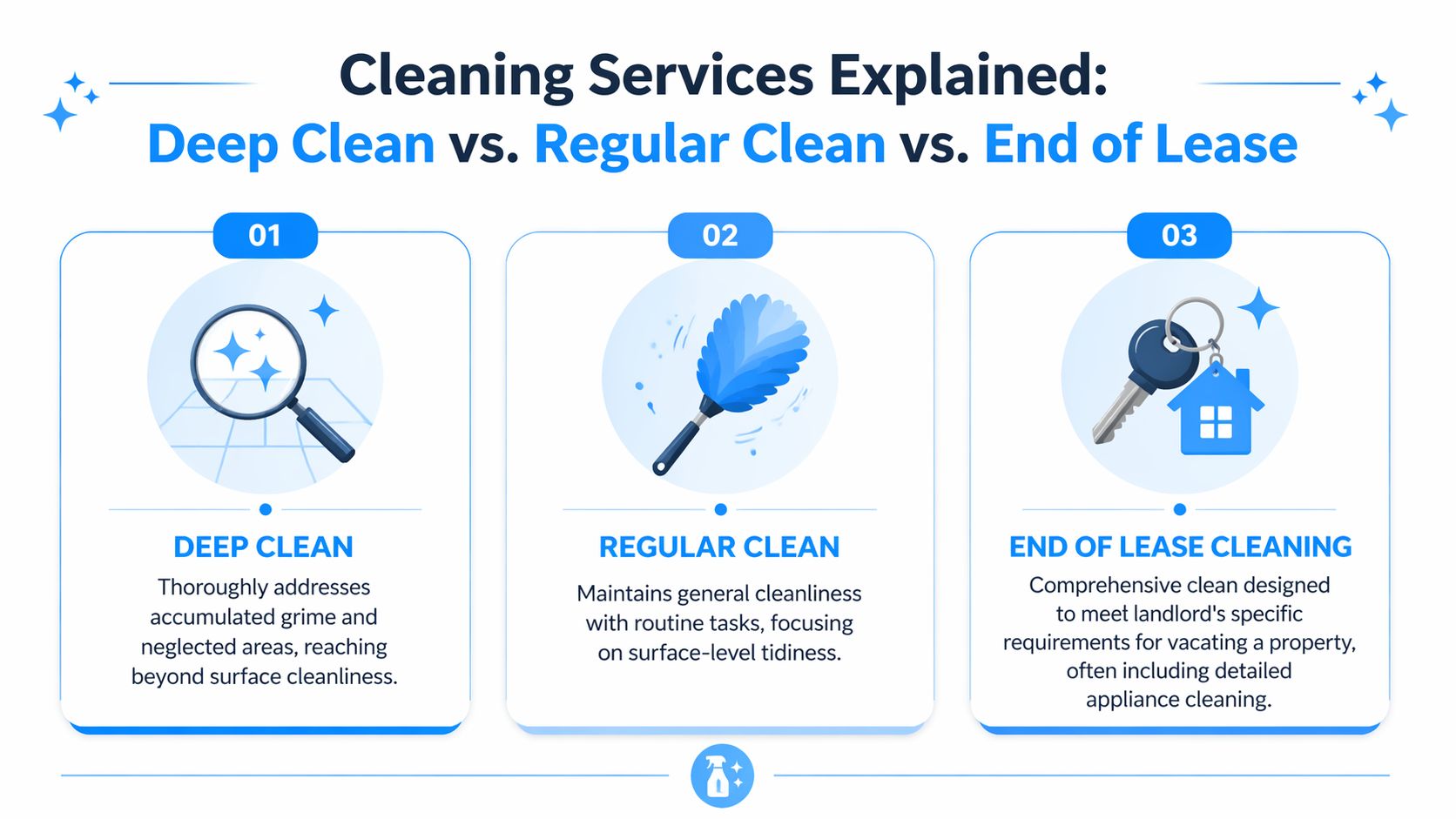
People often book the wrong service because the names sound similar. They aren’t. The goal is different in each case, and in Melbourne rentals that distinction matters.
The main difference is the outcome
A regular clean is maintenance. It keeps a lived-in property under control. Think vacuuming, mopping, bathroom wipe-downs, surface dusting, and kitchen bench cleaning.
A deep clean is restoration. It addresses neglected areas, accumulated grime, and the details that don’t fit into a routine service.
An end of lease clean is contract-driven. It’s built around what a landlord, agent, or property manager will inspect when the tenancy ends. In Victoria, that means the job has to stand up to scrutiny under the Residential Tenancies Act 1997 and, if things escalate, evidence presented in a VCAT dispute.
Why end of lease is a category of its own
Generic advice from overseas articles falls apart in this context. In Melbourne, bond cleaning isn’t just “a very good clean”. It has to align with how the property will be assessed.
The stakes are real. In Victoria, 28% of bond claims are disputed by tenants, often over cleaning standards, and using a professional bond cleaning service that understands the Residential Tenancies Act 1997 requirements can increase the rate of full bond refunds to between 85-95%. That’s why vacate cleaning needs more than enthusiasm. It needs the right checklist, evidence, and standard of finish.
For a more detailed breakdown of rental-specific expectations, this guide to end of lease cleaning in Melbourne is worth reading alongside your condition report.
Cleaning Service Comparison
| Attribute | Regular Cleaning | Deep Cleaning | End of Lease Cleaning |
|---|---|---|---|
| Main purpose | Ongoing upkeep | Full reset of built-up grime | Meeting vacate and bond standards |
| Best for | Weekly or fortnightly maintenance | Seasonal refresh, move-in, neglected homes | Tenancy handover |
| Detail level | Surface-focused | High-detail, top-to-bottom | High-detail with inspection focus |
| Inside oven | Usually extra | Often included or added | Commonly expected |
| Skirting boards and tracks | Sometimes spot-cleaned | Thoroughly addressed | Thoroughly addressed |
| Cupboards and fittings | External wipe-down | More detailed treatment | Often cleaned to vacate standard |
| Bond-focused | No | Not specifically | Yes |
| Evidence for disputes | Rarely needed | Sometimes useful | Often important |
If you’re handing back keys, don’t assume a deep clean and an end of lease clean are interchangeable. Some overlap, but the purpose is different.
A simple way to choose
Use a regular clean if the property is already in good shape and you need upkeep.
Book a deep clean if the home feels tired, neglected, stale, or you want a proper reset before guests, sale photos, or new tenants.
Choose an end of lease clean if your bond, final inspection, and tenancy paperwork are involved. In that setting, “good enough” often isn’t good enough.
Melbourne Deep Cleaning Costs and Time Estimates
Price is where many people get caught out, usually because they compare two quotes that aren’t for the same scope. One cleaner may be pricing a surface clean with basic kitchen and bathroom work. Another may be allowing for oven detailing, skirting boards, window tracks, soap scum removal, and carpet steam cleaning as extras.
What drives the final quote
For most homes, the main variables are practical:
- Current condition: A tidy lived-in home takes less work than one with months of built-up grease, dust, or bathroom scale.
- Property size and layout: More rooms, more bathrooms, stairs, and extra living areas all add labour.
- Add-ons selected: Ovens, internal windows, carpet steam cleaning, upholstery, garage sweep-outs, or balcony work change both price and time.
- Access and parking: Tight access, limited parking, or apartment lift logistics can slow the job.
- Furnishing level: Empty homes are faster to clean than heavily furnished homes with lots of surfaces to work around.
Typical time expectations
A deep clean takes longer than many people expect because the detail work is what absorbs time. Oven interiors, shower screens, grout lines, skirting boards, and window tracks aren’t quick jobs.
For practical planning, a 3-bedroom house in Melbourne often sits around 4-6 hours for a deep clean, assuming average condition and no major specialty work. If the property has heavy build-up or several add-ons, it can take longer. If it’s been maintained well, it may come in faster.
What a fair quote should include
A trustworthy quote should tell you:
| Quote item | What you want to see |
|---|---|
| Scope | Which rooms and detail tasks are included |
| Products and equipment | Whether the team supplies everything |
| Extras | Clear list of add-ons and exclusions |
| Timing | Estimated arrival window and job duration |
| Follow-up | What happens if something needs attention after the clean |
The cheapest quote often leaves out the exact work people assume is included. That’s where misunderstandings start. If you want apples-to-apples pricing, ask specifically about ovens, tracks, skirting boards, walls, blinds, shower descaling, and whether carpet work is part of the package or a separate line item.
A low quote can still be expensive if it leaves you with half the job unfinished.
For landlords and tenants alike, transparency matters more than the headline number.
How to Choose the Right Melbourne Deep Cleaning Company
Choosing a cleaner isn’t mainly about finding someone who says yes to the job. It’s about finding a team that arrives on time, knows what standard is required, brings the right gear, and doesn’t disappear when you ask detailed questions.

What to check before you book
The strongest operators usually have the same habits:
- Clear communication: You can get a straight answer about what’s included, what’s extra, and how long the job should take.
- Own equipment and products: The team arrives prepared, not expecting you to provide sprays, buckets, or a vacuum.
- Consistent staffing standards: Vetted cleaners, reliable scheduling, and some accountability behind the booking.
- Experience with Melbourne property types: Apartments, weatherboard homes, terraces, and investment properties all present different cleaning issues.
- Real review history: Look for repeated mentions of punctuality, detail, and follow-through, not just generic praise.
One market shift is worth paying attention to. Post-pandemic, 65% of businesses in Melbourne prefer cleaning providers that use eco-friendly products and digital tools for verified thoroughness. Even if you’re booking a residential clean, that preference says something important. Buyers are looking for providers who are organised, accountable, and less reliant on harsh chemical shortcuts.
Good signs and warning signs
Here’s a practical split.
| Good sign | Warning sign |
|---|---|
| Written scope of works | Vague verbal promises |
| Honest exclusions | “Everything’s included” with no detail |
| Questions about condition | Instant quote with no context |
| Flexible booking process | Hard to reach, slow replies |
| Eco-friendly options available | No clarity on products used |
A short video can also help you spot whether a company works in a systematic way or just markets itself well.
The trade-off most people get wrong
Some customers focus only on price. Others focus only on speed. The better question is whether the provider can match the job to the outcome you need.
If you need a presentable home for family coming over, you don’t need a tenancy-grade clean. If you need a bond-safe vacate service, you shouldn’t book the cheapest generic house clean and hope for the best.
Ask one direct question before booking: “What would you clean in this property that a regular cleaner usually wouldn’t?” The answer tells you a lot.
The best company isn’t always the one with the flashiest ad. It’s the one that explains the work properly and then does exactly that work on the day.
Your Pre-Clean and Post-Clean Action Plan
A deep clean runs better when the property is ready for it. Cleaners can do detailed work faster when they’re not spending the first hour moving piles of clothes, sorting toys, or clearing kitchen benches.

Before the team arrives
Use this checklist to make the booking worthwhile:
- Declutter surfaces: Clear benches, bedside tables, bathroom vanities, and floors where possible.
- Secure valuables: Put away jewellery, documents, cash, and fragile items.
- Flag problem areas: Mention grease in the oven, mould-prone corners, pet hair, hard water stains, or marks you’re concerned about.
- Manage pets and access: Keep pets secure and make sure keys, codes, parking, or lift access are sorted.
- Empty appliances if needed: If fridge interiors or cupboards are part of the service, clear them in advance.
After the clean
The final walkthrough matters, especially if the clean is tied to an inspection.
- Check the agreed scope first: Focus on the rooms and tasks you booked, not extras you assumed might happen.
- Inspect detail zones: Look at oven glass, shower screens, skirting boards, tracks, taps, and corners.
- Raise issues promptly: If something has been missed, say it while the job is fresh and easy to rectify.
- Take photos for records: This matters most for vacate cleans and property handovers.
- Ask about maintenance: A good cleaner will tell you how to keep the result looking better for longer.
Small preparation on your side usually means better detail on the cleaner’s side.
For tenants and landlords
If the clean is linked to a rental handover, keep your paperwork together. Condition reports, invoices, and post-clean photos are useful if there’s any disagreement later. If you’re a landlord preparing for new tenants, a documented deep clean also helps set the standard for how the property is presented and returned.
The smoother the handover, the less chance of arguments over cleaning that could have been avoided.
Frequently Asked Questions About Deep Cleaning in Melbourne
Can NDIS funding be used for a deep clean
In some situations, yes. It depends on the participant’s plan, goals, and the type of support approved. The important step is checking with your plan manager, support coordinator, or provider before booking. The cleaning must usually connect clearly to the participant’s needs rather than being treated as a general household luxury.
How often should a home get a deep clean
There isn’t one perfect schedule. Homes with pets, children, allergies, heavy cooking, or lots of foot traffic usually need deep cleaning more often than low-traffic homes. Many people book one when the property starts feeling dull even after regular cleaning, or before a major event such as moving in, moving out, hosting family, or listing a home for sale.
Is flood or renovation cleaning different from a standard deep clean
Yes. Post-flood and post-renovation work often needs a more specialised approach because the issue isn’t only dirt. It can involve moisture, residue, fine dust, odours, or contamination in areas a standard deep clean doesn’t fully address. That kind of work should be discussed upfront so the provider can assess whether the booking needs a different scope.
Are flexible bookings harder to find now
They can be, especially for weekends and end-of-lease periods. Demand for flexible, 7-day-a-week cleaning slots has spiked by 40% in greater Victoria, and workplace hygiene audits increased by 35% in 2025. In plain terms, organised providers get booked earlier, and inspection-driven work has become more exacting.
What matters most if bond recovery is the goal
Accuracy. The clean has to match what the agent or landlord will inspect. That usually means more focus on kitchens, bathrooms, internal glass, tracks, skirting boards, built-in storage, and other detail areas than people expect. If you treat it like a regular weekly clean, you’ll likely leave money on the table.
A proper deep clean changes more than appearance. It resets the property, reduces the chance of disputes, and gives you a cleaner handover whether you’re staying, selling, moving in, or moving out.
If you need dependable End Of Lease Cleaning Melbourne support for a deep clean, vacate clean, or bond-focused service, book a team that knows Melbourne properties and the level of detail inspections demand. With over 20 years of experience, flexible bookings seven days a week, transparent quotes, eco-friendly products, and meticulous attention to ovens, bathrooms, skirting boards, windows, and finishing touches, End Of Lease Cleaning Melbourne makes it easier to get the result you need.
