
You’re probably reading this while juggling a lease handover, a property manager’s checklist, and a growing list of things that still need attention. The oven needs work. The shower screen needs descaling. The carpet invoice needs booking. Then you look at the mattress and realise it’s been slept on for months or years, and no amount of fresh linen is going to make it pass a hygiene inspection.
That’s where a proper mattress cleaning service matters, especially in Melbourne’s rental market. A mattress can look fine from the doorway and still hold stains, odours, dust, and pest activity in the seams and padding. For tenants, that can turn into a bond argument. For families, it can mean poor sleep, allergy flare-ups, and a bedroom that never feels fresh.
A lot of general mattress cleaning guides miss the point for Victorian renters. They talk about bedroom hygiene in a broad sense, but not about the practical reality of vacating a property, meeting inspection standards, and avoiding disputes over cleanliness. In Victoria, over 40% of rental bond claims involve cleaning disputes, with mattress hygiene a common issue, which is why adding a professional mattress clean to a vacate service is often the smarter move for tenants trying to protect their bond (Stanley Steemer on steam cleaning mattresses).
What a Professional Mattress Clean Actually Involves
A professional mattress clean is not just a quick vacuum and a spray deodoriser. It’s a deep hygiene treatment aimed at what sits below the fabric surface, where body oils, dead skin, embedded dust, stain residues, and allergens settle into the padding.
Think of it the same way you’d think about carpet care. Running a household vacuum over a carpet lifts loose debris from the top. It doesn’t give you the same result as deep extraction. A mattress is no different. Surface cleaning improves appearance. Professional cleaning targets what’s trapped inside.
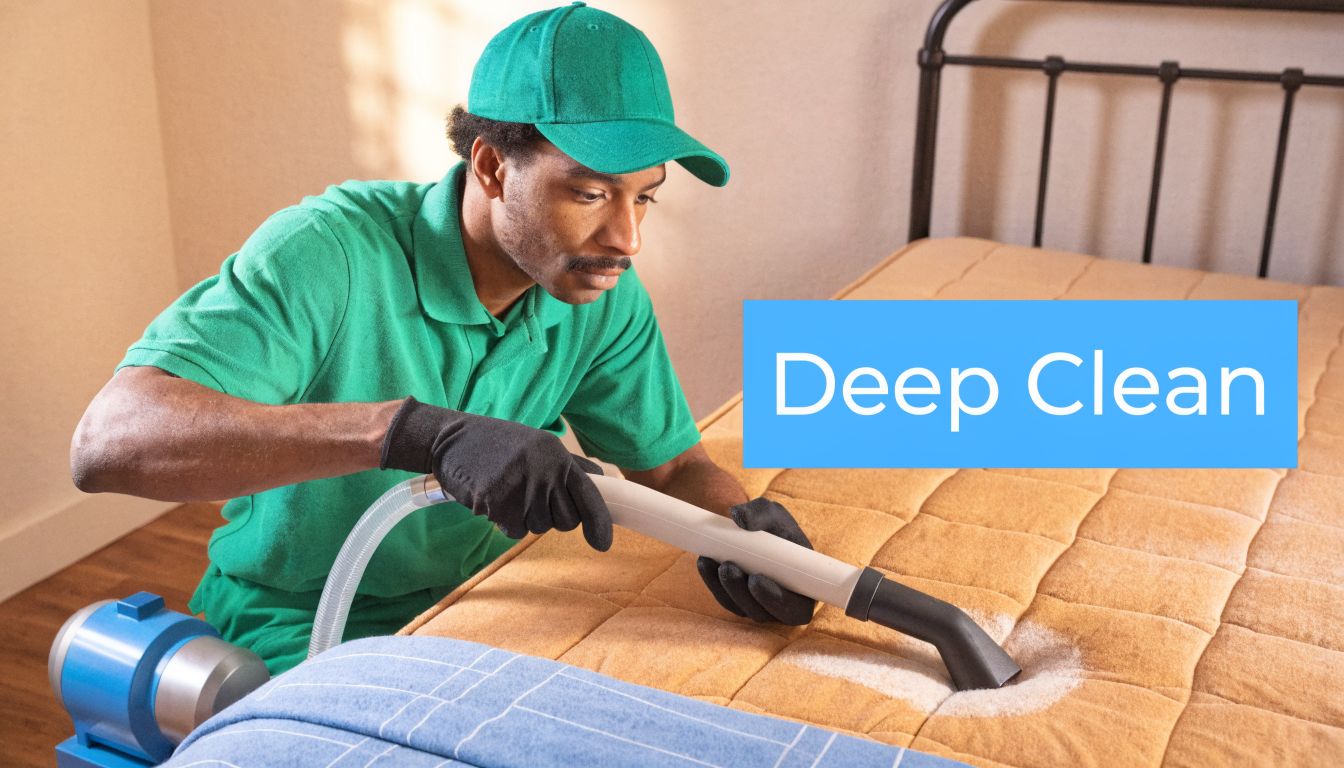
What the process usually includes
Most quality operators follow a staged process rather than trying to do everything in one pass.
Inspection first
The cleaner checks the mattress fabric, visible staining, odour level, seam build-up, and signs of pest activity. During this inspection, they decide what can be improved safely and what stains may be permanent.Dry soil removal
Loose dust, lint, hair, and surface debris are removed before any wet process starts. If this step is skipped, grime can turn muddy and spread further into the fabric.Targeted pre-treatment
Problem areas get treated with the right solution for the issue. Protein-based marks, sweat staining, and general body oil build-up don’t all respond to the same chemistry. Good cleaners don’t soak the mattress. They apply what’s needed where it’s needed.Deep extraction or sanitising treatment
This is the step that separates a proper service from a DIY attempt. The machine does the heavy lifting, drawing contamination out instead of just moving it around.Drying and aftercare advice
A mattress shouldn’t be left damp. Good airflow matters. Good operators will tell you when it’s safe to remake the bed and how to stop moisture getting trapped.
Practical rule: If a service can’t explain its cleaning steps clearly, it’s usually not a true deep clean.
Why people are booking this service more often
Clients aren’t imagining the shift. The Australian cleaning services market is a mature industry and is projected to contribute to a global market size of $90 billion by 2027, while professional cleaning bookings in metropolitan areas like Melbourne rose 20-30% post-COVID as hygiene awareness increased (cleaning services market overview from SBDCNet).
That lines up with what many Melbourne cleaners see on the ground. People aren’t only asking whether something looks clean anymore. They want to know whether it’s sanitary, whether odours are dealt with at the source, and whether the room will stand up to a final inspection.
What home methods usually miss
A standard vacuum cleaner can help with loose dust. Baking soda can freshen a mattress temporarily. Spot sprays can lighten some marks.
What they don’t do well is remove contamination from deeper layers, extract dissolved soil properly, or deal with the cause of persistent odour. DIY work also carries a common risk. Too much water. Overwet a mattress and you create a drying problem, not a cleaning result.
Comparing Professional Mattress Cleaning Methods
Not every mattress cleaning service uses the same method, and that matters. The best choice depends on what you’re trying to solve. General refresh, stain removal, allergy control, end-of-lease presentation, or pest treatment all call for different approaches.
Some methods clean thoroughly. Some are better for fast turnaround. Some are more about sanitising than extraction. If a provider offers only one option for every situation, ask more questions.
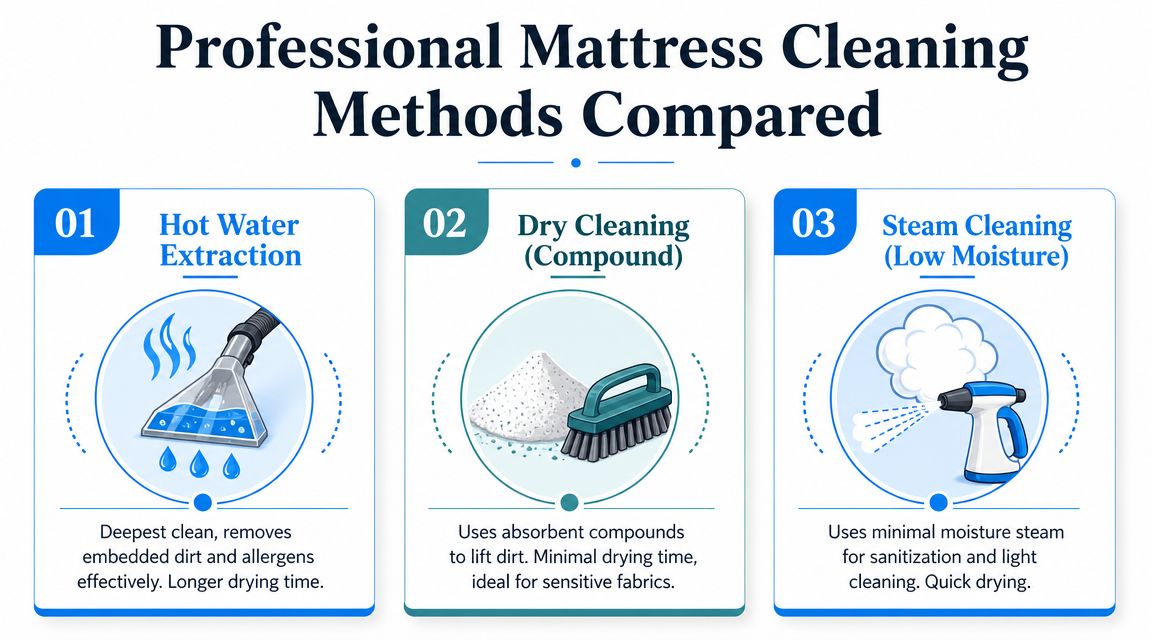
The three methods most clients hear about
Hot water extraction
This is the method many people mean when they say steam cleaning, even though the process is really an injection and extraction clean. It’s usually the strongest option for deep soil removal, body oils, odours, and allergy-related contamination.
The strength of this method is that it flushes and extracts. It doesn’t just sanitise the top fabric. It removes suspended soil from within the upper layers of the mattress.
Dry cleaning compound
This method uses low-moisture absorbent compounds or specialised dry-cleaning products to lift surface contamination. It’s useful where moisture must be kept to a minimum, such as delicate materials or situations where drying access is limited.
The trade-off is depth. Dry methods can improve appearance and freshness, but they’re usually not the first choice for heavily soiled rental mattresses.
Steam cleaning with low moisture vapour
Low moisture steam vapour is different again. It’s strong for surface sanitisation, seam work, and pest-focused treatment, especially where heat matters more than flushing action.
This is especially relevant for bed bug work. Melbourne rental properties have seen a surge in infestations, and an effective protocol involves steam vapour treatment at 120-140°C, which kills 100% of bugs and eggs within seconds of exposure and is 98% effective at preventing reinfestation compared with 60% for chemical sprays alone (bed bug treatment guidance from Rent.com.au).
For bed bug concerns, ask whether the service treats seams, tufts, edges, and bed frames. Heat applied only to the broad top panel won’t be enough.
Mattress Cleaning Method Comparison
| Method | Best For | Drying Time | Effectiveness |
|---|---|---|---|
| Hot water extraction | Deep cleaning, stains, odours, allergens | Longer | Strongest overall for embedded soil removal |
| Dry cleaning compound | Sensitive fabrics, low-moisture situations | Minimal | Best for lighter soiling and surface refresh |
| Steam cleaning (low moisture) | Sanitisation, seam treatment, bed bug work | Quick | Strong for heat-based hygiene and pest control |
Which method suits which problem
For an end-of-lease mattress clean, hot water extraction is usually the best all-rounder because it addresses presentation and hygiene together. For a mattress with delicate fabric or limited ventilation, dry compound cleaning may be the safer route. For suspected pests, low moisture steam vapour becomes far more important.
A similar principle applies to lounges and upholstered furniture. The method has to match the material and the problem, which is why this guide to sofa steam cleaning in Melbourne is useful if you’re comparing how professionals approach different soft surfaces in the same property.
The Health and Hygiene Benefits of Regular Cleaning
While sheets are changed regularly with the assumption that this is enough, it isn’t. Sheets catch some of what your body sheds overnight, but the mattress underneath still absorbs moisture, skin particles, dust, and airborne debris over time.
That build-up matters more in Melbourne than many people realise. In Melbourne’s humid climate, mattresses can accumulate up to 1.5-2 million dust mites per square metre within a year, and professional hot water extraction cleaning at 70-80°C can reduce mite populations by 95-99%, which is particularly relevant given 20% of Australian adults suffer from allergic rhinitis (National Asthma Council Australia dust mite allergy factsheet).

What’s actually sitting in the mattress
An unclean mattress becomes a holding area for a mix of fine particles and organic residue. That includes skin flakes, household dust, pet dander, sweat residue, and allergen material that settles into the top layers.
You may not see any of it. But you can often notice the signs around it:
- Morning congestion that eases once you leave the room
- A stale smell that returns even after fresh bedding
- Irritated skin or itchy eyes after a night’s sleep
- A room that feels dusty no matter how often it’s wiped down
A mattress doesn’t need to look dirty to affect sleep quality.
Why regular cleaning helps
When a professional removes embedded debris and dries the mattress properly, the bedroom usually feels fresher straight away. Clients often notice less mustiness and a cleaner smell first. The bigger benefit is longer term. You’re reducing what sits close to your face for hours every night.
For allergy-prone households, children, older adults, and NDIS participants who need a cleaner sleeping environment, that’s not a cosmetic service. It’s part of basic home hygiene.
Here’s a useful visual explainer on what mattress contamination can look like in practice:
Sleep quality is part of the result
A mattress cleaning service won’t fix every sleep issue. It won’t change a poor pillow, an old spring system, or a noisy street. But it can remove one common source of irritation from the room.
That matters because sleep is cumulative. A cleaner bed surface, fewer odours, and lower allergen load can make the room feel easier to rest in. For many households, that’s the difference between a bed that feels tired and one that feels reset.
How Often Should You Clean Your Mattress
There’s no single timetable that suits every home. The right schedule depends on who sleeps on the mattress, whether there are pets, whether anyone has allergies, and whether the property is owner-occupied or a rental about to be vacated.
A practical schedule that works
For general household maintenance, a periodic professional clean makes sense when the mattress starts showing visible marks, holding odour, or feeling stale even after bedding is changed. If the room is well ventilated and the mattress is protected, you can usually work on a longer maintenance cycle.
For homes with allergy sufferers, pets, or heavier use, clean it more often. The issue isn’t just visible staining. It’s the faster build-up of hair, dander, moisture, and fine debris.
For tenants moving out, clean the mattress as part of the vacate process rather than leaving it to the last minute or skipping it entirely. If the property manager checks presentation and hygiene closely, the mattress can become an avoidable problem.
Use these triggers, not guesswork
After illness or extended recovery at home
It’s sensible to refresh the sleeping surface properly.Before a final inspection
Don’t assume fitted sheets will hide old staining or odour.When there’s a smell you can’t air out
That usually means the source is below the surface.If the mattress has gone through a humid summer
Bedrooms with poor airflow often need attention sooner.
If you’re asking whether it’s time, it usually is.
For NDIS households
In NDIS-supported homes, frequency should follow the participant’s needs, the condition of the room, and any hygiene requirements set by carers or coordinators. The key is consistency. A sleeping environment should stay manageable, not be left until the mattress becomes difficult to recover.
Preparing For and Experiencing a Professional Clean
Clients are often less worried about the cleaning itself than the uncertainty around it. They want to know what to move, how wet the mattress will get, whether they can sleep on it that night, and what the technician will need access to.
The process is usually straightforward if the booking has been explained properly.
Before the cleaner arrives
Start with the simple jobs. Strip the bed fully. Remove mattress protectors, toppers, and linen. Make sure there’s a clear path to the room so equipment can be brought in without delay.
If there are any specific stains, mention them at booking stage. Don’t wait until the technician arrives and then remember an old spill, pet accident, or suspected pest issue. Good preparation helps the cleaner choose the right treatment and manage expectations early.

What the appointment usually looks like
A typical visit starts with inspection. The cleaner checks fabric type, staining, wear, odour, and whether the mattress can be treated safely. They’ll often point out where improvement is likely and where permanent discolouration may remain even after cleaning.
Then comes the actual treatment. In a solid professional service, you can expect:
Pre-treatment of spots and body contact areas
This targets the dirtiest sections first, especially around the upper body area and edges.Machine cleaning with extraction or vapour treatment
The method depends on the mattress and the issue being treated.Attention to seams and piping
These areas trap lint, dust, and sometimes pest activity.Advice at the end
You should be told about drying, ventilation, and when to remake the bed.
For readers dealing with marks before a booking, this guide on how to get stains out of a mattress helps explain what can be attempted safely at home and what is better left to a professional.
What to expect afterwards
The mattress may feel slightly cool or mildly damp after a wet clean, but it should not feel saturated. If it does, something has gone wrong. Proper airflow after cleaning is part of the service outcome, not an optional extra.
You should also expect honesty. Some stains lift well. Some don’t. Old urine marks, oxidised sweat staining, and ingrained discolouration may improve without disappearing completely.
The best cleaners promise a realistic result, not a miracle.
If the mattress is part of an end-of-lease clean, keep the invoice and take clear photos once it’s dry. That paperwork can help if cleanliness is later questioned.
Choosing Your Melbourne Mattress Cleaning Service
You hand back the keys, the place looks clean, and the agent still circles the bedroom. A stained or musty mattress is the sort of detail that gets pulled into a broader cleaning argument at final inspection. In Melbourne rentals, that matters because small hygiene issues can drag out a bond return even when the rest of the property presents well.
Price matters, but context matters more. A low quote means very little if the cleaner turns up late, uses the wrong method, leaves the mattress too wet to present properly, or gives you no invoice for your records. For a vacate job, you want a service that understands inspection standards, timing, and documentation.
What to look for first
Start with the basics that affect the result.
Experience with rental and vacate work
End-of-lease jobs run differently from routine bedroom cleaning. The cleaner needs to understand deadlines, access windows, and the standard agents expect at handover.Clear quoting
Ask what is included, what is extra, and what outcome is realistic. Stain treatment, deodorising, sanitising, and drying times should be discussed before the booking, not on the day.Proper equipment
A professional should arrive ready to complete the job with commercial equipment suited to mattress cleaning.Insurance and reliability
If something is delayed or damaged, you need a business that answers the phone and takes responsibility.
The Melbourne rental angle many guides skip
As noted earlier, cleaning disputes are a major cause of bond claims in Victoria. The mattress is an easy target during inspection because it is visible, easy to photograph, and often overlooked by tenants who focus on carpets, ovens, and bathrooms first.
That is why I usually tell renters to treat mattress cleaning as part of the exit plan, not as a separate afterthought. If the mattress has staining, odour, dust build-up, or signs of poor upkeep, it can feed the impression that the room was not properly maintained. Property managers do notice patterns like that.
Ask these questions before booking
A good operator should answer direct questions without dancing around them.
What cleaning method will you use on my mattress?
The method should match the mattress type and the problem. Latex, pillow-top, memory foam, and heavily stained mattresses do not all suit the same approach.
Do you handle end-of-lease bookings?
This question filters out a lot of unsuitable providers quickly. Vacate work needs tighter scheduling and better communication than a standard domestic booking.
Can you coordinate with other cleaning booked for the property?
This matters if carpets, upholstery, or a full vacate clean are happening on the same day. Timing affects access, drying, and how the room presents in photos and at inspection. If you are planning the whole job, this end of lease cleaning checklist helps you line things up properly.
Will I get an itemised invoice?
You should. Keep it with your other vacate paperwork in case the agent questions what was done.
What matters for NDIS clients
For NDIS participants, carers, and support coordinators, reliability and hygiene standards usually matter more than getting the cheapest price. The cleaner should be able to work respectfully in an occupied home, follow access instructions, and use products and methods that do not leave heavy residue or strong lingering smells.
Consistency matters too.
If a bedroom needs to stay low-allergen and manageable for daily care, the service should be planned around that requirement from the start.
Signs of a provider who understands the job
These are the signs I would look for in Melbourne.
They are realistic about results
Honest cleaners explain what can improve and what may remain visible.They understand inspection pressure
They know delays can affect key return, photos, and handover.They are organised
Booking confirmations, arrival windows, and invoices should be straightforward.They can fit the mattress clean into the wider vacate process
The job should support the final presentation of the room, not complicate it.
The best mattress cleaning service for a Melbourne tenant is the one that understands why the mattress is being cleaned, and what happens if it is left out.
The trade-off
A standalone mattress cleaner can be fine for a routine hygiene job in an occupied home. For a rental vacate, a provider who understands the full bond-cleaning context is usually the better choice.
That choice affects more than appearance. It affects timing, paperwork, drying, inspection readiness, and whether the mattress becomes one more issue on the condition report. A proper clean can improve odour, presentation, allergen control, and hygiene standards for households with health or NDIS-related needs. For tenants, the goal is simple. Leave the property with as few arguable cleaning issues as possible.
If you need a reliable End Of Lease Cleaning Melbourne team for a vacate clean that includes practical mattress hygiene support, choose a company that understands Melbourne rentals, communicates clearly, and helps you present the property properly at final inspection. That is often the difference between a stressful handover and a smooth one.
