
It’s 4:30 pm on a Thursday. The removalists are booked for tomorrow, the agent wants the keys back by noon, and you’ve just been quoted a low “starting from” price that sounds fine until the cleaner asks about the oven, carpets, balcony glass, and whether the job needs to happen urgently.
For a 2-bedroom apartment, a realistic end of lease clean price usually sits around $420 to $580, with $500 as a sensible planning figure. In Melbourne, that starting price can rise quickly if the property needs heavy detail work or you’re booking at short notice.
That’s the part tenants often miss. The base price is only the starting point. A well-kept apartment with light bathroom use, a clean oven, and no pet hair usually stays close to the quote. The same layout can cost a lot more if the shower has scale buildup, the stovetop has baked-on grease, the window tracks are packed with dust, or the booking comes in the day before handover.
I see this every week. One tenant calls with a tidy 2-bed, 1-bath apartment and gets quoted around the middle of the range. Another calls for a similar property, but adds carpet cleaning, an oven that hasn’t been cleaned in a year, and a next-day booking. The final figure is a different story.
A proper bond clean is priced differently from a regular house clean because the standard is different. Regular cleaning is about presentation and upkeep. End of lease cleaning is about passing inspection, reducing the chance of complaints, and dealing with the spots agents check closely, including skirtings, grout, glass, inside cupboards, and tracks.
That’s why cheap phone quotes can go wrong. If the cleaner hasn’t asked about condition, access, extras, or timing, the number is only half the story.
Navigating End of Lease Cleaning in Melbourne's Market
If you're in the last week of your lease, the pressure is real. You want the place spotless, you want your bond back, and you don’t want a vague quote that changes once the cleaners arrive.
Melbourne tenants are dealing with a tighter market than they were a few years ago. That matters because stricter rental conditions usually lead to stricter exit inspections. According to Easy Home’s guide to end-of-lease cleaning expenses, Melbourne’s vacancy rate fell to 1.2% in Q1 2025, and that pressure has pushed end-of-lease cleaning costs up by 15–20% year-over-year as property managers apply tighter inspection checklists.
That lines up with what many tenants see in practice. The cleaner isn’t only quoting for mopping and wiping. They’re quoting for the risk of callback work, the detail level required for a final inspection, and the time it takes to get kitchens, bathrooms, tracks, skirtings, and glass to bond standard.
Why quotes feel inconsistent
Two properties with the same floorplan rarely price the same. A neat apartment that’s been looked after is straightforward. Another one in the same building might need extra work on grease, bathroom scale, internal glass, pet hair, or marks on walls.
Practical rule: The closer a property is to “inspection ready” before the cleaners arrive, the closer your final invoice stays to the starting quote.
The biggest mistake tenants make is treating a bond clean like a normal weekly clean. It isn’t. The goal isn’t “looks clean”. The goal is “holds up under inspection”.
What transparent pricing should look like
A proper quote should tell you three things clearly:
- What the base clean covers so you know the starting scope
- Which extras are separate such as oven work, windows, or carpet steam cleaning
- What can trigger added cost like heavy grime, mould, pet issues, or urgent scheduling
If a company can’t explain those points plainly, the quote isn’t finished. It’s just a starting conversation.
Your Baseline End of Lease Clean Price Guide
A tenant calls on Thursday. Keys go back Monday. The property is a standard 2-bedroom unit, but the oven is greasy, the shower has scale, and the agent wants carpets professionally cleaned. The first figure they heard was a base clean price. The final quote ends up higher because the job in front of the cleaner is higher effort.
That is how end of lease pricing works in practice.
Property size is still the best starting point, because it gives you a baseline before condition, access, and timing push the total up or down. In Melbourne, a smaller vacant property in good condition will usually sit at the lower end of the range. A larger home, or a property with neglected kitchens, bathrooms, or pet issues, climbs fast because labour climbs fast.
Estimated End of Lease Cleaning Prices in Melbourne 2026
| Property Size | Average Price Range |
|---|---|
| Studio or 1-bedroom | Usually quoted case by case |
| 2-bedroom, 1-bathroom | $420 to $580 |
| 3-bedroom home | $600 to $780 |
| 4-bedroom home | $850 to $1,100 |
| 5-bedroom home | Average $1,200, with some quotes $1,400 or beyond |
Use these as baseline figures for an empty property that has been reasonably well kept. They are a starting point, not a fixed promise.
A base clean usually assumes the team can walk into a vacant property and get straight to detail work. It assumes average wear, not months of built-up grease, mould, heavy soap scum, strong pet odour, or extra rubbish left behind. It also assumes standard access and enough notice to schedule the job properly.
Here is the part tenants often miss. The base price is built around normal conditions.
A real quote might look like this:
- 2-bed, 1-bath apartment in good condition: base clean only
- Same apartment with heavy oven grease and shower scale: base clean plus extra labour
- Same apartment booked urgently for the weekend: base clean plus condition loading plus rush scheduling
- Same apartment with carpets requiring professional treatment: base clean plus end of lease carpet steam cleaning
That is why two homes with the same floorplan can land at very different prices.
Larger homes also rise in price for reasons tenants can see once the clean starts. More bedrooms means more wardrobes, doors, tracks, skirtings, switches, glass, and corners to hand-detail. Extra bathrooms and bigger kitchens usually add more time than the bedroom count suggests. In older homes, the surfaces themselves can be slower to restore because grout, seals, and fittings hold more staining.
The safest way to read a quote is this. Treat the base rate as the price for size. Treat the final invoice as the price for size, condition, and timing together.
If you want to keep your end of lease clean price close to the baseline, hand back an empty property, defrost the fridge, remove rubbish, and flag any problem areas before the team arrives. That gives you a firmer quote and fewer surprises on the day.
Decoding Your Quote Common Add-On Costs
A quote can look reasonable until the add-ons appear. That’s not always a red flag. It often means the cleaner is separating specialist work from the base service instead of burying it in a vague lump sum.
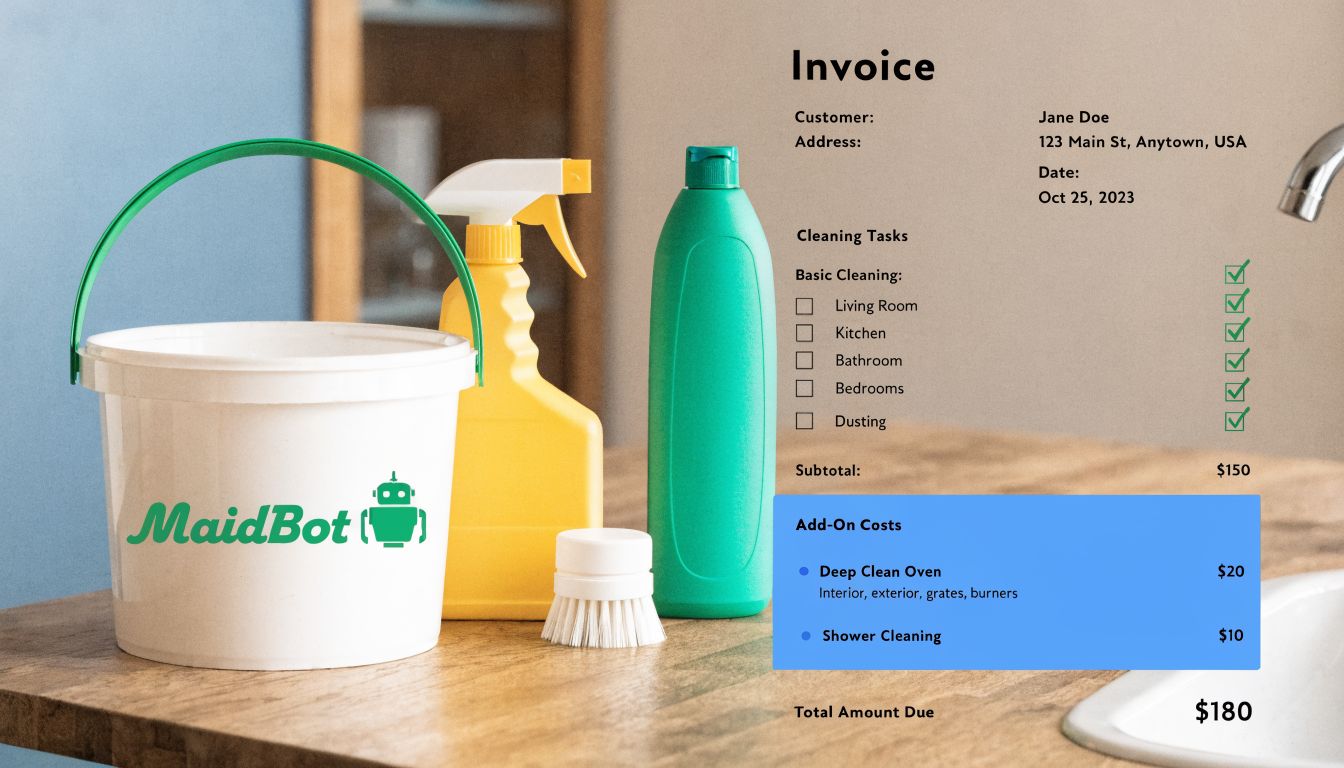
According to Airtasker AU’s end of tenancy cleaning cost guide, Melbourne add-ons commonly include oven cleaning at $30 to $150, window cleaning at $30 to $150, and carpet steam cleaning for a 3-bedroom home at $60 to $200.
The extras that move the final total
Here’s how these line items usually work in practice:
- Oven cleaning often sits outside the base clean because baked-on grease takes time, chemicals, scraping, and repeat passes. A lightly used oven is one job. A neglected one is another.
- Window cleaning can be simple if it’s internal glass only. Tracks, sills, heavy dust, and accessible external panes change the labour.
- Carpet steam cleaning is commonly required under lease terms, especially where pets have been present or where the entry report recorded professionally cleaned carpets.
If your lease calls for carpets to be done professionally, it helps to read up on what’s involved before you book. A practical overview is in this guide to steam cleaning for carpet.
What to ask before you approve a quote
Don’t ask only for the total. Ask what that total includes.
A cleaner should be able to tell you:
- Whether the oven is included or listed separately
- Whether windows means inside only or also tracks, sills, and any accessible exterior glass
- Whether carpets are included and, if so, how many rooms
- Whether balconies, garages, and laundries are covered
- Whether the quote is based on good condition or allows for heavier work
If the property manager is known to check oven racks, shower screens, tracks, and skirtings closely, make sure those are named in writing. Assumptions are where disputes start.
What doesn’t work
What usually fails is choosing the lowest number without comparing scope. A low quote that leaves out carpets, oven detailing, or windows often isn’t the cheapest option by the end.
The better move is to get an itemised quote and match it against your lease obligations and entry condition. That’s how you compare properly.
Hidden Factors That Increase Your Final Cleaning Bill
The biggest pricing shock usually isn’t the published add-on. It’s the condition charge that appears after inspection. Tenants often assume the base quote is the final price, then wonder why the cleaner has revised it.
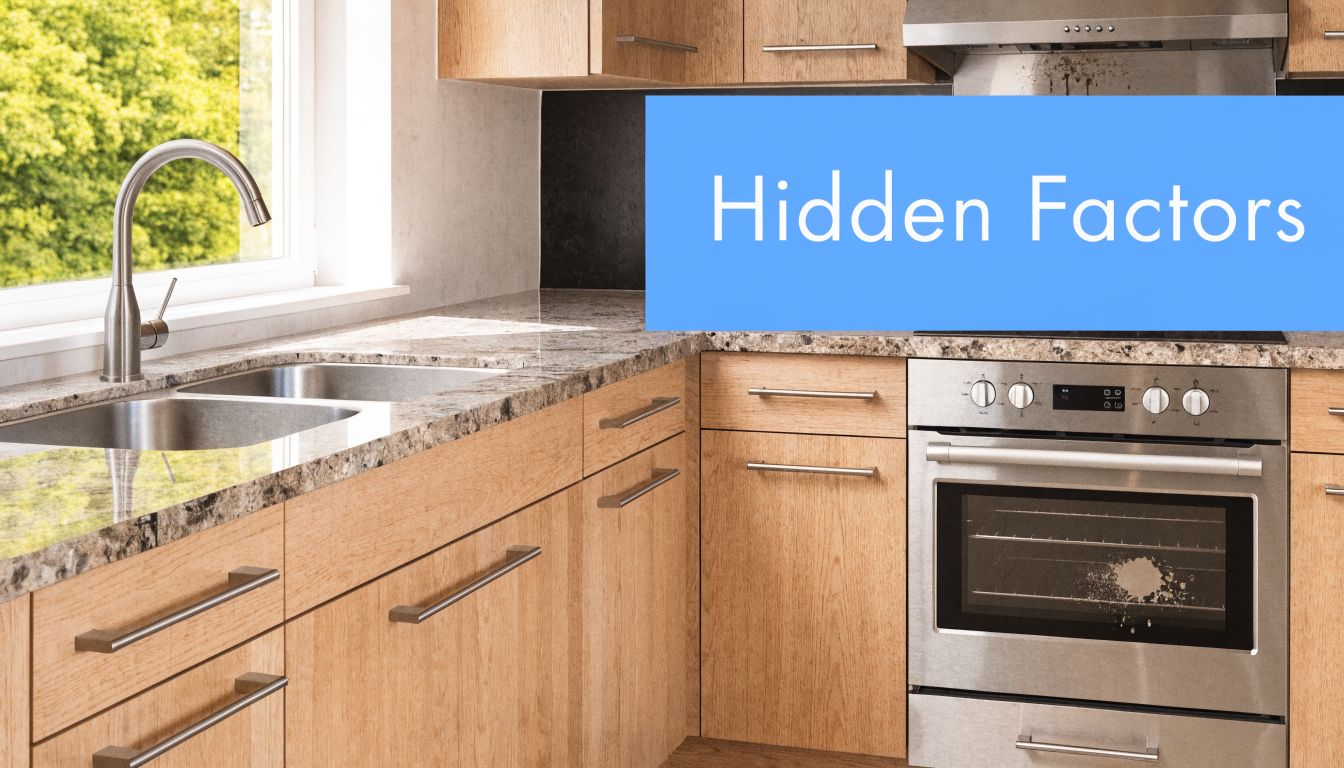
That assumption falls apart in neglected properties. Amazing Architecture’s cost breakdown of end-of-lease cleaning services notes that heavy oven grime or stained grout can trigger 25–50% surcharges, adding $50 to $150 on a standard quote. The same source states that 40% of Victorian bond disputes stem from unclean bathrooms and tiles.
Condition-based pricing is usually justified
A bathroom with light soap residue is standard. A bathroom with scale, mould spots, stained grout, and a milky shower screen is specialist detail work.
The same goes for kitchens. Surface wiping is one thing. Cutting through thick grease on splashbacks, range hoods, cooktops, and oven interiors takes far longer.
That’s why honest photos matter. If you understate the condition to lock in a cheap price, the quote usually won’t hold once the team sees the property.
The rooms that most often trigger extra cost
Some areas cause more price creep than others:
- Bathrooms and tiles because buildup hides in grout lines, screens, taps, and corners
- Ovens and range hoods because grease is labour-heavy
- Balconies and outdoor thresholds because dust, leaves, cobwebs, and bird mess are often excluded from basic quoting
- Pet-affected areas where fur, odour, marks, or stains require extra attention
If you’ve got mould concerns, that’s worth raising before the booking is confirmed. General cleaning and proper treatment are not the same thing. This guide on mould remediation in Melbourne explains the difference clearly.
A quick visual example helps show how much detail kitchen condition can add to a vacate clean.
Urgent bookings also push the price up
Last-minute jobs are often more expensive, even when the property itself isn’t too bad. The reason is simple. Urgent bookings compress scheduling, reduce flexibility, and limit the cleaner’s ability to pair your job efficiently with other work.
In real terms, a rushed booking can cost more than a prepared one because there’s no room to plan around access, keys, carpets drying, or re-cleans if the agent comes back with a list.
Be brutally honest when requesting a quote. Cleaners can work around a dirty property. What they can’t price accurately is a surprise.
Sample End of Lease Cleaning Quotes for Melbourne
The easiest way to understand end of lease clean price is to see how a quote builds in real situations. These examples use the pricing ranges already covered above. They’re not universal prices, but they do show why one tenant pays close to the base rate while another pays much more.
Example one, tidy 2-bedroom apartment
A tenant in a modern 2-bedroom, 1-bathroom apartment has kept the place in good shape. The property is empty, there’s no heavy bathroom build-up, and the oven is only lightly soiled.
A realistic quote structure might look like this:
| Item | Sample Quote |
|---|---|
| Base end of lease clean for 2-bedroom, 1-bathroom property | $420 to $580 |
| Oven cleaning | $30 to $150 |
| Window cleaning | $30 to $150 |
| Final total | Depends on what’s included and the actual condition |
This is the type of job that usually stays close to the published range. There are few surprises, so the tenant is paying for scope, not recovery work.
Example two, 3-bedroom house with carpets and pet wear
A suburban 3-bedroom house is a different story. The carpets need steam cleaning, the kitchen has grease build-up, and the bathroom grout has darkened over time.
The quote could be built like this:
| Item | Sample Quote |
|---|---|
| Base 3-bedroom home clean | $600 to $780 |
| Carpet steam cleaning for 3-bedroom home | $60 to $200 |
| Condition surcharge for heavy grime or stained grout | $50 to $150 |
| Oven cleaning if separate | $30 to $150 |
Often, tenants say the quote “blew out”. In reality, the base was never meant to cover neglected-condition detail work.
Example three, larger family home
A 4-bedroom property usually starts from a much higher point because of the cleaning volume. Add windows, carpets, or neglected wet areas and the total rises quickly.
For larger homes, the baseline itself is already substantial:
- 4-bedroom homes average $960, with a typical range of $850 to $1,100
- 5-bedroom homes average $1,200
- Some 5-bedroom jobs extend to $1,400 or beyond
The lesson from these examples is simple. Price isn’t random. It follows scope, condition, and timing.
How to Save Money on Your End of Lease Clean
You do have some control over the final number. Not complete control, because size and condition still matter, but enough to avoid paying for preventable extras.
The first money-saving move is booking early. When you leave the clean until the final days of the lease, you have less control. You’re choosing from whatever time slots are left, and you’re more likely to accept a rushed quote because the handover date is fixed.
Do the prep work that actually reduces labour
Some DIY prep helps. Some doesn’t.
What helps:
- Remove all belongings first so cleaners can reach floors, cupboards, and edges properly
- Empty the fridge and pantry so no time is spent moving items around
- Dispose of rubbish and hard waste before the clean starts
- Vacuum loose pet hair and crumbs so the team can focus on detail work instead of basic pick-up
What usually doesn’t help:
- Half-cleaning wet areas badly and leaving residue behind
- Using the wrong product on glass or stainless steel
- Trying to hide mould, grease, or stains instead of declaring them upfront
Small prep tasks can reduce wasted labour. They don’t replace professional detail work, but they can stop your clean from drifting into avoidable extra time.
Ask for a fixed quote, but earn it
A fixed quote only works when the cleaner has enough information. Send clear photos of the kitchen, oven, bathrooms, floors, windows, and any problem areas.
Mention the details tenants often leave out:
- Pets in the property
- Any mould or water staining
- Whether carpets need steam cleaning
- Whether the property is furnished or empty
- How soon you need the job done
The more accurate your description, the less chance of a revised invoice on the day.
Read your lease before choosing extras
A lot of wasted money comes from paying for services that weren’t required, or skipping the ones that were. Check whether your lease or property manager specifically requires carpet steam cleaning, extra window work, or professional receipts.
If the property is already in fair condition, spend your budget where inspections are most unforgiving: kitchen grease, bathroom tiles, shower glass, and floor finish. Those areas decide a lot of final outcomes.
The Ultimate Bond Return Checklist and FAQs
A clean passes inspection when the little details are finished, not just the obvious ones. Use a proper room-by-room checklist and tick items off only when they’re fully done.
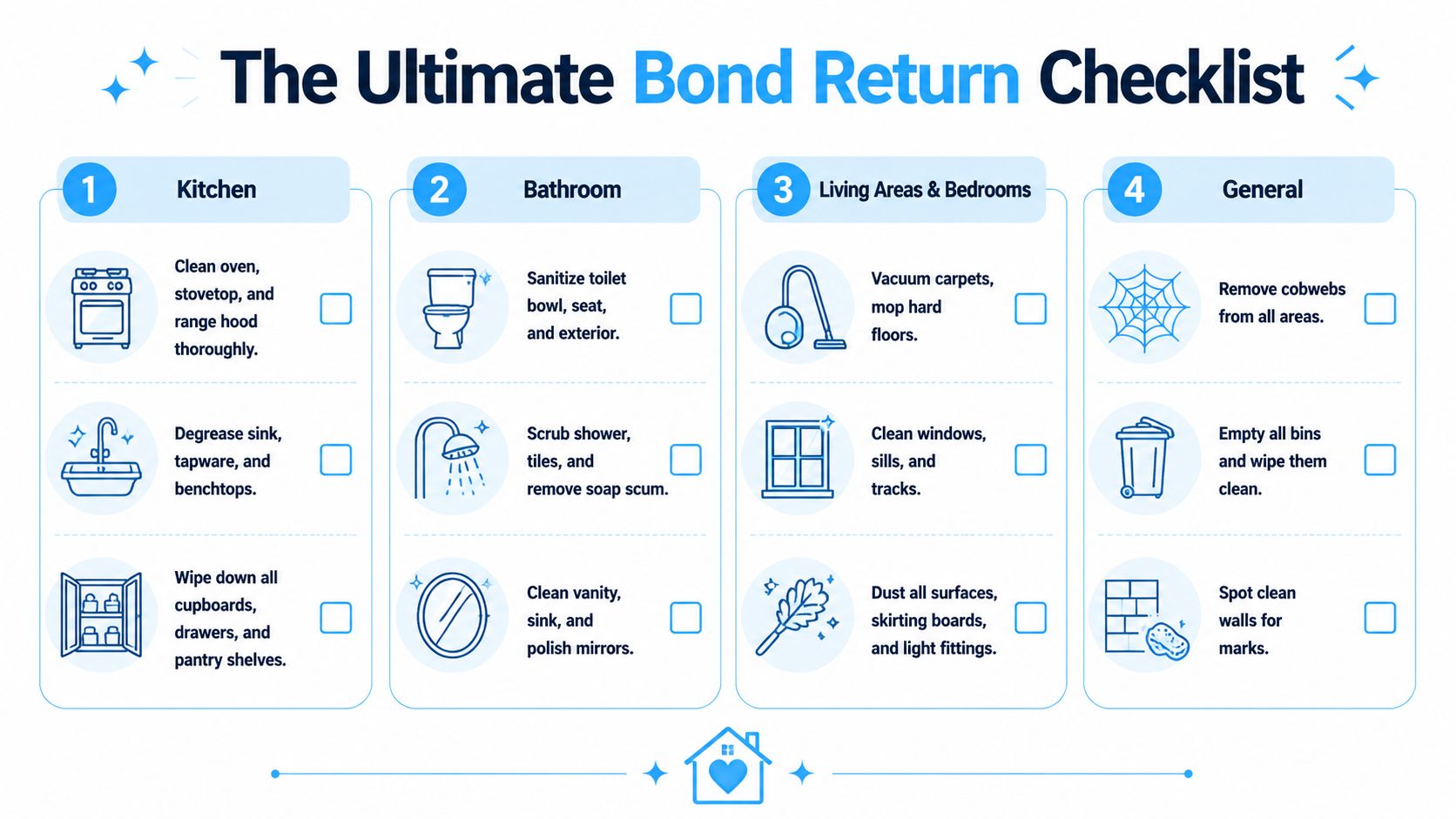
If you want a printable room-by-room version, this end of lease cleaning checklist is a practical one to work through before key handover.
Core bond return checklist
- Kitchen Clean oven, cooktop, range hood, sink, taps, benchtops, cupboards, drawers, and splashback
- Bathroom Scrub toilet, shower, bath, vanity, mirrors, screens, taps, and tiles
- Living areas Dust surfaces, wipe skirtings, clean light fittings, vacuum carpets, and mop hard floors
- Bedrooms Clean wardrobes, shelves, window sills, and floors
- General details Remove cobwebs, spot clean walls, empty bins, and wipe switches, handles, and door frames
Common questions tenants ask
What does a bond-back guarantee actually cover
Many cleaners offer a return visit if the property manager identifies missed cleaning items after inspection. The guarantee usually applies only if the property condition hasn’t changed since the clean and the reported items fall within the original agreed scope.
Do I need to be there during the clean
Not always. Many tenants arrange access by key pickup, lockbox, concierge, or agent handover. What matters most is clear access and written confirmation of the job scope.
What if the landlord or agent finds an issue
Send the cleaner the inspection notes promptly and check whether the issue is part of the quoted service. If it is, a reputable company will usually discuss a re-clean process. If it wasn’t included, you may need additional work booked.
Should I book the cheapest quote I can find
Only if the scope matches your lease requirements. A low number is useless if it excludes carpets, windows, oven detailing, or the areas your property manager will check first.
If you want a clear, itemised quote from a local team that understands Melbourne exit inspections, End Of Lease Cleaning Melbourne offers transparent pricing, flexible bookings, and practical help for tenants who want the property cleaned properly the first time.
