
You've got a mark on the carpet, a final inspection coming, and about five different tabs telling you to throw vinegar, bicarb, dish soap, and hope at it.
That's how tenants make stains worse.
Real carpet stain removal starts with diagnosis, not with a random spray bottle. Coffee doesn't behave like grease. Pet urine doesn't behave like ink. A stain that looks “almost gone” while wet can come straight back as the carpet dries if you leave residue behind or soak the backing. If you're trying to save your bond, the job isn't just lifting the mark. It's lifting it without roughing up the pile, bleaching the colour, or leaving a sticky patch that catches the light during inspection.
The good news is that a lot of stains can be improved at home if you stop, identify what you're dealing with, and use the right workflow.
Carpet Stain First Aid Your Immediate Action Plan
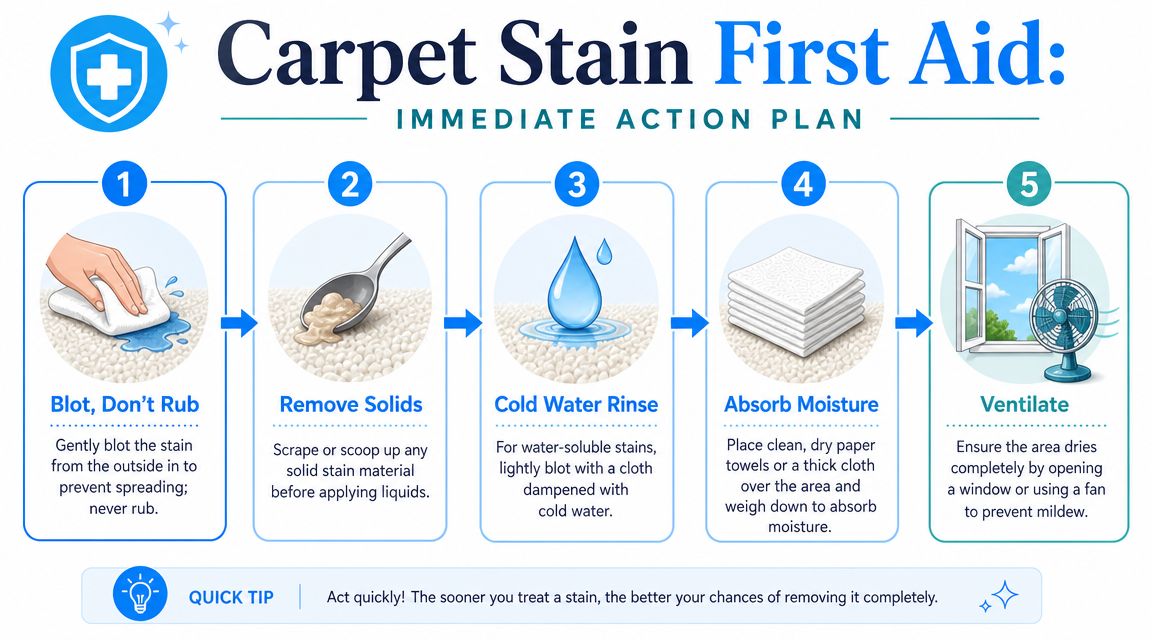
The first few minutes matter most. Not because every stain disappears instantly, but because the wrong move can lock it in.
The biggest mistake I see is panic scrubbing. Don't rub. Blot. The Carpet and Rug Institute's guidance is clear that rubbing can damage carpet fibres and push the stain deeper, while blotting helps pull liquid out. That same guidance also recommends rinsing with plain water after using cleaners, and lists 1/4 teaspoon of non-bleach liquid dishwashing detergent in 16 oz of lukewarm water as a standard starting mix for spot cleaning in the first stage of treatment (Carpet and Rug Institute stain guidance).
What to do straight away
Pick up solids first
If it's food, mud, vomit, waxy makeup, or anything chunky, scoop or scrape it up before adding moisture. A spoon works better than a knife because it's less likely to snag fibres.Blot from the outside in
Use a white cloth or plain paper towel. Press down. Lift. Move to a clean section. Repeat. Working from the edge inward helps stop the stain spreading wider.Use only a small amount of moisture
For many fresh spills, plain water on a cloth is enough for the first pass. The aim is controlled lifting, not soaking the carpet.Apply a mild detergent mix if plain water isn't enough
Use the mild dishwashing solution above. Dampen the cloth, don't flood the spot. Blot again.Rinse and dry properly
After any cleaner, go back with plain water on a clean cloth, then blot dry. Put dry towels over the area and press down to absorb more moisture. Open windows or use airflow.
Practical rule: If the carpet feels wet under your hand, you've probably used too much liquid.
What to avoid in the first hour
A lot of bond-killing mistakes happen here:
- Coloured towels can transfer dye.
- Harsh scrubbing brushes can fuzz the pile.
- Too much product leaves residue.
- Heat can set some stains.
- Random chemical mixing can create bleaching, yellowing, or sticky re-soiling.
If you do nothing else, remember this. Remove what you can, blot gently, rinse lightly, and dry thoroughly. That gives you the best chance of treating the stain properly later instead of fighting a bigger mess.
Identify Your Stain Before You Treat It
Most DIY guides jump straight to recipes. That's backwards.
Professionals start by asking what the stain is, because different soils respond to different chemistry. Guidance on stain identification points out that acidic soils, alkaline soils, synthetic dyes, and solvent-soluble stains need different approaches. It also warns that generic all-purpose fixes like vinegar or bicarb, used without diagnosis, can set the stain and make later removal much harder (stain identification guidance from Imperial Dade).
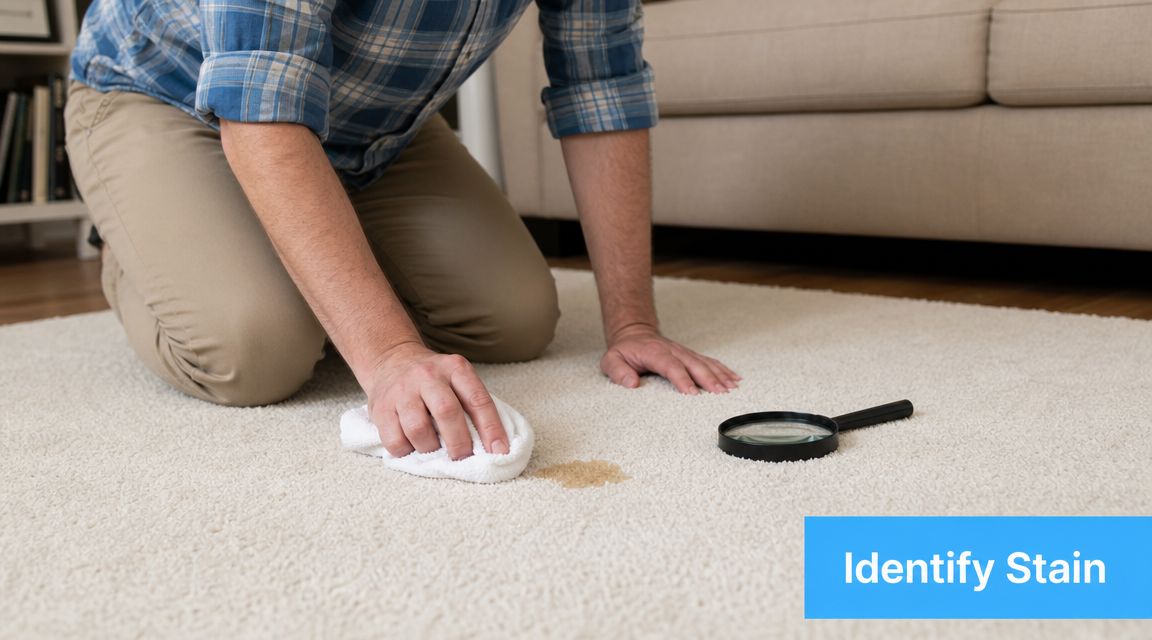
Use these clues before you touch the stain
Start with three questions.
What caused it?
If you saw the spill happen, you're ahead already. Tea, wine, milk, pet accidents, grease, ink, makeup, and mud all leave different residue.
How does it feel?
Rub a tiny amount between gloved fingers if it's safe to do so. Oily stains feel slick or waxy. Sugary drink stains often dry tacky. Protein stains can dry stiff. Mud and soil feel gritty.
How does it look and smell?
Dark rings, yellowing, and sharp odours can tell you a lot. A stain with a strong food or bodily smell usually needs a different approach from a coloured drink spill.
The categories that actually matter
Tannin stains
Think tea, coffee, red wine, some fruit drinks. These are common in rentals because they happen fast and spread quickly.
They usually look like liquid colour transfer rather than grease. They may dry with a visible edge if too much liquid was used during cleanup.
Protein stains
Think blood, milk, pet urine, vomit, food sauces with animal content.
These are the ones tenants often make worse with heat or heavy chemical guesswork. They can also leave odour even after the visible mark fades.
Oil and grease stains
Think cooking oil, butter, cosmetics, shoe polish, greasy takeaway drips.
These don't respond well to plain water alone. In fact, adding lots of water first can just spread them.
Dye and ink stains
Think cordial, marker, pen ink, some cosmetics, strong coloured cleaners.
These are risky because colourants can move deeper or bind fast. Go gently and test before escalating.
A short visual explainer can help if you're staring at an old mystery mark and drawing a blank:
Some stains fail at home not because you were too slow, but because you used the wrong method for the soil type.
A simple diagnosis shortcut
If you don't know exactly what it is, use this rough filter:
- Looks watery, coloured, not greasy. Treat it like a tannin or dye stain.
- Smells organic or came from a pet or food. Treat it like protein contamination.
- Feels slick, waxy, or makeup-like. Treat it like oil or grease.
- Has bright artificial colour. Be cautious. It may be dye-based and easy to spread.
That one habit, diagnosing before treating, is what separates careful carpet stain removal from random DIY damage.
Step-by-Step Carpet Stain Removal Workflows
Once you've identified the likely stain type, the workflow gets much simpler. The key is to stay controlled. Small amounts of product. Gentle passes. Proper rinsing. Full drying.
Common Stain Treatment Cheat Sheet
| Stain Type (Category) | Examples | Recommended First Action |
|---|---|---|
| Tannin | Coffee, tea, red wine | Blot, then use a mild detergent solution sparingly |
| Protein | Pet urine, milk, blood | Blot contamination first, use minimal moisture, avoid heat |
| Oil | Grease, makeup, food oil | Lift residue mechanically first, then use a suitable spot treatment carefully |
| Dye | Ink, cordial, strong colour spills | Blot only, test before using stronger chemistry |
| Unknown mixed stain | Old marks, traffic-area mystery spots | Diagnose by feel, smell, and appearance before choosing chemistry |
If you're also comparing extraction methods for broader carpet cleaning, this guide to steam cleaning for carpet is useful background. For spot work, though, method matters more than force.
Red wine and coffee
These usually sit in the tannin family. The first job is stopping spread.
Blot immediately with a white cloth. If the spill is fresh, work from the outer edge toward the centre. Then use a small amount of mild detergent solution on a clean cloth and blot again. Don't pour the mix straight onto the carpet.
If colour remains, rinse with plain water and blot until you stop lifting residue. A lot of people skip that rinse and leave detergent behind. That's when the patch dries crunchy or attracts dirt.
If it's set in
For stubborn stains after pre-cleaning, an oxidation step can help, but only after a compatibility test. One professional protocol recommends about 0.25 cup of 6% hydrogen peroxide per square foot, followed by full drying that can take up to 24 hours or faster with airflow. The same guidance also describes a two-pass extraction method, one pass with solution and a second pass with suction only, to reduce residue and wicking. Walking is generally allowed after roughly 4–6 hours for deep cleaning, though overnight drying is preferred (spot treatment and extraction guidance).
Pet urine
It is common for people to chase the colour and ignore the contamination.
Start by blotting as much liquid as possible. Press hard with dry white towels and keep changing them. If it's already dried, lightly dampen the area to help lift residue, then blot again. Use as little liquid as you can while still getting transfer into the towel.
The biggest mistake is soaking the patch. That pushes contamination deeper into the backing and underlay. It may smell better for an hour and worse the next day.
If the stain comes back as the carpet dries, that usually means moisture pulled residue back to the surface. The mark didn't “return” by magic. It was never fully removed.
Grease and oily food stains
Treat these as oil-based first, not as drink spills.
Lift off any surface residue with a spoon or dull edge. Blot with a dry cloth before introducing moisture. If you wet grease too early, you can spread the boundary and make it larger.
Then use a small amount of suitable spot cleaner or mild detergent solution on a cloth, not directly on the carpet. Blot, rotate to a clean part of the cloth, and repeat. Finish with a light plain-water rinse and dry thoroughly.
Ink and strong dye stains
These need patience. Scrubbing an ink spot is one of the fastest ways to turn a small mark into a shadowed patch.
Blot only. Use tiny amounts of product. Test in an inconspicuous area first. If the dye starts transferring aggressively or the carpet colour changes, stop. A partial stain is better than a bleached patch at inspection.
Old or unknown stains
These are the ones most tenants inherit from daily living and only notice when moving furniture out.
Don't start with internet folklore. Look at the texture, smell, and colour behaviour first. If it's stiff, organic-smelling, or layered, it may be mixed soil rather than a single stain. In those cases, repeated gentle cleaning and drying beats one aggressive attempt.
If one pass improves it, don't rush into stronger chemistry straight away. Let it dry fully so you can see the true result.
Homemade Cleaners vs Store-Bought Products
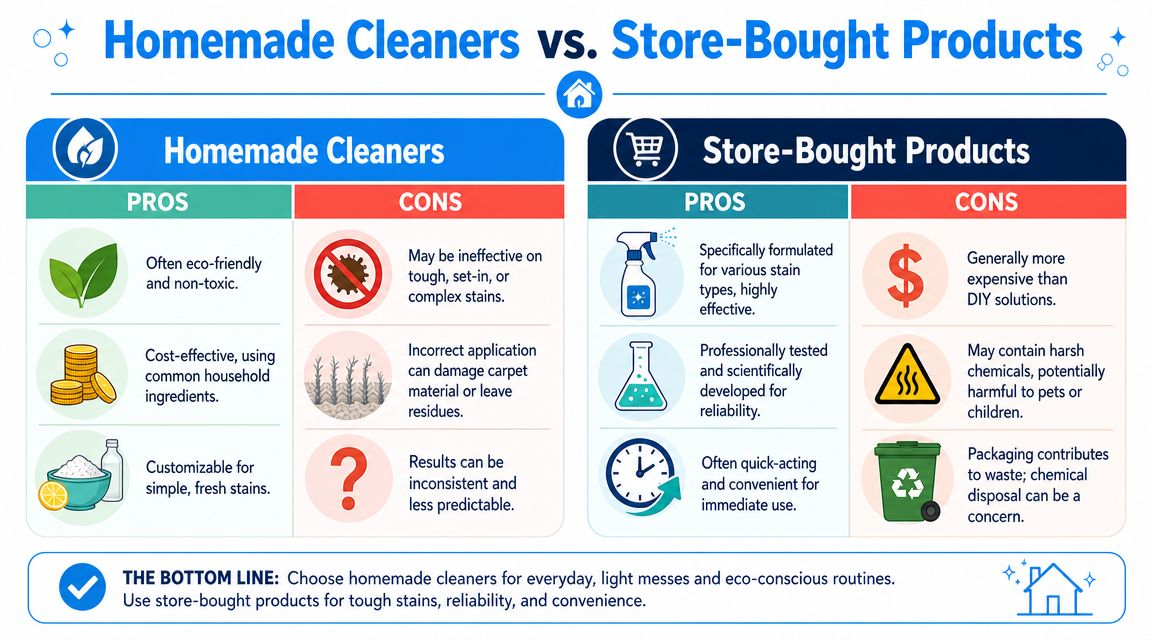
There isn't one right answer here. It depends on the stain, the carpet, and whether you need a quick tidy-up or inspection-level carpet stain removal.
Where homemade mixes make sense
A simple mild dishwashing mix is a sensible first option for many fresh, water-responsive stains. It's easy to control, usually already in the cupboard, and less likely to create a dramatic reaction than improvised combinations.
Homemade cleaning works best when the stain is:
- Fresh rather than old
- Small rather than widespread
- Clearly identified
- Treated with restraint, not flooded
The problem isn't always the ingredients. It's the way people use them. Too much liquid, too much rubbing, not enough rinsing.
Where store-bought products earn their place
Commercial spotters can be useful when you know the stain type and need something designed for it. That's especially true with oily marks, dye-heavy spills, or repeat stains that keep wicking back.
But stronger products come with trade-offs:
- Patch testing matters because some formulas can affect colour or texture.
- Residue matters because over-application can attract dirt later.
- Label directions matter because “more” doesn't mean “better”.
One rule worth keeping: whether it's homemade or bought, if you can't explain why you're using that product on that stain, stop and reassess first.
What I'd avoid
I'm cautious with one-size-fits-all pantry advice. Vinegar and bicarb get recommended for almost everything online, but broad advice isn't the same as correct advice. A method that helps one stain can set another, especially on unknown or older marks.
If the carpet is wool, delicate, older, or already discoloured, the safe move is conservative cleaning and a patch test in a hidden corner. That's not being timid. That's protecting the pile and the bond.
When Your Best Efforts Arent Enough Call a Professional
Some stains are beyond a sensible DIY attempt. That doesn't mean you failed. It means the risk has shifted.
The biggest misunderstanding about professional cleaning is that one pass fixes everything. Even hot-water extraction has limits. In an EPA study on carpets treated with perfluorocarboxylic acids, hot-water or steam cleaning removed an average of 55% of total PFCA, with results ranging from 26% to 76%. The same report says each cleaning round removes about 20% on average, so it can take 3 rounds to remove 50%, 7 rounds to remove 80%, and 10 rounds to remove 90% of the load (EPA carpet cleaning study). For tenants, that's the practical lesson. A carpet can look better after one pass and still hold embedded residue.
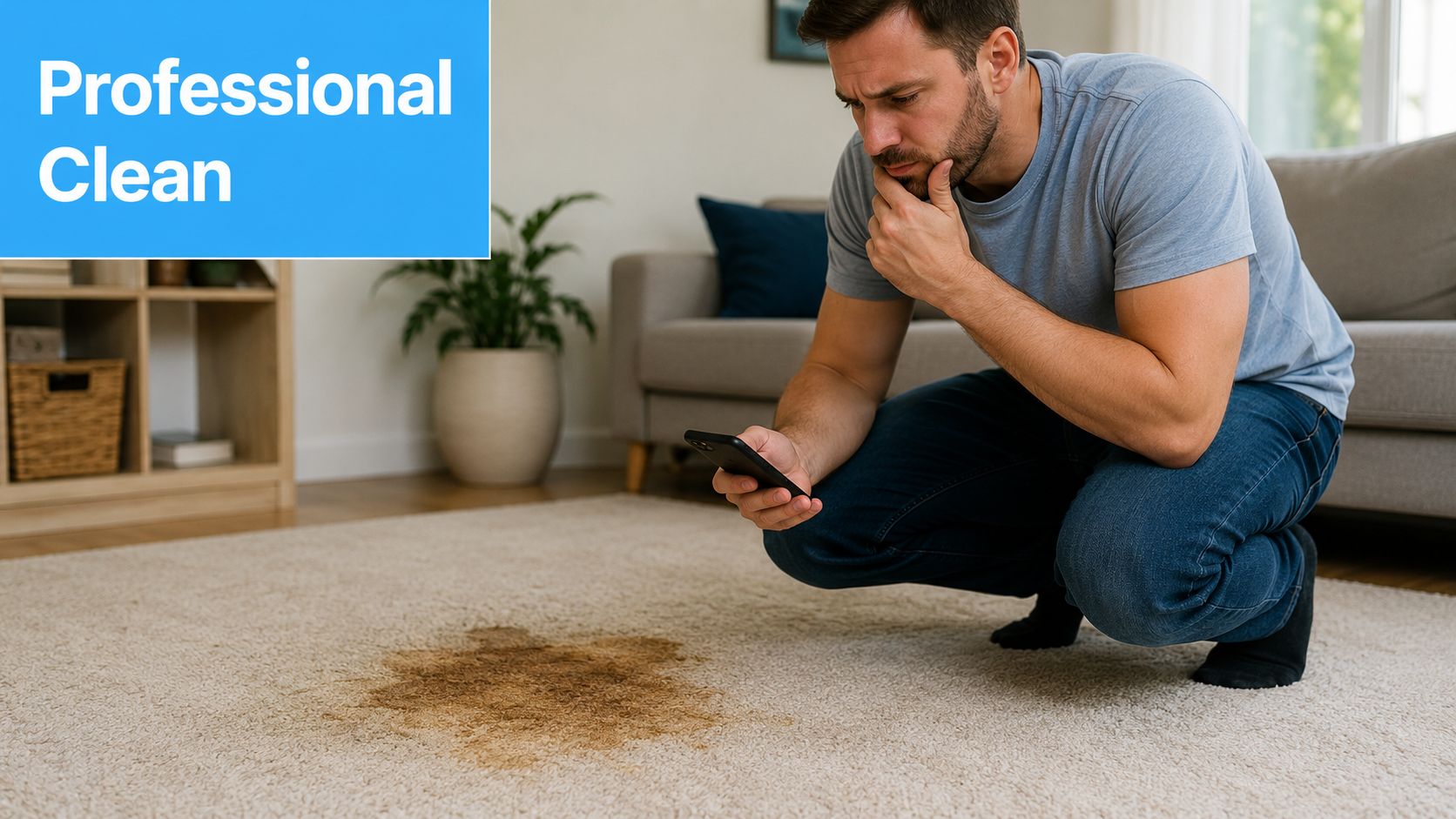
When DIY stops being the smart option
Call a professional if any of these apply:
The stain is old or has already been treated badly
Previous DIY attempts often leave residue, fibre distortion, or colour damage that needs a more careful recovery process.You don't know the carpet fibre
Unknown or delicate fibres don't forgive strong chemistry.The stain is large or repeated
Widespread drink spills, pet contamination, and recurring wick-back usually need extraction equipment and drying control.You're close to your final inspection
This is the big one. Late-stage experimenting is how a removable mark becomes a permanent issue.
Why this matters at end of lease
At vacate stage, you're not cleaning for your own comfort. You're cleaning for scrutiny. Property managers notice pile damage, lingering odour, sticky patches, and stains that reappear once dry.
That's where a service such as professional carpet cleaning near you becomes a practical option rather than a luxury. In Melbourne, End Of Lease Cleaning Melbourne is one example of a provider that includes targeted stain treatment for marked areas as part of end-of-lease carpet cleaning.
If you've got a valuable bond on the line, a professional clean can be the cheaper decision than one more failed DIY attempt.
Carpet Stain Removal FAQ
Can I use a hairdryer to speed things up
Airflow is helpful. Heat is risky. A fan and open windows are safer than blasting the spot with high heat, especially when you aren't fully sure what the stain is. Fast drying is good. Heat-setting a stain isn't.
Is bicarb soda always safe on carpet
Not automatically. The issue isn't just the ingredient. It's whether it suits the stain and whether you can remove the residue properly afterwards. On dark or textured carpet, leftover powder and patchy application can create a mark of its own.
What if I've got a wool carpet
Be more conservative than you think you need to be. Use minimal moisture, patch test first, and avoid aggressive DIY chemistry. Wool can react differently from synthetic carpet, and rough handling shows up quickly in the pile.
Why does the stain look gone when wet, then come back dry
That's usually wicking or residue. Moisture pulls dissolved soil upward as the carpet dries, or leftover cleaner holds onto dirt. Proper rinsing, controlled moisture, and full drying reduce the chance of that happening.
Should I clean every room before inspection or just the marked area
If you're preparing for handover, it helps to think beyond the obvious spot. A single clean patch in a dull room can stand out almost as much as the stain did. A broader vacate plan keeps the result consistent. This end of lease cleaning checklist is a good way to make sure the carpet isn't the only thing you've handled.
If you're dealing with a stubborn mark, a recurring pet stain, or a carpet that needs to pass a final inspection, End Of Lease Cleaning Melbourne can handle end-of-lease carpet cleaning as part of a broader bond clean. That's useful when you need the stain treated properly and the rest of the property ready for handover at the same time.
