
You're probably reading this with boxes half-packed, cleaners' sprays on the floor, and a property manager's final inspection sitting on your calendar like a threat.
That's normal. Moving out in Melbourne is stressful because the last clean isn't just about presentation. It's tied to your bond, your timeline, and whether the handover turns into a quick sign-off or a back-and-forth over deductions. A smart bond cleaning service doesn't just make a place look better. It reduces risk.
After years of managing vacate cleans, the pattern is always the same. Tenants lose time on the wrong jobs, underestimate ovens and bathrooms, and assume “pretty clean” will be enough. Often, the difference between a smooth return and an argument comes down to strategy, evidence, and knowing what agents scrutinise.
What Is a Bond Clean and Why It Matters in Victoria
A bond clean isn't just a deep clean with a nicer name. It's a move-out clean done to meet the handover standard of a rental property at the end of a tenancy.
That difference matters. A regular house clean focuses on liveability. A bond cleaning service focuses on inspection points, missed detail, and the condition a rental provider or agent will assess when you've already handed back the keys.
Why the stakes are higher in Melbourne
In Australia, the national standard bond lodgement amount is typically equivalent to 4 weeks' rent, and in Victoria the RTBA manages rental bonds, with the bond for most private rentals generally up to one month's rent under the Victorian framework, as outlined in this cleaning services business overview. That's why end-of-lease cleaning isn't a cosmetic extra. It's tied to a meaningful amount of money.
In practical terms, most tenants don't book a bond cleaning service because they love spotless skirting boards. They book it because they don't want avoidable deductions taken from a significant deposit.
Practical rule: Treat the final clean as part of your move-out paperwork. It's as important as keys, receipts, and condition photos.
What makes a bond clean different from a normal clean
A proper bond clean is more methodical. It deals with the places agents notice because they're easy to inspect and easy to dispute.
That usually includes:
- Built-up kitchen grime such as oven grease, splashback residue, cupboard crumbs, and greasy rangehood filters
- Wet-area build-up including soap scum, water marks, toilet detail, and residue around taps and screens
- Low-level detail work like skirting boards, power points, switches, tracks, and door edges
- Dust above eye level on fans, light fittings, vents, and tops of cupboards
- Glass and presentation points such as mirrors, internal windows, sills, and visible marks on walls
The mistake tenants make
The common mistake is cleaning for effort instead of cleaning for outcome. Tenants spend hours on tasks that feel productive, then miss the exact items that trigger complaints.
A landlord or property manager doesn't usually care how hard the clean felt. They care whether the oven is degreased, whether the bathroom presents well, and whether the property looks ready for the next tenancy.
That's why a bond cleaning service in Melbourne needs to be approached as a handover standard, not a weekend tidy-up.
The Ultimate Room-by-Room Bond Cleaning Checklist
Professionals don't clean randomly. We work top to bottom and dry to wet, because that stops dust and debris falling onto areas you've already finished. It's also how you keep a large move-out clean organised instead of doubling back across every room. For planning, a typical three-bedroom home may take 8 to 12 hours, depending on size and condition, as noted in this bond cleaning process guide.
Start with the highest dust points, then vertical surfaces, then detail work, then floors and wet sanitation.
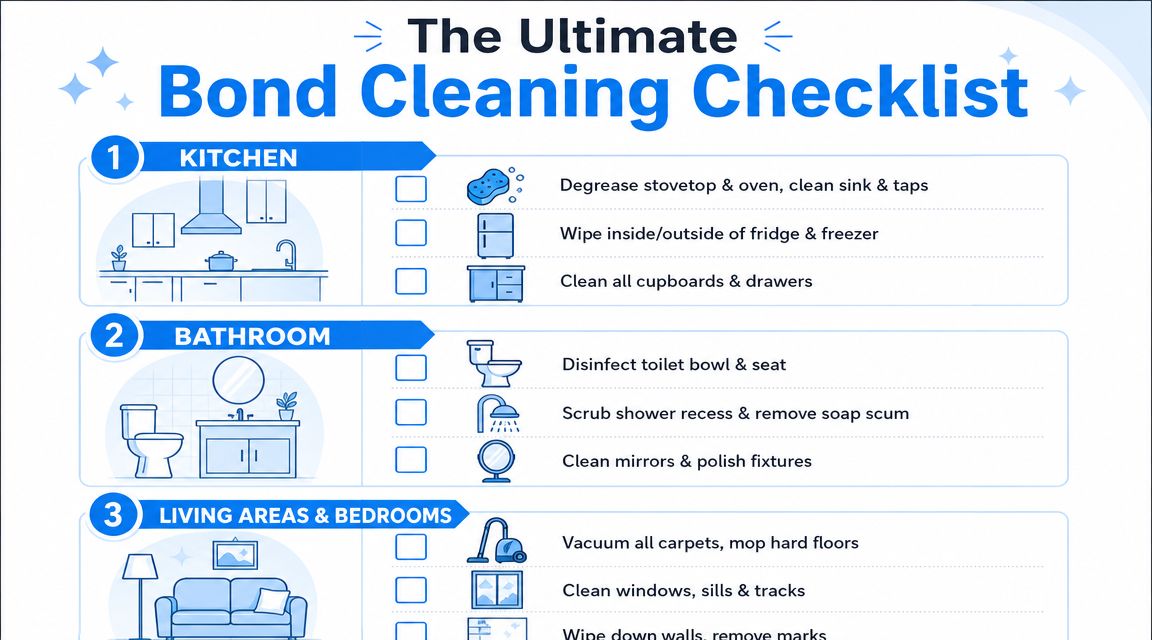
Kitchen
Here's where most bond cleans either pass cleanly or start trouble. The kitchen carries visible grease, food residue, and strong odours, so it draws attention fast.
- Oven and stovetop: Remove baked-on grease, food spill residue, racks, trays, glass, knobs, and the area around the seal. If the oven still smells burnt after cleaning, it usually isn't finished.
- Rangehood and splashback: Wipe grease film from the hood exterior, underside, and nearby tiles or wall surfaces.
- Cupboards and drawers: Clean inside and outside. Don't leave crumbs in corners or sticky residue around handles.
- Sink and taps: Descale where needed, polish the tapware, and clear food residue from the sink and drain area.
- Bench edges and joins: Wipe corners, seams, and the wall line where grease often sits.
- Fridge cavity if applicable: If the fridge is included, clean shelves, seals, drawers, and the surrounding recess.
If you only have enough energy for one room to be meticulous, make it the kitchen.
A lot of wall marks show up during move-out. If you're cleaning painted surfaces, use care so you don't swap a scuff mark for paint damage. This guide on how to clean walls without removing paint is useful when you're dealing with marked walls near dining areas, hallways, and bed heads.
Later in the clean, it helps to compare your result against a visual standard. This short video is a useful reference point for move-out detail:
Bathrooms and laundry
Bathrooms fail inspections for one reason. Tenants clean what they can see straight on, but inspectors also look for residue around edges, bases, and fittings.
Focus on these points:
- Shower recess: Glass, screen frames, tracks, tiles, grout lines, and soap scum build-up
- Toilet: Bowl, seat, hinges, exterior, base, and the floor area around it
- Vanity and basin: Drawer fronts, cupboard faces, mirror splash, taps, overflow, and pipe area below
- Exhaust fans and vents: Dust here is easy to miss and easy to spot
- Laundry sink and tapware: Mineral marks, detergent residue, and cabinet faces if present
Living areas
Living spaces usually look easy until daylight hits them. Dust on sills, marks near light switches, and dirty tracks show up quickly in an empty property.
Check these carefully:
- Light fittings and ceiling fans: Dust first, before wiping lower surfaces
- Walls, switches, and power points: Remove fingerprints and obvious marks where safe
- Windows, sills, and tracks: Tracks collect grit and dead insects. Wiping the glass but ignoring the tracks is a classic bond-clean miss.
- Doors and frames: Especially around handles, edges, and lower kick marks
- Skirting boards: These are one of the first detail checks many agents notice
Bedrooms
Bedrooms are usually simpler, but they still need full detailing once furniture is gone.
- Wardrobes: Shelves, rails, doors, tracks, handles, and floor edges
- Window areas: Glass, blinds if included, sills, and corners
- Corners and cobweb points: Behind doors, ceiling lines, and wardrobe tops
- Floor finish: Vacuum carpets thoroughly or mop hard flooring after all dusting is done
Final general checklist
Before you call the place finished, do one slow walkthrough at standing height and one at crouch height.
- Look low: Skirtings, corners, and under vanity edges
- Look reflective: Mirrors, glass, stainless steel, and taps
- Look by smell: Kitchen grease and bathroom odour can signal unfinished work
- Look by touch: Cupboard handles, shelves, and switches often feel sticky before they look dirty
That final walkthrough catches more problems than rushing through another round of random wiping.
Deciding on Your Cleaning Strategy Professional vs DIY
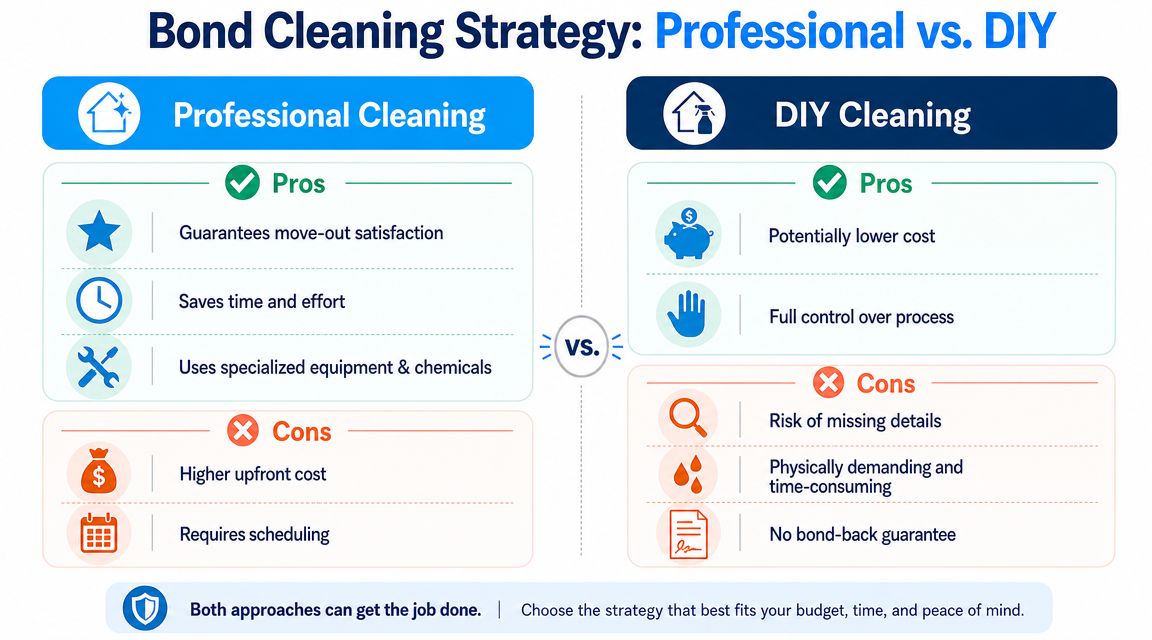
This decision usually comes down to four things. Time, physical effort, equipment, and how much risk you're willing to carry into the final inspection.
Some tenants should absolutely do it themselves. Others are better off paying for a bond cleaning service and using their own time on the move, utilities, and paperwork.
When DIY makes sense
DIY can work well if the property has been kept in good order throughout the tenancy and you have enough clear time after moving everything out.
DIY is usually the better fit when:
- The property is already well maintained: Light upkeep over the tenancy reduces the final workload dramatically.
- You have the right gear: A decent vacuum, mop system, cloths, degreaser, glass cleaner, brushes, and enough lighting matter.
- You can clean after the property is empty: Cleaning around furniture nearly always leaves missed areas.
- You're detail-oriented: Bond cleans reward patience more than speed.
When a professional is the smarter choice
A professional clean is usually worth it when the job includes heavy kitchen grime, multiple bathrooms, pet hair, stained carpets, wall marks, or a tight move-out schedule.
Here's the trade-off in plain terms:
| Option | Works well when | Main risk |
|---|---|---|
| DIY | The home is in solid condition and you have time to finish properly | You miss high-scrutiny details |
| Professional | The property is large, soiled, or time is tight | Higher upfront spend |
Book a professional when the job has hidden labour in it. Ovens, showers, tracks, and carpets are where DIY plans usually fall apart.
Carpets are often the tipping point. If the lease, condition report, or property manager expects a higher standard for carpet presentation, this overview of steam cleaning for carpet helps clarify when a basic vacuum isn't enough.
What people underestimate
Most tenants don't underestimate the easy parts. They underestimate repetition.
One bathroom might seem manageable until you factor in screen detailing, grout lines, tap polishing, toilet bases, fan covers, and floor edges. One kitchen sounds straightforward until you open the oven, pull out the racks, degrease the rangehood, and wipe every cupboard internally.
That's where a bond cleaning service earns its keep. Not by doing magical cleaning. By handling a long list of exacting tasks without losing consistency.
The timing rule that saves headaches
Book or plan the clean for after everything is out. Not mostly out. Completely out.
If removalists are still coming, if cupboards still hold odds and ends, or if someone is sleeping there one last night, the standard drops immediately. Floors get marked again, bathrooms get used again, and dust from moving settles back onto surfaces.
How to Book with End Of Lease Cleaning Melbourne
The booking part should be simple. If it isn't, that's usually a warning sign.
A good bond cleaning booking process asks the right questions up front. Property type, bedroom count, bathroom count, condition, carpet needs, and any problem zones such as an oven with heavy grease, nicotine residue, or pet hair. Clear quoting matters because vague pricing often means vague scope.
What to have ready before you enquire
You'll get a more accurate quote if you can provide:
- Property basics: Bedrooms, bathrooms, living areas, and whether it's an apartment, townhouse, or house
- Condition notes: Heavy kitchen use, mould, wall marks, pet issues, or long gaps between cleans
- Access details: Stairs, lift access, parking, key pickup, and inspection deadline
- Extras if needed: Carpet cleaning, wall spot cleaning, or internal window work
If you're comparing providers, ask what's included rather than only asking for the cheapest figure. A low quote can leave out key labour, especially in kitchens and wet areas.
What a solid booking process looks like
End Of Lease Cleaning Melbourne takes bookings online or by phone, and the useful part for tenants is the practical side of that setup. You can explain the condition of the property, confirm access, and line up related services such as carpet cleaning near you if the vacate clean needs floor work as part of the handover.
The company states it supplies its own equipment and eco-friendly products, which is helpful for tenants who don't want to source tools during a move. It's also a family-owned Melbourne operator with 20+ years of experience, according to the business information provided.
If a company can't explain what happens from quote to key return, keep looking.
Why product choice matters less than people think
Tenants often ask whether agents care about the brand of products used. Usually, they care about the final condition.
Still, lower-toxicity options can make sense in some homes. The growing preference for low-VOC and environmentally safer products is notable, especially for households with children, pets, or allergies, as discussed in this video on eco-friendly cleaning considerations. In practice, safer products are a plus, but they don't replace the need for good technique and a documented result.
How to avoid booking mistakes
A few habits prevent the most common problems:
- Book after removalists: Don't schedule the clean while the property is still being emptied.
- Send photos if the condition is rough: That helps avoid underquoting and rushed expectations.
- Confirm the scope in writing: Kitchen internals, bathrooms, windows, and carpets should be clear.
- Allow access time: Last-minute key delays can throw off the whole appointment.
Navigating Landlord Requirements and the Final Inspection
The inspection is where the clean becomes a result. A property can feel clean to you and still trigger a complaint if obvious handover points are missed.
In Victoria, the practical standard isn't perfection. It's whether the property is returned in an acceptable condition for handover, allowing for fair wear and tear. That phrase matters because wear from normal use isn't the same as neglect, damage, or avoidable grime.

What agents usually look at first
Most inspections aren't forensic in every room from the first second. They start with obvious visual checks.
That usually means:
- Kitchen presentation: Oven, stovetop, sink, splashback, cupboards
- Bathroom standard: Shower glass, toilet, vanity, mirrors, floor edges
- Floor finish: Visible dust, hair, stains, and dirty corners
- Windows and tracks: Especially in bright rooms
- Wall and joinery marks: Switch plates, doors, frames, and scuffed sections
Fair wear and tear versus cleaning issues
A worn patch in carpet from normal use isn't the same as loose debris, hair, or staining caused during the tenancy. Faded paint over time isn't the same as greasy handprints or obvious marks around switches.
That's why it helps to separate three things in your own mind before inspection:
| Item | Usually cleaning | Usually wear and tear | Usually damage |
|---|---|---|---|
| Soap scum on glass | Yes | No | No |
| Light scuffs from normal use | Sometimes | Often | No |
| Broken fitting or chipped surface | No | No | Often |
Your pre-inspection protection plan
Do this before handing over the property:
- Finish cleaning with the property empty: No bags, no food, no bedding left behind.
- Take date-stamped photos and video: Wide shots first, then close-ups of risk areas.
- Photograph high-scrutiny items: Oven interior, shower screen, toilet, vanity, sink, windows, tracks, carpets, walls.
- Keep invoices and messages: If you hired cleaners or carpet services, save the paperwork.
- Do a final smell check: Stale odour, pet smell, and cooking grease can undo an otherwise good visual result.
The clean matters. Your evidence matters just as much.
What works during the actual handover
Be calm and specific. If an agent raises an issue, ask exactly what area they mean and compare it to your photos.
Don't argue in general terms like “the place was definitely clean.” Point to the oven, the bathroom, the tracks, or the wall area being discussed. Specific evidence carries more weight than broad assurances.
Handling Bond Disputes and Protecting Your Rights
If a landlord or agent wants to deduct from the bond for cleaning, don't assume the claim is automatically valid.
In Victoria, a rental provider can only claim bond money for legitimate costs such as damage beyond fair wear and tear or reasonable cleaning, and if the parties can't agree, disputes are resolved through VCAT, as explained in this Victorian bond-back guide. That's the key point. A claim still needs to be justified.
What to do first
Start with a written response. Keep it short, factual, and attached to evidence.
Include:
- Your move-out photos and videos: Show the actual condition at handover.
- Any cleaning invoice: If you paid for a bond cleaning service, include the receipt and scope.
- Relevant condition records: Entry photos or condition report notes if they help show what changed and what didn't.
- A request for detail: Ask which exact area is said to require cleaning and what cost is being claimed.
What usually weakens a cleaning claim
Many disputes turn on whether the claim is specific and reasonable.
A broad statement like “property not cleaned properly” is far weaker than a documented issue tied to a particular room and a clear cost. If the complaint is vague, ask for the evidence and the itemised basis for the deduction.
VCAT won't care who sounded more confident. It will care who kept better records.
When to stand firm
Stand firm when the issue looks like normal wear, when the complaint isn't backed by evidence, or when the claimed cleaning cost doesn't match the actual condition.
That doesn't mean refusing every concern. If there's a genuine missed item and a practical way to resolve it, a quick fix can be easier than a prolonged dispute. But if the deduction is inflated or unsupported, you're entitled to challenge it.
Keep your position organised
Use one folder, digital or printed, with your photos, lease documents, invoices, messages, and inspection notes. That keeps the discussion anchored to facts instead of stress.
A bond dispute feels personal because it lands right at the end of a move. Still, the strongest response is a calm one with clean records, clear dates, and room-by-room evidence.
If you'd rather avoid doing the final clean yourself, End Of Lease Cleaning Melbourne offers end-of-lease and bond cleaning across Melbourne and greater Victoria. You can book online or by phone, confirm the scope before the appointment, and arrange related services if your handover needs more than a basic vacate clean.
