
In Melbourne, end of lease cleaning usually starts around $250 to $400 for a 1 to 3 bedroom apartment, while a larger 3 to 4 bedroom house often lands around $400 to $600+, depending on condition and extras. That's the honest starting point, not the final number, because ovens, carpets, mould, windows, bathrooms, and the standard expected at final inspection can move the quote up fast.
If you are reading this while surrounded by half-packed boxes, old lease papers, and a genuine fear of losing part of your bond, you are not alone. Most tenants do not struggle with the concept of cleaning. They struggle with the gap between a normal weekly clean and the level of detail a vacate inspection demands.
The question behind end of lease cleaning how much isn't just about price. It's really about risk. Spend too little and you can end up paying more through deductions. Spend blindly and you can overpay for extras that should've been explained upfront.
Your Guide to End of Lease Cleaning Costs in Melbourne
It is usually 9 pm, the removalist is booked for tomorrow, and the place looks clean until you notice the oven glass, the shower grout, the tracks in the windows, and the dust line behind the fridge. That is the point where many Melbourne tenants start searching end of lease cleaning how much.
A useful starting budget is one thing. Protecting the bond is the primary objective. In Melbourne, the standard that matters at final inspection is not your usual weekly clean. It is whether the property is returned in a condition that meets the lease, the entry condition report, and the level of detail property managers commonly assess against REIV-style expectations for presentation and cleanliness.
That is why two tenants in similar 2-bedroom properties can get very different quotes. One flat is empty, well-kept, and only needs a proper top-to-bottom vacate clean. The other has grease in the rangehood, soap scum built up in the shower, stains in the carpet, and fingerprints on every painted door. Same size. Different labour, different risk, different price.
Practical rule: Price the condition first, then the bedroom count.
A simple fact of vacate work is that empty properties show everything. Marks hidden by furniture suddenly stand out. So do cobwebs on cornices, dust on skirting boards, grime in window tracks, residue inside cupboards, and splash marks on light switches.
This is also where cheap quotes catch tenants out. A low base price can exclude the oven, steam cleaning, wall spot cleaning, exterior glass, mould treatment, or a return visit if the agent raises issues. If the quote does not spell out what is included room by room, it is not clear enough.
The safest approach is to judge cost against bond risk, not just the headline number. A proper vacate clean in Melbourne should line up with what the agent will inspect, especially in kitchens, bathrooms, floors, internal glass, and built-in storage. If a cleaner cannot explain that standard clearly, keep looking.
Melbourne End of Lease Cleaning Price Guide for 2026
Tenants searching end of lease cleaning how much usually need a realistic budget before they hand back the keys. In Melbourne, the useful question is not just “what does a cleaner charge?” It is “what will it cost to get the property to the standard a property manager will inspect against, and what extras could push the invoice up?”
That difference matters. A quote can look reasonable at first, then climb once the cleaner adds the oven, wall marks, mould treatment, balcony glass, or carpet steam cleaning for a rental inspection.
What Melbourne tenants should budget for
As noted earlier, base pricing by property size only gets you into the ballpark. The final figure often shifts because Melbourne vacate cleans are usually built from two parts. A general whole-property clean, plus inspection-sensitive add-ons.
A practical budget guide for 2026 looks like this:
| Service Type | Typical Budget Range (AUD) |
|---|---|
| Base end of lease clean for a small apartment | Mid hundreds |
| Base end of lease clean for a standard family rental | Mid to high hundreds |
| Oven cleaning | Extra charge, often quoted separately |
| Carpet steam cleaning | Usually priced per room or area |
| Tile and grout detail cleaning | Usually priced per bathroom or wet area |
| Mould treatment | Extra charge depending on severity |
| Pet odour or stain treatment | Extra charge after inspection |
That format is closer to how real quotes are built in Melbourne. It also matches how disputes happen. The tenant assumes “full end of lease clean” includes everything. The cleaner has only allowed for standard dusting, vacuuming, mopping, bathroom wipe-downs, and basic kitchen detailing.
Why one quote can be far cheaper than another
The cheaper quote is often missing the parts agents focus on first.
In Melbourne exits, the usual problem areas are predictable. Oven interiors, greasy rangehood filters, shower screens, bathroom grout lines, inside cupboards, window tracks, skirting boards, and marks around switches and doors. If those items are not clearly listed, ask before booking.
A low quote is not automatically bad. Sometimes the property really is tidy and only needs a straightforward vacate clean. But I have seen plenty of tenants accept a bargain price, then get hit with add-ons on the day because the oven was “extra,” the carpet was “extra,” and the mould in the ensuite was “specialised treatment.”
Price the job by bond risk
The better way to budget is to separate the job into two buckets:
- Base clean for the whole property
- Add-ons that affect bond return, such as oven cleaning, carpet steam cleaning, wall spot cleaning, mould removal, and heavy grease work
That approach is closer to REIV-style inspection expectations than a simple bedroom-count quote. Property managers do not care whether the cleaner called it a standard package or a premium package. They care whether the kitchen is degreased, the bathrooms present cleanly, the floors are finished properly, and the property matches the condition required at handover.
If your quote does not show those details clearly, treat the advertised price as a starting figure, not the total cost.
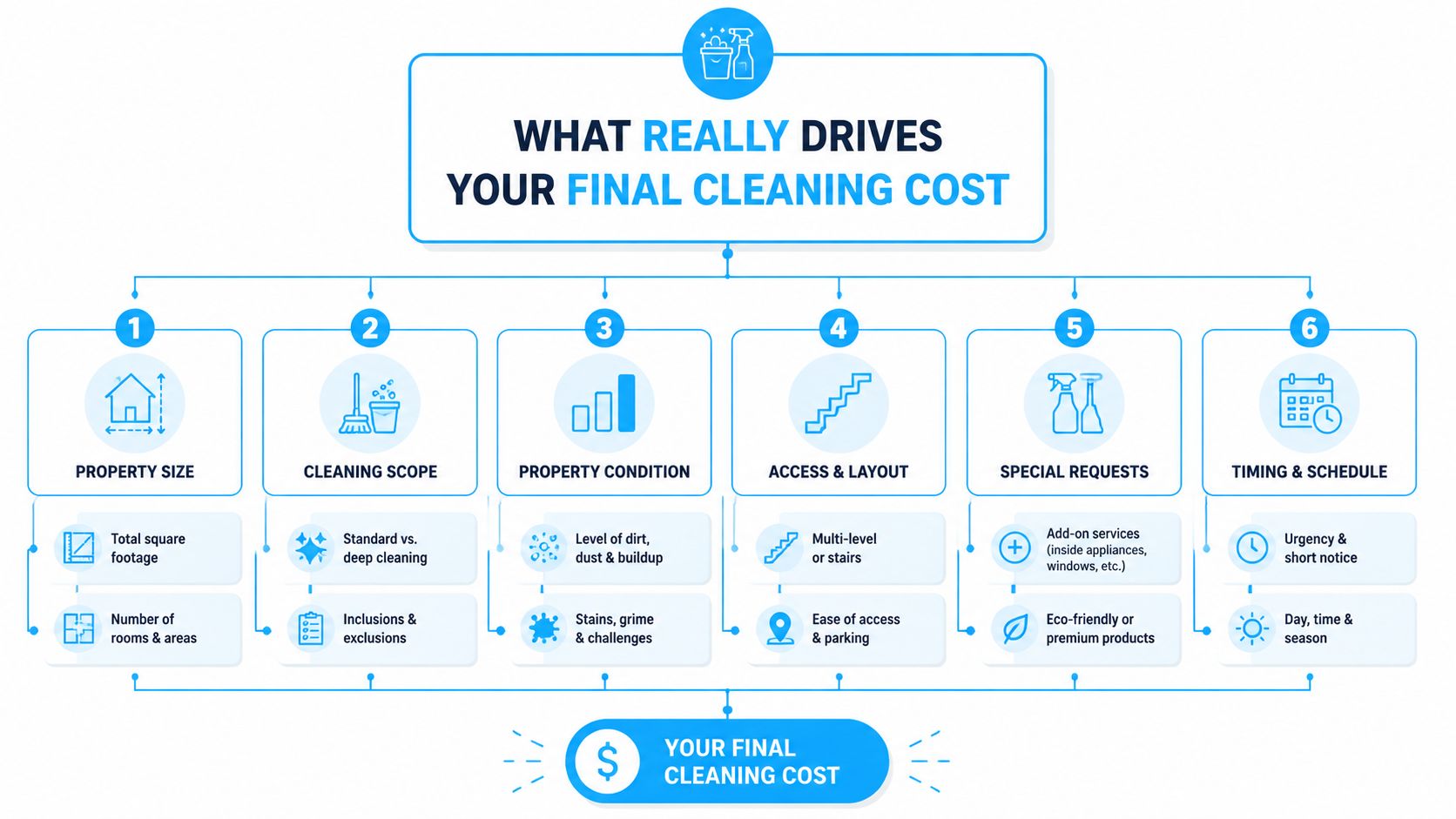
What Really Drives Your Final Cleaning Cost
The final price doesn't come from one thing. It comes from a stack of labour-heavy details that either make the job routine or turn it into a rescue mission.
Size matters, but not in the way tenants think
Most tenants assume cleaners price by bedroom count alone. In practice, cleaners price by how many surfaces, wet areas, fittings, and problem zones need attention.
A compact one-bedroom with one tidy bathroom can be straightforward. A two-bedroom apartment with two bathrooms, balcony glass, heavy kitchen grease, and built-in wardrobes can take far more effort. That's why a small property doesn't always mean a cheap invoice.
There's also a simple reality in vacate work. Empty properties show everything. Dust on ledges, marks on walls, crumbs in cupboard corners, soap residue on shower glass, and grime in tracks stand out more once the furniture is gone.
Condition changes the job more than tenants expect
Condition is usually the biggest quote mover after size. A well-kept home needs detailed finishing. A neglected home needs recovery work.
Consider it this way:
- Standard service means dusting, vacuuming, mopping, bathrooms, kitchen detailing, internal glass, cupboards, and a final presentation clean.
- Recovery service means caked grease, mould spotting, stained grout, pet smells, scale build-up, neglected ovens, and grime that needs repeated treatment.
That difference is why one vacate clean feels manageable and another burns through time. Cleaners aren't charging extra for fun. They're charging for scrubbing, dwell time, repeat passes, specialised products, and the physical work of bringing surfaces back to inspection standard.
Add-ons are where quote surprises usually happen
The biggest pricing shock often comes from extras that tenants assumed were included. Carpet work is a common one. If the carpets need steam cleaning, that can materially change the total. If you're trying to judge whether that add-on is worthwhile, this guide to steam cleaning for carpet is useful for understanding when it matters most.
Other common quote movers include:
- Bathrooms with mould or stained grout because those need focused treatment, not a quick wipe
- Ovens and rangehoods because grease removal is slow and messy
- Pet-related issues because odour treatment is different from general cleaning
- Windows, tracks, and frames because agents often check them closely
- Laundry and utility areas because they collect dust, lint, and neglected residue
If a quote sounds cheap, ask one direct question. “Does this include the oven, window tracks, skirting boards, cupboard interiors, and any re-clean if the agent raises issues?”
Access and timing still affect the job
Even when the property itself is reasonable, the booking conditions matter. Tight key windows, limited parking, no lift access, or a same-day handover can complicate a clean. Good operators can still do the work, but rushed logistics usually create pressure somewhere.
The most reliable quotes come from clear photos, an honest description of the condition, and a tenant who says upfront what the agent is likely to inspect closely.
The Professional End of Lease Cleaning Checklist
A proper bond clean is detailed because inspections are detailed. The difference between “clean enough for everyday living” and “clean enough for handover” sits in the small things.
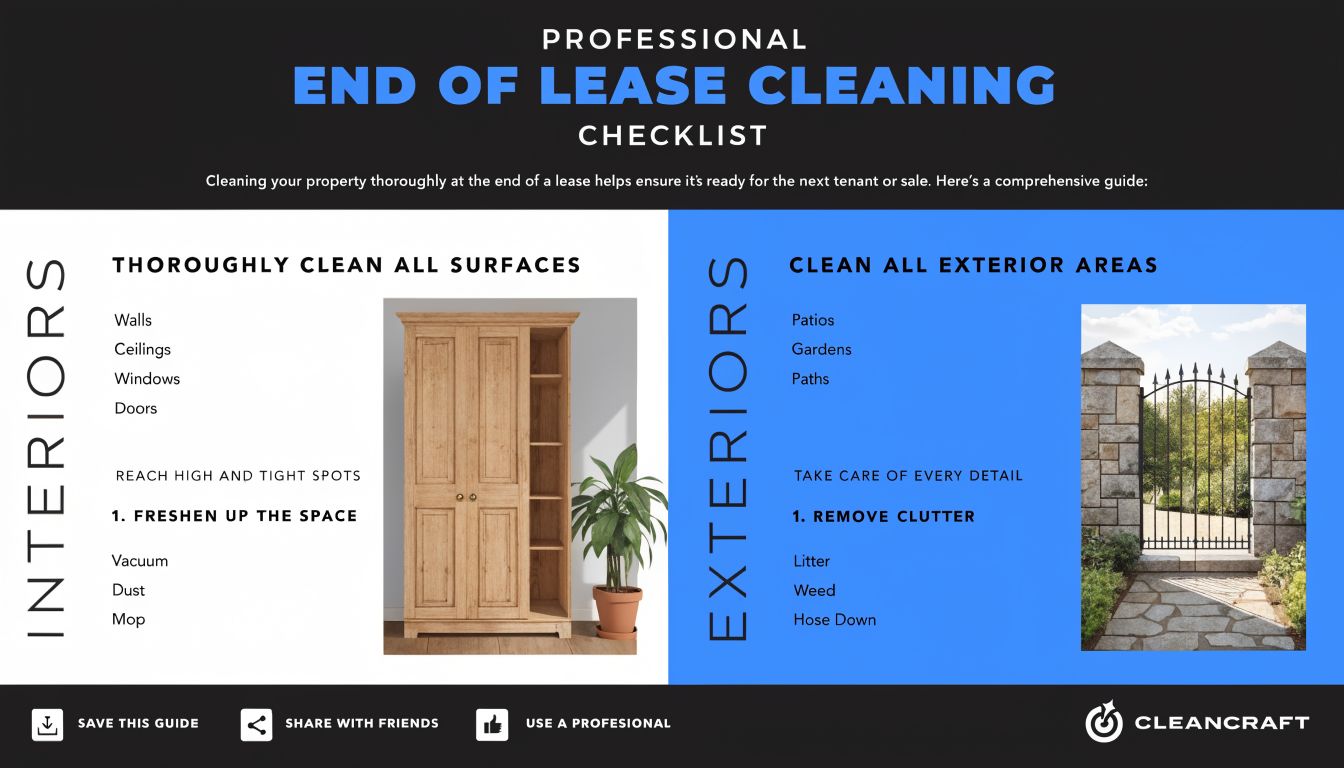
In Victoria, cleaning disputes often come back to whether the property meets professional standards, with bond claims for cleaning issues averaging $200 to $800 according to this discussion of bond deductions and professional standard cleans. That's why checklists matter. They stop obvious misses from becoming expensive arguments.
Kitchen details that get checked
The kitchen is where many DIY cleans fall apart. It may look fine at a glance, but inspection-grade cleaning means going inside and around everything.
A professional checklist usually includes:
- Cupboards and drawers wiped inside and out, with crumbs, grease film, and shelf residue removed
- Benches and splashbacks cleaned thoroughly, especially around edges and joins
- Sink and taps polished and cleared of build-up
- Stovetop and burners degreased properly
- Rangehood exterior and filters cleaned
- Oven interior addressed if included in the quote
- Switches, handles, and kickboards wiped down
The common misses aren't dramatic. They're the tray under the grill, the greasy lip above the splashback, the filter mesh, and the handle grime that only shows in bright light.
Bathrooms need more than a surface clean
Bathrooms decide a lot of inspections because they reveal neglect quickly. Soap scum, mould, grout staining, water marks, and residue around fittings all signal poor maintenance even when the room smells clean.
Professionals generally focus on:
- Shower glass and screens
- Tiles and grout
- Toilets, vanity, basin, and bath
- Mirrors and chrome fittings
- Cabinets and drawers
- Exhaust covers and vents where accessible
- Floors, edges, and corners
A bathroom doesn't fail because one tile is imperfect. It fails when the room still shows visible build-up in the places agents expect to be spotless.
Most vacate complaints come from eye-level and hand-level surfaces. Glass, taps, handles, cupboard fronts, mirrors, and switch plates draw attention fast.
Living areas, bedrooms, and the forgotten edges
The rest of the property tends to be less filthy but more deceptive. Empty rooms expose dust lines, wall marks, fingerprints, and edge work that furniture used to hide.
The standard professional walk-through usually covers:
- Floors vacuumed and mopped
- Skirting boards wiped
- Wardrobes and shelves cleaned inside
- Window sills, tracks, and accessible internal glass
- Doors, door frames, and handles
- Light switches and power points
- Cobwebs and high dusting where accessible
If you want a fuller room-by-room reference, this practical end of lease cleaning checklist is worth keeping beside you while you compare quotes or inspect the job yourself.
Outdoor and utility spaces still count
Balconies, laundries, garages, and entryways often get less attention from tenants and more attention from agents than expected. Dirt in tracks, lint around the trough, dust in corners, and cobwebs near entry points can all work against an otherwise solid clean.
A good vacate clean doesn't chase perfection. It targets the exact details that trigger avoidable bond issues.
DIY vs Professional Cleaning A Realistic Breakdown
A common Melbourne handover goes like this. The truck is booked, keys are due back tomorrow, the place looks almost clean, and then the problem areas show up once the rooms are empty. Oven trays still greasy. Shower glass still cloudy. Dust sitting in window tracks. That is where DIY starts to get expensive.
The question is not “Can you clean?” It is “Can you clean to the standard your agent will inspect against, within the time you have?” In Melbourne, that usually means a practical REIV-style outcome. Clean enough that visible grime, residue, dust, stains, and neglected detail work do not give the property manager a reason to claim the property was returned below expected condition.
The side-by-side trade-off
| Decision factor | DIY clean | Professional clean |
|---|---|---|
| Upfront cash outlay | Lower if you already own products and equipment | Higher at booking |
| Time required | Often a full day or more once the property is empty | Usually limited to access, inspection notes, and payment |
| Standard of finish | Depends entirely on your skill and energy | More consistent on ovens, bathrooms, glass, and edges |
| Risk of bond issues | Higher if detail work is missed | Lower if the scope matches the lease requirements |
| Hidden extras | Product costs, rubbish removal, equipment hire, fatigue | Add-ons can apply for carpets, walls, mould, or heavy build-up |
DIY can save money. It can also create a false sense of savings if you need to buy chemicals, scrapers, microfibre cloths, a decent vacuum, or hire a steam cleaner at the last minute.
Where DIY usually goes wrong
Tenants rarely fail on the broad stuff. Floors get vacuumed. Benches get wiped. Bins get emptied.
They fail on the inspection points agents notice fast:
- Oven interiors and trays
- Shower screens, grout lines, and soap scum
- Cupboard tops and inside drawers
- Window tracks and sills
- Skirting boards and door frames
- Grease around rangehood filters and splashbacks
- Marks around switches, handles, and light touchpoints
That is the trade-off in plain terms. DIY works if you are thorough, methodical, and cleaning after the property is fully empty. It starts to fall apart when you are doing it tired, in poor light, or with half your supplies already packed.
Professional cleaning pays off in specific situations
Professional help makes the most sense when the job has any technical or high-risk element. Mould is a good example. A quick wipe can make it look better for a day, but visible regrowth or staining can still trigger inspection issues. If that is part of the job, get clear on whether the cleaner is handling surface cleaning only or proper mould remediation in Melbourne.
It is also usually worth paying for a vacate clean when:
- You are under a tight key-return deadline
- The property has not had a proper deep clean in years
- You had pets, cooking grease, or smoker residue
- The agent is known for detailed exit reports
- You are moving interstate or juggling settlement dates
- You know detail cleaning is not your strong point
A good professional clean does not guarantee the bond by itself. Damage, unpaid rent, and lease breaches are separate issues. But if cleaning is the weak point, getting it done properly removes one of the most common reasons money gets withheld.
Ultimately, the decision isn't only financial
Vacate cleaning has a labour cost and a mental cost. Tenants usually feel the second one more. After packing, lifting, paperwork, and moving logistics, attention drops. That is when easy-to-miss problems stay behind and show up on the final report.
DIY is a reasonable option for a small, well-kept property with light wear and enough time to do the job properly. Professional cleaning is usually the safer option for older properties, stricter agencies, and any tenancy with built-up grime. If losing part of the bond would hurt more than paying for the clean, that is usually the clearest answer.
How to Secure an Accurate Quote and Protect Your Bond
The fastest way to get a bad quote is to ask for one with almost no information. “How much for a 2-bedroom in Melbourne?” won't get you a reliable answer. It gets you a starting figure, not a protected outcome.
What to send before asking for a quote
If you want a quote that holds up, send photos and specific details. The cleaner needs to see the work, not just the floor plan.
Send these:
- Property type and bedroom count so the cleaner knows the basic size
- Photos of the kitchen including oven, stovetop, splashback, and sink area
- Photos of each bathroom especially shower glass, grout, and vanity
- Flooring details so carpeted rooms and hard floors are obvious
- Any trouble spots like mould, pet odour, marked walls, or built-up grease
- Your deadline including inspection date and key-return timing
- Any lease requirements such as carpet cleaning or special inclusions
The cleaner can then tell you whether the quote is fixed, conditional, or likely to change if the actual condition is worse than shown.
What should appear in the quote
A proper quote should be itemised enough that you can tell what you're paying for. If the oven, window frames, or detailed bathroom work aren't named, don't assume they're included.
One issue in the Australian market is hidden cost packaging. As noted in this article discussing bond-back guarantees and itemised cleaning quotes, many quotes hide essentials like oven cleaning or window frames, and tenants are better protected when the quote clearly includes a bond-back guarantee with a commitment to re-clean failed inspection points for free.
That matters because “full end of lease clean” can mean very different things from one provider to another.
Red flags that should make you pause
Watch for quotes that are vague, unusually cheap, or resistant to detail. A good operator should be comfortable naming inclusions and exclusions.
Be cautious if you see:
- Cash-only pressure with no written confirmation
- No clear item list for kitchen, bathrooms, windows, and floors
- No mention of re-cleans if the agent flags cleaning issues
- No interest in property condition before pricing
- Reluctance to discuss mould or heavy problem areas
If mould is one of the issues affecting your quote, this guide on mould remediation in Melbourne helps clarify why it often sits outside a standard vacate clean.
The safest quote isn't the cheapest one. It's the one that tells you exactly what the cleaner will do, what they won't do, and what happens if the inspection raises a cleaning issue.
Get everything in writing. That alone prevents a lot of moving-week confusion.
Frequently Asked Questions
Can an agent force me to use their preferred cleaner
Usually, the actual issue isn't who cleans. It's whether the property is returned to the required standard. If you hire your own cleaner or do it yourself, the result still has to satisfy the inspection standard expected at handover.
I'm a landlord. Should I organise a vacate clean between tenants
If the property needs presentation work before the next renter moves in, organising a proper clean protects the handover condition and reduces disputes about what was left behind versus what happened after possession changed. The cleaner should be briefed clearly on any problem zones, especially kitchens, bathrooms, and flooring.
I'm a property manager. What helps the vacate process run smoothly
Clear checklists, written cleaning expectations, and early identification of likely fail points save everyone time. Photos, itemised communication, and realistic scheduling matter more than broad instructions like “please clean thoroughly.”
If you want a quote from a team that understands Melbourne vacate standards, End Of Lease Cleaning Melbourne offers transparent, itemised end of lease cleaning across Melbourne and greater Victoria. Their family-owned team handles bond cleans, ovens, bathrooms, windows, skirting boards, carpets, and other moving-day details with clear communication and flexible booking, so you can hand the keys back with less stress.
