
It's 6:30 pm, the removalists have gone, the fridge is defrosting into a towel, and the agent has already reminded you that the property needs to be returned in clean condition. Then the quotes start coming in, and the gap between them makes no sense.
In Melbourne, bond cleaning prices can vary widely for the same home on paper. In practice, that usually comes down to what the cleaner has included, what they have left out, and what they expect to charge once they see the job properly. After 20 years quoting end-of-lease cleans, I can say this aspect often catches tenants out. The cheapest number is often just the thinnest quote.
A bond clean is priced on the actual job, not just the bedroom count. A tidy two-bedroom unit with hard floors, clear access, and a well-kept oven can be straightforward. The same layout with carpet shampooing, built-up grease, mould in the shower, pet hair, balcony glass, and poor parking is a different quote because it takes more labour, more equipment, and more time on-site.
That's why the useful question is not only “how much does bond cleaning cost?” It's what the quote covers, what it excludes, and which extra charges could appear later.
Get that part clear before you book, and the price starts to make sense.
Your Guide to Melbourne Bond Cleaning Costs
You can get three quotes for the same Melbourne rental and still have no clear idea what you will pay on the day. One cleaner has included the oven but not the windows. Another has allowed for carpet steam cleaning only if the agent insists on it later. A third has given a low base price, then adds surcharges for heavy grease, pet hair, or poor access once the team arrives.
That is why the first job is to read the scope, not chase the lowest number.
Bedroom count helps, but it is a weak quoting tool on its own. A well-kept two-bedroom apartment can be faster than a neglected one-bedroom with mould in the bathroom, grease around the cooktop, stained carpet, and no lift access. In real bond cleaning work, price follows labour time, equipment needed, and the risk of a return visit if the agent picks up missed items.
The part tenants need to pin down early is simple. What is included, what is excluded, and what conditions change the final price. Get those three points in writing and most of the confusion disappears.
A usable quote should answer questions like these:
- Does the price include the oven, rangehood, and inside cupboards?
- Are internal windows and tracks included?
- Is carpet steam cleaning part of the quote or a separate line item?
- Will balconies, garages, storage cages, or laundries be cleaned?
- Is wall spot cleaning included, and if so, to what extent?
- Are there extra charges for heavy build-up, mould, pet hair, or furnished properties?
- Does the price include a bond return clean or just a general end-of-lease clean?
One clear quote beats three vague ones.
If a cleaner cannot tell you exactly what the price covers, the number is not firm yet. That does not always mean the business is being difficult. Sometimes they are protecting themselves from underquoting a job they have not properly seen. But from a tenant's side, uncertainty is still a cost risk.
The practical way to stay in control is to send accurate details upfront. Include clear photos of the kitchen, bathrooms, floors, any problem areas, and note anything the agent has specifically asked for. That usually gets you closer to a realistic quote than a quick phone estimate based only on bedrooms and bathrooms.
Melbourne Bond Cleaning Prices A Detailed Breakdown
Two tenants can both say, “I need a bond clean for a two-bedroom in Melbourne,” and still receive very different quotes. One property is vacant, fairly tidy, and has one bathroom. The other has pet hair in the carpets, grease built up in the oven, a balcony, and hard water staining in two bathrooms. The bedroom count is the same. The labour is not.
That is why the table below is useful as a starting point, not a decision point.
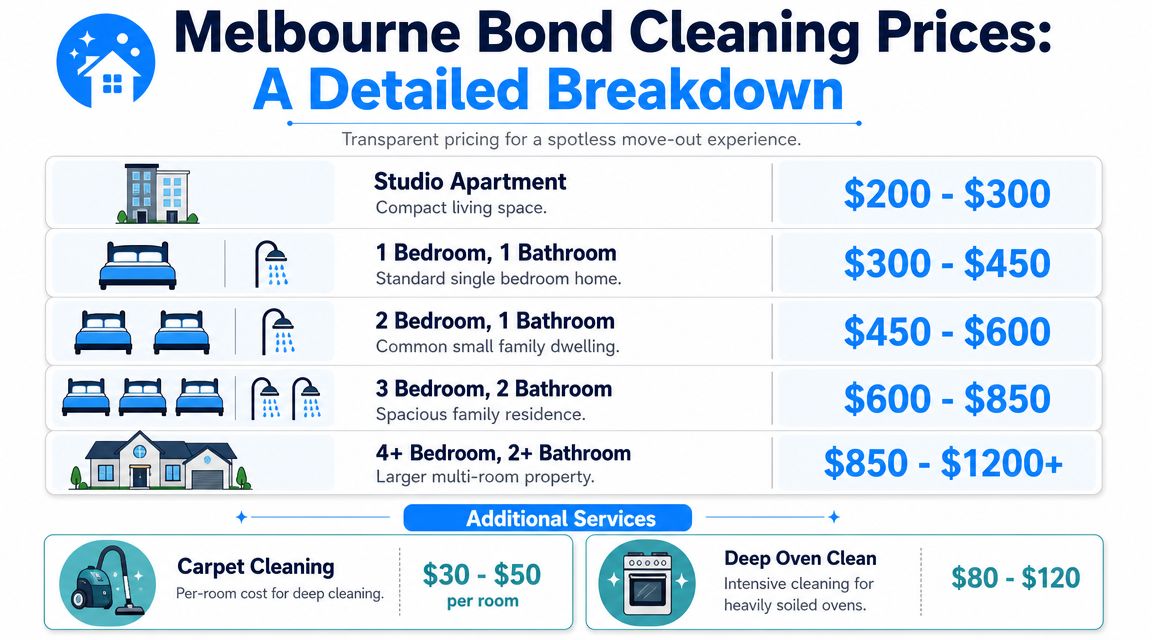
Estimated Bond Cleaning Costs in Melbourne 2026
| Property Type | Average Price Range |
|---|---|
| Studio or 1-bedroom | $290–$380 |
| 2-bedroom property | $400–$540 |
| 3-bedroom property | $480–$650 |
| 4-bedroom property | Typically higher than 3-bedroom pricing |
| 5-bedroom and larger homes | Can exceed $1,000 once add-ons are included |
The best way to read these numbers is as a base for a vacant residential property in normal condition. They help you rule out quotes that are obviously too high or too low. They do not tell you how much time the cleaner expects to spend on grease, soap scum, marks, pet hair, or access issues.
A packaged bond clean quote is usually built around rooms and condition, not just floor area. Residential cleaners price this way because agents inspect by room and by task. Kitchen standard, bathroom build-up, and window count often affect labour more than raw square metre size. Commercial jobs are different. Those are more likely to be priced per square metre because the work is more repetitive across open areas and less dependent on detailed room-by-room tasks.
Hourly pricing still appears, but it is less useful for tenants comparing end-of-lease quotes. A flat quote gives you a clearer total before keys are due back. An hourly quote can work for a small or lightly soiled property, but the risk is obvious. If the condition is worse than expected, the final cost moves with the clock.
The practical question is not “What does a two-bedroom cost?” It is “What assumptions is this two-bedroom quote based on?”
Ask yourself what would happen if the cleaner arrived and found a heavily used oven, mould around silicone, furnished rooms, or carpets that need professional steam cleaning for end-of-lease requirements. If those assumptions were not discussed before the quote was issued, the number was only provisional.
Low quotes usually rely on one of three assumptions. The property is in above-average condition. Some detailed tasks will be charged separately. Or the cleaner is allowing very little time and hoping the property passes without a return visit.
That is the reason Melbourne prices vary so widely. The market is not confused. The scope is.
What a Standard Bond Cleaning Quote Includes
A tenant gets two quotes for the same Brunswick two-bedroom. One is $280. The other is $520. Both say “bond clean.” The gap usually comes down to scope, not mystery.
A proper quote should tell you what the cleaner is allowing time for. If it does not spell that out, you are not comparing two prices. You are comparing two assumptions.
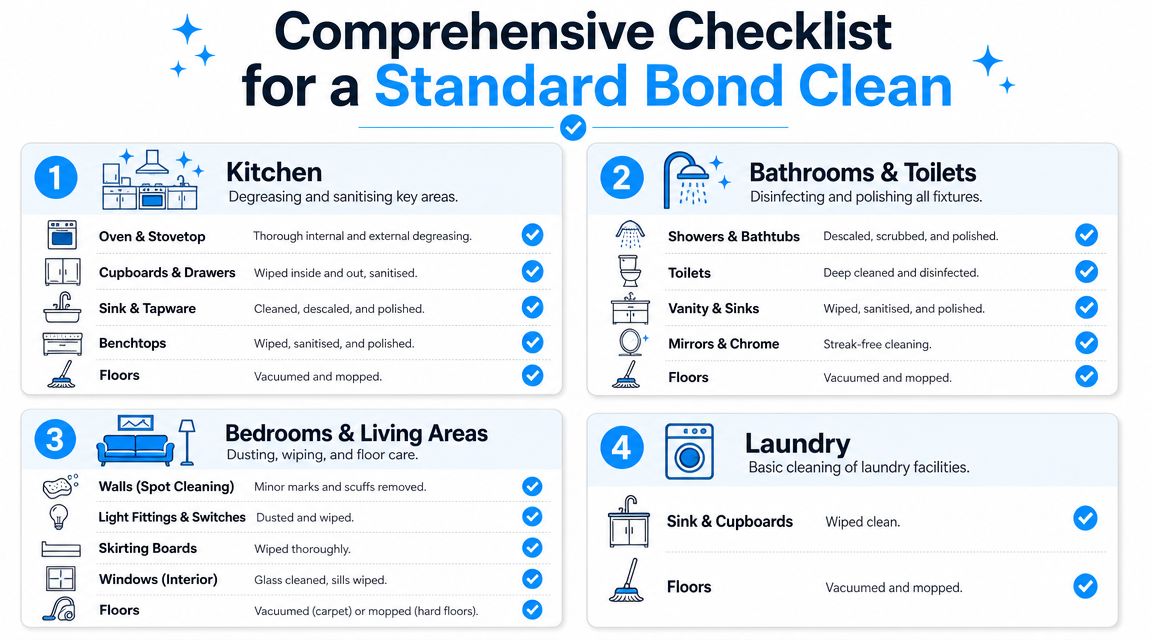
What's usually included in a standard quote
For a vacant property in standard condition, a base bond cleaning quote usually covers detailed cleaning across the rooms already in the home, using normal tools and products a general end-of-lease team brings to site.
That often includes:
- Kitchen cleaning: Benchtops, splashbacks, cupboard fronts, sink, tapware, stovetop, rangehood exterior, and general degreasing of reachable surfaces.
- Oven cleaning: Often included, but only if the quote says so clearly. Some companies allow for a standard oven clean. Others price heavy grease, trays, racks, or neglected interiors separately.
- Bathrooms and toilets: Shower glass, tiles, vanity, mirrors, toilet, bath, taps, and floor cleaning.
- Bedrooms and living areas: Wardrobes, skirting boards, door frames, switches, internal glass, tracks, dusting, vacuuming, and mopping.
- Laundry: Sink, surfaces, cupboard exteriors, and floors.
The key point is detail. “Kitchen included” means very little unless you know whether that covers inside cupboards, the oven, the rangehood filters, and marks on vertical surfaces.
Why some jobs sit outside the standard quote
Tenants often find themselves in a predicament. Certain tasks are often separated from the base quote because they are a different kind of work, not because the cleaner is being difficult.
Carpet steam cleaning is a good example. It usually sits outside a standard bond clean because it needs specialised machinery, extra drying time, and in some businesses a separate technician or dedicated booking slot. If you are unsure whether your lease or agent will expect it, check this guide on steam cleaning for carpet at end of lease.
Full wall washing is often treated the same way. Spot marks are one thing. Washing every wall in a property is slower, uses more product, and carries some risk on flat paint, patchy paintwork, or older surfaces that mark easily.
External windows can also fall outside the base scope, especially on upper levels or where access is awkward. The issue is not only cleaning time. It is access, safety, and whether ladders, poles, or extra insurance controls are needed.
Blinds, balconies, garages, mould treatment, and heavy grease removal are commonly conditional for the same reason. They can be quick in one property and labour-heavy in the next. A cleaner who prices them blindly is guessing.
How to read the quote properly
Ask for the quote in checklist form, room by room. A solid quote should show inclusions, exclusions, and the conditions that trigger extra charges.
The clearest quotes usually answer questions like these:
- What tasks are included in each room?
- What is excluded unless requested?
- What condition issues change the price after inspection or photos?
That format protects both sides. You know what you are paying for, and the cleaner knows what standard they are being asked to deliver.
Key Factors That Will Increase Your Quote
You move out of a two-bedroom flat that looks reasonably clean, then the quote jumps after the cleaner sees the oven, shower screen, and pet hair packed into the carpet edges. That catches tenants off guard all the time. The wide price range usually comes back to condition, access, and how much work sits outside the standard checklist.

The base quote assumes a property that has been lived in normally and maintained reasonably well. Quotes rise when the cleaner expects extra labour, stronger chemicals, repeat treatment, extra equipment, or slower access through the property. That is the part many headline prices leave out.
Heavy kitchen and bathroom build-up
Kitchens and bathrooms push quotes up faster than bedrooms do. An oven with light residue is one thing. An oven with baked-on grease, carbon on the racks, and a neglected grill tray can add a lot of time on its own. The same applies to rangehood filters, tiled splashbacks, shower glass with heavy mineral build-up, and grout that needs repeated passes.
This is not just about effort. It is about time on site. Degreasers need dwell time, scrubbing has to be more detailed, and some surfaces need a second attempt to get them to inspection standard without damage.
Mould needs the same caution. Light spotting from condensation may sit within a cleaning scope, but widespread growth, staining, or recurring bathroom mould can move beyond routine cleaning. If you are unsure where that line sits, this guide to mould remediation in Melbourne explains when the job becomes a bigger issue.
Pets change the labour
Pet hair is one of the biggest quote changers because it spreads everywhere and takes longer to remove properly than tenants expect. A room can look fine from the doorway and still need extra vacuuming along skirtings, under beds, inside wardrobes, and around flyscreens.
Common pet-related add-ons include:
- Hair packed into carpet edges, corners, and under furniture lines
- Odour in carpet, rugs, or soft furnishings
- Marks on doors, lower walls, and glass
- Extra detailing in tracks, screens, and vents
- Repeat vacuuming before mopping or wiping can even start
Odour is often the hidden issue. Hair can be removed. Smell in carpet or upholstery usually needs treatment beyond a standard wipe-down clean.
Access and layout matter too
Some properties take longer to clean well. Upper-floor apartments without lift access, poor parking, tight stairwells, awkward shower layouts, and furnished rooms all slow the team down. The cleaner may need more setup time, more trips to and from the vehicle, or smaller equipment to work safely in narrow spaces.
An empty property is always easier to price accurately. If half the contents are still inside, the team has to clean around them, and some surfaces cannot be done properly until the room is clear. That creates delays and sometimes return work.
To see exactly what cleaners mean by "heavy build-up", this video shows the kind of grime that pushes a standard quote into a higher bracket:
Add-ons that commonly catch tenants out
The biggest pricing surprises usually come from tasks tenants assumed were included. Ovens, blinds, carpets, mould, pet hair, and heavy grease are the typical sources of scope creep. They can be minor in one property and labour-heavy in the next, so many cleaners treat them as conditional until they see photos or inspect the job.
The practical fix is simple. Declare those areas upfront and ask the cleaner to list them separately on the quote. A clear quote should show the base clean, the optional extras, and the conditions that trigger added cost. That gives you something useful to compare, instead of a cheap starting number that grows on booking day.
DIY Bond Clean vs Hiring a Professional A Cost-Benefit Analysis
You move the last box out at 6 pm, hand the keys back tomorrow, and the place still needs the oven, bathrooms, window tracks, and inside cupboards done properly. That is the point where a DIY clean stops being about saving money and starts being about risk.
A bond clean is a labour job first, but it is also a standards job. The important comparison involves your available time, the tools on hand, the condition of the property, and how likely the agent is to pull you up on small misses.
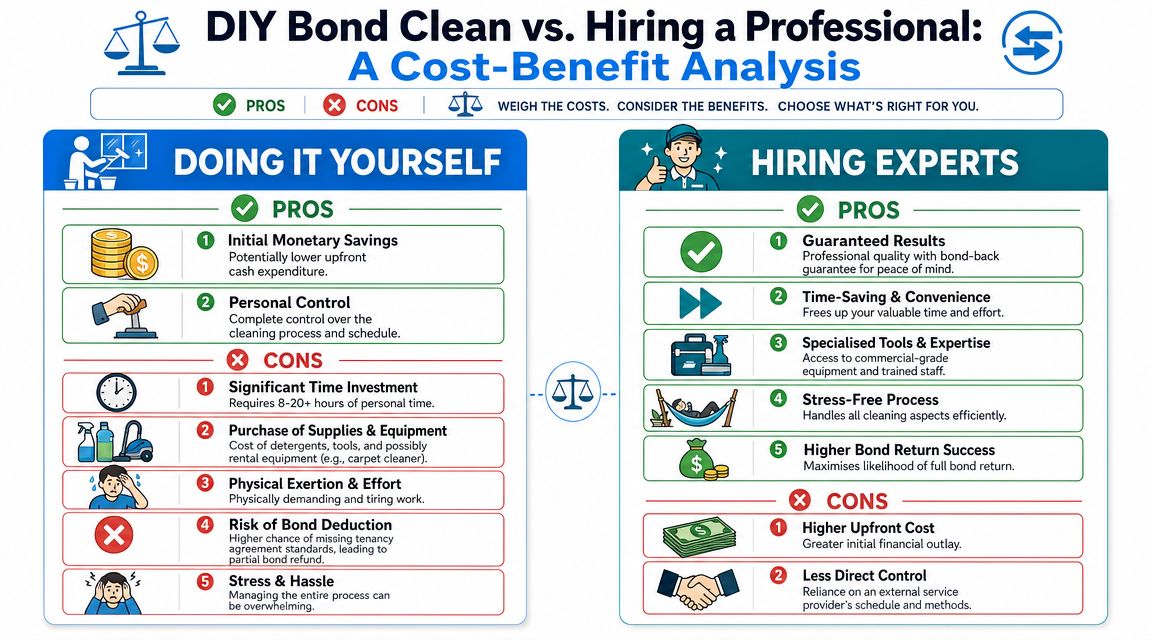
Where DIY makes sense
DIY can be the cheaper option if the property is properly under control. I mean clean enough that you can wipe a shelf or skirting board with a white cloth and it comes away clean, not just tidy enough for photos. Hard floors help. A lightly used oven helps. So does a bathroom that needs a maintenance clean, not scale removal.
Time matters just as much as condition. If you have a clear day or two after the property is empty, plus the patience to work room by room with an inspection checklist, a DIY clean can stack up. This end of lease cleaning checklist for Melbourne tenants is the kind of list worth using, because bond cleaning fails in the details, not the obvious areas.
Where DIY usually struggles
The job gets harder fast once the property needs more than general cleaning. Built-up oven grease, shower screen scale, greasy splashbacks, pet hair in edges, marks on walls, and carpet issues all add time. So do second bathrooms and separate toilets, because each wet area has its own detail work.
Equipment is another hidden cost. A tenant might own sprays, cloths, and a vacuum, but not a strong degreaser, extension tools for high dusting, carpet equipment, or the products needed to cut through soap scum without damaging finishes. Buying those items for one exit clean can narrow the saving quickly.
Then there is fatigue. A professional team works to a sequence and keeps moving. A tenant doing the job alone often loses hours re-cleaning areas, waiting for products to dwell, or discovering at the end that the oven trays, blind slats, or inside windows still need attention.
If you clean it yourself, wait until the property is fully empty. Boxes and leftover rubbish hide areas that agents still inspect.
The practical trade-off
Professional cleaners are not magic. They are faster because they repeat the same process every day, bring the right gear, and know where inspection reports usually get strict. You are paying for labour, but you are also paying to reduce the chance of a dispute over cleaning.
End Of Lease Cleaning Melbourne is one option tenants use when they want the vacate clean handled by a team that works to inspection-level detail. That can make financial sense when your own time is tight, the property needs real recovery work, or a failed clean would mean taking more time off work for a return visit.
How to decide without guessing
DIY usually makes sense if these points sound like your property:
- You can inspect surfaces with a white cloth and they come up clean already
- You have more than 48 hours between moving your last box and the final inspection
- The oven, bathrooms, and floors need cleaning, not restoration
- You already have the products, tools, and patience for detailed work
- You are comfortable following the agent's checklist line by line
Hiring a professional usually makes sense if these sound more familiar:
- You have less than 48 hours before handover
- The oven has baked-on grease or the shower has heavy scale
- There is pet hair, odour, mould, or stained carpet to deal with
- The property manager is known for detailed re-inspections
- Your cheapest mistake would still cost more than the cleaning bill
The best choice is the one that gives you a clean property, enough time to move properly, and the lowest chance of bond deductions.
How to Reduce Costs and Verify Your Quote
It is 6 pm, the truck is unloaded, keys are due back tomorrow, and three quotes for bond cleaning all look different. One is cheap but vague. One includes carpets but says nothing about the oven. One looks expensive until you notice it covers the agent re-clean if the issue sits within scope. This is the point where tenants either save money or create a bond dispute by accident.
The easiest way to cut costs is to make the job smaller before the cleaners arrive. The easiest way to verify a quote is to make each cleaner define the same scope in writing. If both sides are clear, pricing usually gets more realistic.
Cut labour without cutting the standard
Good cleaners charge for time. If you remove delays, you often remove cost.
- Have the property completely empty before the team starts
- Remove food, rubbish, and anything left in cupboards or the fridge
- Defrost the fridge the day before if fridge cleaning is included
- Make sure water, power, and access are ready on arrival
- Send clear photos of the oven, showers, blinds, balcony, and any stained areas before booking
Those last photos matter more than tenants expect. A cleaner can quote much more accurately from photos of the specific problem spots than from a message saying “normal wear and tear”.
Verify the wording, not just the price
A one-line quote tells you almost nothing. A useful quote names the task, the condition assumed, and what falls outside the agreed price.
| Vague quote line | What a good quote says |
|---|---|
| Oven clean | Oven deep clean including racks, trays, internal glass, and door edges |
| Windows included | Internal window cleaning included. External glass excluded unless accessible from ground level |
| Bathroom clean | Bathroom clean including soap scum removal, shower screen, tiles, taps, vanity, toilet, and exhaust cover |
| Full bond clean | Vacate clean for 2 bedroom, 1 bathroom apartment. Includes cupboards, skirting, switches, tracks, floors, and internal glass |
| Carpet cleaning | Steam cleaning for 2 bedrooms and lounge. Spot treatment included. Stain removal not guaranteed |
| Reclean if needed | Return visit for items in the original written scope if raised at final inspection within the stated timeframe |
That level of detail protects both sides. It tells you what you are paying for, and it gives the cleaner something concrete to stand behind if the agent picks up issues later.
How to check a quote properly
Use this short test before you accept anything:
- Ask what is excluded, not just what is included
- Ask what condition the quote assumes. Light soil, moderate build-up, or heavy recovery work
- Ask which surcharges can still be added on the day
- Ask whether carpets, external windows, blinds, wall marks, balconies, garages, and mould treatment are priced separately
- Ask what happens if the property manager requests touch-ups on inspection items covered by the quote
Then do one step that saves a lot of guesswork. Forward your two best quotes to the property manager and ask: “Based on your experience, which of these scopes is more likely to satisfy the final inspection for this property?” That puts the focus where it belongs. Not on the cheapest figure, but on whether the written scope matches what the agent usually checks.
If you want a practical room-by-room reference before comparing providers, use this end-of-lease cleaning checklist and mark off anything missing from the quote.
Red flags that usually lead to extras later
Cheap quotes are not always bad. Unclear quotes are.
Watch for these warning signs:
- A very low price with no room-by-room scope
- No mention of oven, carpets, windows, or cupboards
- No written exclusions
- No note about access, parking, stairs, or key collection
- No process for handling inspection feedback
- Language like “general clean” when you asked for an end-of-lease clean
A quote you can check line by line usually costs less in the end than a quote that looks cheap and leaves the hard parts open.
Melbourne Bond Cleaning FAQs
What does a bond back guarantee actually mean
A bond back guarantee usually covers return visits for items already included in the original quote, if the property manager flags them at inspection. It does not give you blanket cover for every issue found in the property.
The part that matters is the written scope. If the quote excludes carpets, blinds, external windows, wall washing, heavy mould, or extra stain treatment, those items are usually outside the guarantee as well. I tell tenants to read the guarantee and the scope together, because one without the other can give a false sense of cover.
How clean does the property need to be for final inspection
It needs to meet end-of-lease standard across the whole property, including the parts people rush past during packing.
Agents and property managers often check inside cupboards, behind toilets, window tracks, skirtings, switches, exhaust fans, shelves, splashbacks, and the oven. A place can look tidy on first glance and still fail on detail. That is where many bond disputes start. The issue is rarely one big mess. It is a dozen small misses.
Can I book just a few hours instead of a full bond clean
Yes, if you only need help with selected tasks.
A short hourly booking can work for touch-ups, a bathroom reset, or help finishing after you have done most of the job yourself. It is usually the wrong fit if you need the cleaner to take responsibility for the full vacate clean. Bond cleaning is normally quoted as a set job because the cleaner is being asked to deliver a result, not just spend time on site.
If you go hourly, be very clear about priorities. Ask the cleaner what can realistically be completed in the booked time, and what will be left out if the clock runs out.
Do I need to be at the property during the bond clean
Usually, no. Many tenants hand over keys, give access instructions, and return when the job is finished.
What matters more is access and communication. Make sure utilities are connected, the property is empty, parking is sorted if needed, and the cleaner has a contact number in case they find damage, mould, rubbish, or anything that changes the scope. If the property is still full of boxes or furniture, the cleaner may only be able to work around them, and that can affect the result.
What happens if the cleaners damage something
A professional cleaner should tell you straight away and have insurance for accidental damage. Ask that question before you book, not after something goes wrong.
Minor wear and tear can also be confused with cleaning damage, especially on old blinds, flaky paint, swollen cabinetry, loose handles, or aged stove parts. Good operators will point out pre-existing issues when they arrive and, where needed, take photos before starting. That protects both sides and avoids arguments later.
If you want a clear, itemised quote for your move-out clean, End Of Lease Cleaning Melbourne can help you price the job based on the actual property size, condition, and required extras, so you know what's included before booking.
