
You’re probably doing the same thing most Melbourne tenants do in the last week before handover. You’ve packed half the kitchen, the wardrobe looks under control, and then you notice the carpet. The hallway is darker than the rest. There’s a faint coffee mark near the sofa. The couch arms have that grey look that only shows up when the room is half empty.
That’s the moment upholstery and carpet cleaning stops feeling like “one more job” and starts feeling like the job that could decide whether your final inspection goes smoothly. Property managers notice floors and furniture fast because they show use, odour, and neglect more clearly than a wiped benchtop ever will. If you know what to look for, what to treat yourself, and what to leave alone, you can avoid a lot of stress and give yourself a much better shot at getting the bond back without arguments.
Securing Your Bond Starts with Your Floors and Furniture
You find out how clean a rental really is after the place starts emptying out. The sofa is gone, the light hits the carpet side-on, and suddenly the traffic lane in the hallway looks darker than you remembered. The dining chairs show arm marks. A faint spill you stopped noticing a year ago becomes obvious in a bare room.
That’s why floors and furniture cause so many end-of-lease headaches in Melbourne. I see the same pattern every week. Tenants clean kitchens and bathrooms first because the result is obvious, then leave carpet and upholstery until the end because they look harder to judge. At inspection time, those are often the surfaces that draw the longest look from the property manager.
There’s a reason for that. Carpet and fabric hold onto what a quick tidy cannot fix. Fine dust, body oils, pet smell, old spot-cleaning residue, tracked-in grit from shoes, and damp odours can all stay put even when the room looks presentable from the doorway. If the lease requires the property to be returned reasonably clean, these surfaces often become the difference between a smooth handover and an argument over cleaning standards.
Melbourne adds its own complication. Drying times are not always predictable, especially in cooler months or during humid weather. A carpet cleaned too late in the week can still feel slightly damp at inspection. A couch that smells fresh right after cleaning can pick up a musty note overnight if there is not enough airflow. That is the kind of detail tenants get caught by.
You’re balancing two goals at once:
- Pass the visual check by lifting marks, traffic shading, and obvious grime.
- Pass the practical check by leaving carpet and upholstery dry enough, neutral-smelling, and free of sticky residue.
Practical rule: If a carpet or sofa looks cleaner but still feels damp, tacky, or strongly perfumed, expect questions at final inspection.
This part matters because many bond disputes in Victoria come down to condition, proof, and whether a problem looks like normal wear or poor cleaning. Floors and furniture sit right in that grey area. A worn traffic lane may be age. A greasy armrest may be cleanable. A rust-coloured spot from pot plants or an old coffee spill near the sofa can go either way unless you deal with it properly and document what was already there.
The smart approach is to treat carpet and upholstery cleaning like bond protection, not spring cleaning. Use the right method for the fibre, leave enough drying time for Melbourne conditions, and photograph anything that looks permanent before you start. If you want the rest of your handover plan to match, use this end of lease cleaning checklist for Melbourne tenants alongside your floor and furniture prep.
Your Pre-Clean Inspection Checklist for Bond Success
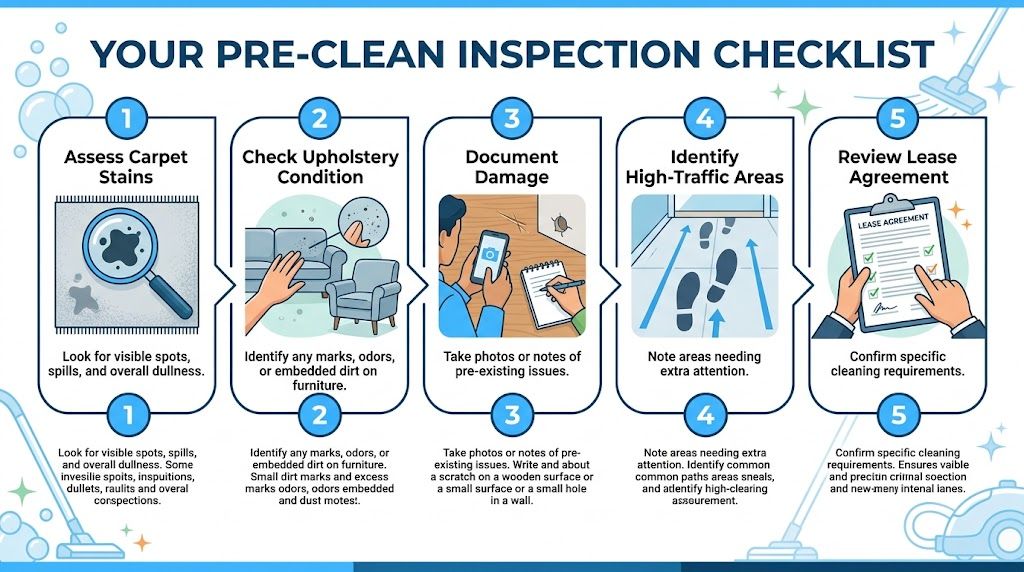
If you skip the inspection and go straight to cleaning, you’re guessing. That’s how tenants turn a manageable job into a damage claim. A solid pre-clean check tells you what’s dirt, what’s wear, what’s pre-existing, and what needs a different method.
Property managers expect a high standard because this category is a major service market, and Grand View Research reports that carpet cleaning services reached USD 39,641.8 million in 2022, with professional carpet cleaning documented to remove about 98% of pollutants and dirt. That doesn’t mean you must hire someone for every room. It does mean your own check needs to be sharper than “looks alright to me”.
What to inspect before you clean
Use your phone, good daylight, and slow down. Walk room by room and inspect from standing height, then crouch down and look across the surface.
Find the fibre or fabric label
Check rugs, couches, dining chairs, and removable covers for cleaning codes or material details. Wool, wool blends, synthetics, microfibre, and delicate weaves don’t react the same way to moisture or detergents. If you can’t identify the material, treat it as delicate until proven otherwise.Photograph existing wear and damage
Take clear photos of burns, snags, sun fading, pulled seams, fraying edges, or flattened traffic lanes. Dirt can often be cleaned. Wear usually can’t. Those photos matter if someone later tries to treat age or damage as a cleaning failure.Mark high-traffic zones
Hallways, bed sides, the lounge-to-kitchen path, sofa arms, and headrests almost always need extra work. Don’t spread your effort evenly across the property. Spend it where the inspection eye will land first.Check for odour, not just marks
Sit on the couch. Put your face close to the arms and cushions. Kneel near the carpet. Pet smell, stale moisture, smoke, and food odour can all survive surface cleaning.Read your lease and exit requirements
Some agreements specify professional carpet cleaning in certain situations. Others are vague. Before booking anything or hiring a machine, compare your condition report, your lease, and a proper end of lease cleaning checklist for Melbourne tenants.
What tenants often misread
A dark patch isn’t always a stain. Sometimes it’s pile distortion or wear. A pale ring after spot cleaning usually means residue was left behind. A couch that “just smells old” may be holding moisture from an earlier clean that never dried properly.
If you can only see the issue from one angle, check texture and pile before attacking it as a stain.
Your go or no-go list
Use this quick filter before you decide on DIY or professional help:
| Surface issue | Usually safe for DIY | Better left alone or assessed carefully |
|---|---|---|
| Light soil on synthetic carpet | Yes | |
| Fresh drink spill | Yes | |
| General upholstery dullness | Yes, with low moisture | |
| Wool or unknown fabric | Yes | |
| Water marks or browning | Yes | |
| Strong pet or smoke odour | Sometimes | Often |
| Shrinkage, seam stress, loose backing | Yes |
Inspection isn’t glamorous, but it saves money. Once you know what you’re dealing with, you can choose a method that improves the surface instead of creating a new problem.
DIY Cleaning Methods for Common Rental Properties
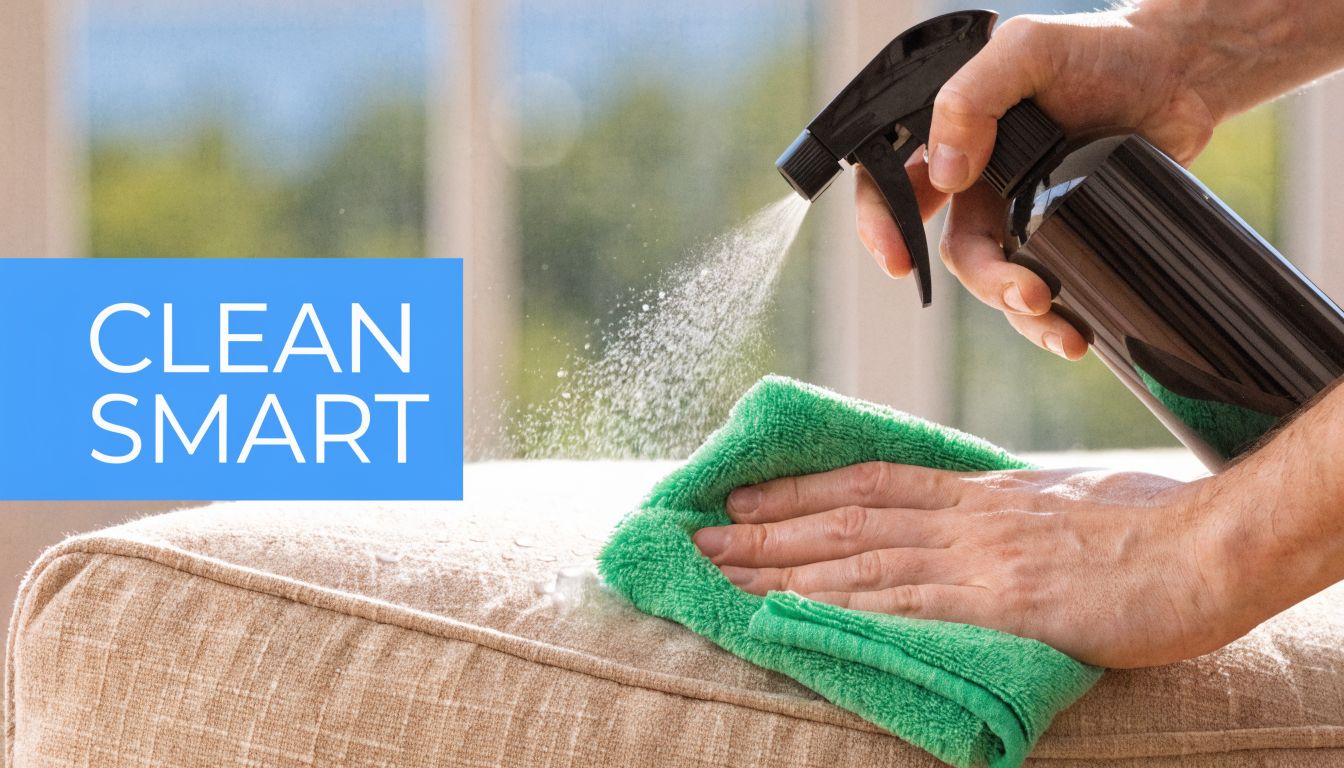
DIY can work well in rentals if you match the method to the material and keep moisture under control. The biggest mistake I see is tenants using one approach for everything. Carpet gets soaked because someone thinks more water means more cleaning. Upholstery gets scrubbed too hard. Then mould smell, shrinkage, or water marks become the actual problem.
Synthetic carpet in standard rentals
A lot of Melbourne rentals have practical synthetic carpet because it handles wear better than delicate fibres. For this type, the safest DIY sequence is simple and disciplined:
- Vacuum slowly first. Don’t rush this. Dry soil removal comes before any spray touches the carpet.
- Spot-treat obvious marks with a small amount of mild solution on a cloth, not poured directly onto the floor.
- Blot, don’t scrub. Scrubbing roughs up fibres and spreads the stain edge.
- Use minimal moisture. You want the carpet cleaned, not saturated.
- Dry the room quickly with open windows, fans, and airflow across the surface.
If you’re considering machine hire, read the instructions carefully and avoid repeat wet passes. In Melbourne humidity, especially in a closed apartment, lingering moisture can become the reason the room smells “unclean” at inspection.
Upholstery needs a lower-moisture mindset
Upholstery is where many DIY jobs go sideways. Cushions, armrests, and sofa backs don’t release moisture as easily as carpet. Dense filling traps water and can stay damp long after the fabric feels dry on top.
That’s why low-moisture cleaning makes more sense for many rental couches. XO2’s write-up on the Express Method says a crystal polymer encapsulant approach can deliver 75% faster drying times at 2 to 4 hours, achieve 90% odour neutralisation, and outperform steam by 25% on delicate fabrics. For tenants, the practical point is clear. On delicate or slow-drying upholstery, less water is often the smarter option.
A safe DIY path for couches and fabric chairs
Use this approach for general soil and mild odour on suitable upholstery:
- Check the tag first. If the label is unclear or the fabric feels delicate, stop and test in a hidden spot.
- Remove loose debris with a vacuum and crevice tool.
- Blot fresh spills with dry cloths before adding any product.
- Use a light mist, not a soak. Apply cleaner to the cloth when possible.
- Work in small sections so you can control moisture and see what’s changing.
- Finish with airflow. Fans matter more than fragrance.
For tenants comparing methods, this guide on steam cleaning for carpet in rental properties is useful for understanding where steam helps and where it can be risky if drying time is tight.
A quick video can help if you learn better by watching technique rather than reading it:
Eco options that suit end-of-lease cleaning
Melbourne agents often care about the finish as much as the process. Strong perfume can count against you because it suggests residue or an attempt to mask odour. A gentler approach is usually safer.
For everyday marks and mild odour, many tenants do well with:
- White vinegar diluted with water for light acidic spot work
- Bicarbonate of soda for dry odour treatment before vacuuming
- Microfibre cloths rather than harsh brushes
- Plain warm water rinsing on cloths to reduce residue
The best DIY clean rarely smells “fresh linen”. It smells neutral.
What not to do
Avoid these common mistakes:
- Don’t soak wool blends or thick sofa cushions
- Don’t use coloured cloths that can transfer dye
- Don’t scrub circles into carpet pile
- Don’t mix random retail chemicals
- Don’t clean the night before inspection unless drying is guaranteed
If the mark is improving, continue carefully. If it’s spreading, browning, or staying wet, stop. Bond-saving DIY is about control, not effort.
A Practical Guide to Removing Tough Stains
Some stains need a calm, specific response. What works on coffee can lock in red wine. What helps with pet urine can damage a delicate fabric if you overdo it. The safest approach is to treat the stain type, not just the fact that it’s there.
End of lease stain removal cheat sheet
| Stain Type | Immediate First Aid | DIY Eco-Friendly Solution | When to Call a Professional |
|---|---|---|---|
| Tea | Blot with dry white cloths. Don’t rub it deeper. | Use a small amount of diluted white vinegar solution on a cloth, then blot with clean water and dry towels. | Call if the stain has been there a long time, returns after drying, or leaves a ring. |
| Coffee | Lift as much liquid as possible first. Press, don’t scrub. | Blot with a mild vinegar-water mix, then rinse lightly with a damp cloth and dry thoroughly. | Call if milk coffee has left odour, or if the stain spreads into underlay or cushion filling. |
| Red wine | Blot immediately and keep turning to clean sections of cloth. | Apply a light vinegar-water treatment, then blot. Avoid pouring anything directly onto the stain. | Call if it has dried, if the fabric is wool or delicate, or if colour changes after testing. |
| Vegemite | Scrape off solids gently before any moisture touches it. | Use a damp microfibre cloth first, then a mild vinegar-water cloth if residue remains. Finish with a clean damp wipe. | Call if the oily colour sits in textured upholstery or if smearing has enlarged the mark. |
| Pet urine | Blot fast and keep pressure on the area with dry towels. | Treat with a diluted white vinegar-water mix, then apply bicarbonate of soda and leave it in place for a day before vacuuming if suitable for the surface. | Call if odour remains after drying, if the stain is old, or if urine has reached cushion inserts or carpet underlay. |
| General food grease | Lift excess with a spoon or blunt edge first. | Blot with a lightly damp cloth and mild cleaner. Keep moisture low and repeat rather than over-apply. | Call if the fabric darkens unevenly or the grease has penetrated deep into upholstery padding. |
| Mystery stain | Test in a hidden area before doing anything else. | Start with the gentlest method possible: dry vacuum, blot, light cloth cleaning, then reassess. | Call if you don’t know the fibre type, the stain reacts badly, or there’s risk of setting it permanently. |
One stain, three decisions
When you’re under time pressure, keep the sequence simple:
- Stop the spread
- Use the mildest effective method
- Quit before damage beats the stain
That last part matters. Tenants often keep going because the mark is “almost gone”. Then they over-wet the area, rough up the fabric, or set the stain with heat or friction.
If a stain needs force, it probably needs a different method.
For common Australian household spills, patience beats aggression. Scrape solids first. Blot liquids first. Test every solution in a hidden area. Dry the treated patch properly before deciding whether it worked. Wet fibres often look cleaner or darker temporarily, which makes people misjudge the result and over-clean.
If you’ve got several old stains in one room, don’t attack them all at once. Treat the easiest marks first and leave enough drying time between attempts. That gives you a better read on what’s improving and what’s heading into professional territory.
When to Call Professionals for Your End of Lease Clean
DIY makes sense when the job is light, the materials are forgiving, and you’ve got time to let everything dry properly. It stops making sense when the risk of making things worse is higher than the cost of getting it done right.
That point usually comes sooner than tenants think. Heavily soiled traffic lanes, old pet issues, water marks, unknown fibres, and upholstered pieces with strong odour are all jobs where a bad attempt can create more scrutiny at final inspection.

Signs the job has moved beyond DIY
You’re usually better off bringing in a professional if any of these apply:
- The stain is old and has already been treated badly
- The fabric is delicate, unlabelled, or expensive to replace
- The carpet smells musty after previous cleaning
- There are multiple issues at once, such as stains plus odour plus traffic lane darkening
- You’re short on time and can’t risk a second attempt before key return
What pros do differently
The difference isn’t just “better machines”. It’s method. Good Lookin’s overview of the 12-step Hot Water Extraction process says professionals can achieve 85 to 95% soil removal on common rental carpets, using steps such as alkaline pre-spray, agitation, and an acid rinse that reduces callbacks by 60%.
That sequence matters because each stage solves a different problem. Pre-spray loosens soil. Agitation separates embedded dirt from fibres. Extraction removes suspended grime. Acid rinse helps prevent fast resoiling. Drying equipment helps stop damp smells from replacing the stain you just removed.
Cost versus bond stress
A lot of tenants hesitate because they don’t want to spend more during a move. Fair enough. Moving is already expensive. But there’s a practical question to ask: what costs more, paying for proper upholstery and carpet cleaning, or losing part of the bond and still being told to organise a re-clean?
That’s where professional cleaning often earns its place. You’re not paying only for labour. You’re paying to reduce the chance of:
- patchy results
- chemical odour
- overwetting
- failed spot treatment
- inspection delay
- callback cleaning under pressure
If your sofa or lounge suite is part of the issue, this local guide to sofa steam cleaning in Melbourne rental situations can help you understand what a proper service should include.
Professional cleaning is usually worth it when the surface is too risky to learn on.
What to ask before you book
Don’t book based on “steam clean” alone. Ask practical questions:
| Ask this | Why it matters |
|---|---|
| What method will you use on my carpet or upholstery? | Different fibres need different treatment. |
| How do you manage drying? | Fast drying reduces inspection risk. |
| Do you test delicate fabrics first? | This helps prevent shrinkage or colour damage. |
| What happens if a stain doesn’t fully lift? | You want honest expectations, not blind promises. |
The best time to book is when you still have room to adjust if something needs extra drying or a follow-up. Last-minute cleaning leaves no buffer, and Melbourne weather doesn’t always cooperate.
Melbourne End of Lease Cleaning FAQs
How long does carpet or upholstery take to dry in Melbourne?
A tenant in Melbourne can clean in the afternoon, see the carpet looking fine by dinner, then walk back in the next morning to a damp smell and a dark patch near the skirting. That catches people out at final inspection.
Drying time depends on the cleaning method, airflow, indoor temperature, humidity, and the fibre itself. In Melbourne, cool changes and damp days slow everything down, especially in older flats with poor ventilation. Upholstery often takes longer than it looks because the outer fabric dries first while moisture sits in the cushion or padding.
If inspection timing is tight, low-moisture cleaning is usually the safer option. The smart move is to finish early enough to check everything again once it is fully dry, not just surface-dry.
Can I clean a wool carpet or wool-blend sofa myself?
Yes, but wool is one of the easiest materials to damage during a rushed vacate clean. Too much water, the wrong spotter, or hard scrubbing can leave browning, texture change, or a larger stain ring than the one you started with.
If the label is missing, stay cautious. Wool and wool blends often feel softer, denser, and less shiny than standard synthetic rental carpet. Test in a hidden spot, use minimal moisture, and stop the moment the colour shifts or the pile starts to rough up.
DIY is usually more forgiving on common synthetic carpet. Wool needs restraint.
Is professional cleaning always required at the end of a lease?
No. The key question is whether your lease requires it, and whether the carpet or upholstery can be returned to a clean condition without risk. In Victoria, plenty of bond disputes start because tenants assume an agent can insist on any cleaning method they prefer. The lease, the condition report, and the actual condition of the property matter more than broad demands made at handover.
If the carpet is lightly soiled and you can clean it properly without leaving odour, residue, or overwet areas, DIY may be enough. If there are pet smells, visible staining, delicate fibres, or a history of water marks, paying for proper cleaning is often cheaper than losing time on a re-clean while your bond is being held up.
Can fire-damaged carpet or upholstery be made bond-ready after an e-bike battery fire?
Sometimes, but this sits outside normal end-of-lease cleaning. Soot, burnt plastic residue, battery chemicals, and odour can stay deep in carpet pile, underlay, and upholstery filling even after the surface looks better.
Fire Rescue Victoria has warned about the risks linked to lithium-ion battery fires, including e-bike and e-scooter incidents. In a rental, the practical issue is simple. Standard vacuuming and wipe-downs do not reliably remove that kind of contamination.
If a room has been affected by an e-bike battery fire, treat it as specialist restoration work, not a standard vacate clean. That matters for health, smell, and inspection outcome.
What’s the safest last-day plan before the final inspection?
Do carpets and upholstery before the final day if you can. Give them time to dry fully in Melbourne conditions, then check them again in daylight with the windows shut for a few minutes. A neutral smell matters more than a perfumed one, and agents notice the difference.
Look for three things. Even colour. Dry feel. No stale or chemical odour.
If you’ve got all three, you’re in a much stronger position to get the bond back without an argument.
If you’d rather hand this over to a team that deals with Melbourne vacates every day, End Of Lease Cleaning Melbourne can help with end of lease cleaning, carpets, upholstery, and the kind of detail work that makes final inspections less stressful. When time is short and the bond matters, getting experienced help can be the simplest way to leave the property clean, dry, and inspection-ready.
