
A fair price for cheap house cleaning melbourne usually means $140–$240 for a standard three-bedroom home clean, not the rock-bottom hourly rate that first catches your eye. The trouble is that the cheapest ads often look affordable upfront, then get expensive once time blowouts, extras, or poor workmanship start showing up.
If you are reviewing quotes right now, you are likely balancing rent, bills, moving costs, and the simple reality that you still want the property cleaned properly. That is reasonable. Many residents do not require the most expensive service. They want a cleaner who arrives, performs the promised work, and avoids creating a second problem after receiving payment.
That gap between cheap and good value is where people get burned. A low hourly number can hide slow work, missing equipment, extra charges for ovens and windows, or a re-clean when the first job wasn't up to standard. In Melbourne, especially for rentals and end-of-lease work, the cheapest option on paper often isn't the cheapest outcome.
How Much House Cleaning Really Costs in Melbourne
A Melbourne renter books a cleaner at a bargain hourly rate, then gets hit with extra charges for the oven, windows, and travel. By the time the job is done, the "cheap" clean costs more than a proper fixed quote would have. I see this often, especially with one-off and vacate jobs.
The useful question is not "who is cheapest?" It is "what will this clean cost once the full scope is clear?"
Across Melbourne, a standard three-bedroom house clean often lands around $140 to $240, while agency hourly rates commonly sit around $45 to $70. Private operators may advertise less, but lower hourly pricing only helps if they work efficiently, bring the right equipment, and stick to the agreed scope. For vacate work, the gap gets much wider. A regular cleaner and an end-of-lease specialist are pricing two different jobs.
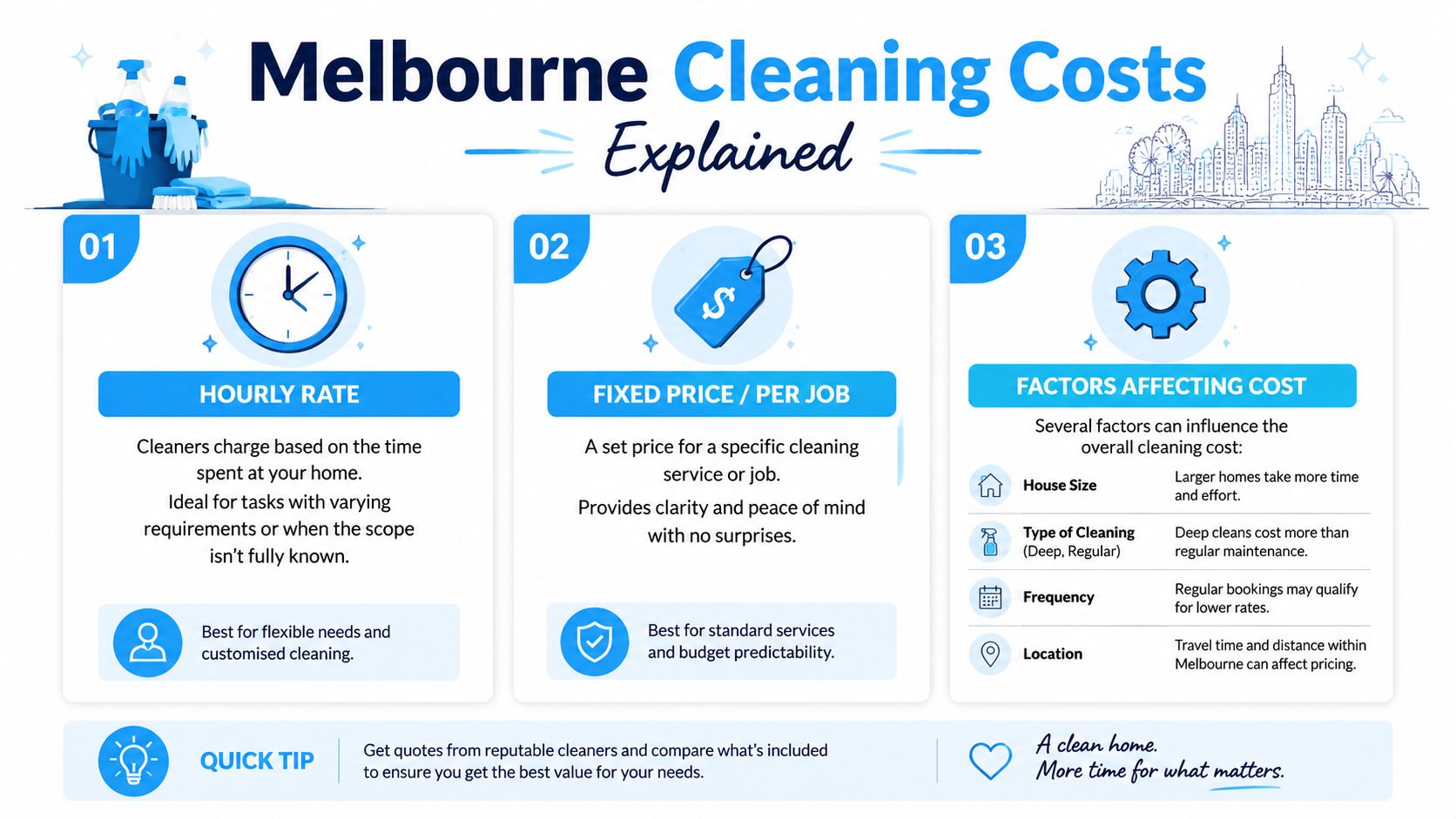
Hourly rates versus fixed prices
Hourly pricing suits lighter work where the priority list may change on the day. It can make sense for a small apartment reset, a few bathrooms, or a fortnightly touch-up.
For full-house jobs, fixed pricing is usually safer. You know what is included, the cleaner knows the target, and there is less room for disputes about how long "should" have been enough. One current Australia-wide pricing guide places Melbourne in the higher-cost bracket, with city rates of $70 to $90 per hour and typical per-visit pricing rising with bedroom count and service level, as outlined in this Australia-wide pricing guide by city and service type.
My rule is simple. If the job has a checklist, ask for a fixed quote against that checklist.
What usually pushes the price up
Cleaners do not price from floor area alone. Labour time changes fast when the condition of the home changes.
The main price drivers are:
- Property size: More rooms usually means more wet areas, more dusting, and more floor work.
- Cleaning type: A maintenance clean costs less than a deep clean, spring clean, or vacate clean.
- Condition: Heavy grease, pet hair, mould marks, soap scum, and long-neglected surfaces all add time.
- Location: Some businesses charge more for outer suburbs or limited parking.
- Extras: Ovens, interior windows, walls, blinds, and inside cupboards are often separate line items.
Cheap quotes usually go wrong here. The ad shows one number. The invoice reflects the actual workload.
| Service element | Common pricing impact |
|---|---|
| Outer suburb travel | $20–$50 |
| Window cleaning extra | $50–$150 |
| Oven deep clean | $100+ |
The hidden cost is not only the add-on itself. It is the mismatch between what the customer thought was included and what the cleaner planned to do.
Why end-of-lease is a different category
End-of-lease cleaning is priced higher because the standard is higher. The cleaner is not just making the place look fresh. They are cleaning to inspection points that agents and property managers routinely notice, including rangehood filters, grout lines, skirting boards, shower screens, tracks, and inside cupboards.
That is why vacate cleaning in Melbourne often sits well above a standard domestic clean. For a clearer breakdown, see this guide on end-of-lease cleaning costs in Melbourne.
If a quote looks far below the market for a vacate clean, check what has been excluded before you book. In practice, the cheapest quote is often missing detail, equipment, insurance, or enough labour hours to finish the job properly.
Finding Reliable and Affordable Melbourne Cleaners
The best-value cleaner usually isn't the first cheap ad you see. They're the one whose pricing, reviews, and communication all line up. That's a different search process from just sorting by lowest price.

Where to look without wasting time
Use more than one channel. Different sources reveal different things about a business.
- Agency websites: Good for seeing service lists, suburb coverage, and whether the business explains what's included.
- Marketplace platforms: Useful for price comparisons, but don't assume a low bid means a complete service.
- Local Facebook groups and neighbourhood boards: Often the fastest way to find cleaners people have hired in your area.
- Property manager recommendations: Worth asking for, especially if you need a vacate clean that matches local inspection standards.
A provider with a clear service page is usually easier to assess than one with a one-line ad and no detail. If you want a benchmark for what a properly described service should look like, review a detailed guide to residential cleaning services in Melbourne.
How to read reviews properly
Don't just count stars. Read for patterns.
A useful review mentions what kind of job was done, whether the cleaner arrived on time, how issues were handled, and whether the final result matched the quote. Reviews that only say "great job" don't tell you much. Reviews that mention ovens, bathrooms, bond cleans, or regular fortnightly work are more useful because they describe actual scope.
Cheap isn't useful if the cleaner cancels, rushes, or leaves you arguing over what was included.
Also look for consistency. If one person says the cleaner was fantastic but several others mention late arrivals, poor communication, or surprise charges, believe the pattern.
What tends to signal real value
Reliable affordable cleaners usually do a few things well before they even start.
- They ask questions: Size of property, bathrooms, pets, parking, condition, and whether you need extras.
- They define the scope: You know whether oven, internal windows, and wall spot-cleaning are included.
- They write things down: A proper quote is more trustworthy than a vague message thread.
- They don't dodge detail: If you ask what's excluded, they answer directly.
That's what value looks like in practice. Not flashy branding. Not the lowest hourly ad. Clear scope, realistic pricing, and a cleaner who treats the job like a job.
Vetting Your Cleaner to Avoid Scams and Disappointment
A Melbourne cleaner quotes $90 for a full apartment clean, asks for cash, and says they can "do everything." On the day, they arrive late, rush the bathrooms, skip the oven, and stop replying when you ask about the missed items. That is the actual cost of a price that looked cheap at the start.
Most bad cleaning experiences can be prevented during vetting. Cheap operators often cut corners somewhere. Insurance, staff screening, equipment quality, time on site, or after-service support. If you do not check those basics before booking, you are gambling with your time, your home, and sometimes your bond.
Essential vetting questions
Ask these before you pay a deposit.
- Business identity: Get the registered business name and ABN. A legitimate operator should provide both without dodging.
- Insurance: Ask if they carry current public liability cover and what happens if damage occurs during the job.
- Who is coming: Some businesses quote the work, then send subcontractors you have never heard of. Ask whether staff are employees or contractors.
- Screening and trust: If they will enter while you are out, ask how workers are screened and supervised.
- Equipment and products: Confirm whether they bring their own vacuum, mop, cloths, and chemicals. Cheap quotes sometimes assume you are supplying half the kit.
- Re-cleans and complaints: Ask how they handle missed items, and whether they will return if something agreed in writing was not done.
- Payment terms: Clarify deposits, payment timing, cancellation terms, and whether you will receive an invoice or receipt.
Good cleaners answer clearly. Evasive answers usually mean trouble later.
What a proper quote should include
A real quote should spell out the job, not just the price. It should list the type of clean, the rooms covered, any extras, and anything excluded. If the property is in rough condition, the quote should say that heavier buildup may affect time and cost.
For vacate cleans, neglected homes, or larger family houses, a quick walkthrough or video assessment is often the difference between a fair quote and a blow-up on the day. In my experience, cleaners who price a difficult job blindly from a one-line text message are the same ones who later add surprise charges or rush to protect their margin.
If you want a practical benchmark, this guide to professional house cleaning in Melbourne shows the level of detail a serious operator should be comfortable discussing before they arrive.
A vague quote usually leads to a vague result.
Red flags that usually lead to trouble
The cheapest quote is not always the highest risk. The highest risk is the quote with no structure behind it.
Watch for these signs:
- Cash-only with nothing in writing.
- No clear business name, ABN, or invoice process.
- Big promises without asking about condition, access, parking, pets, or specific tasks.
- A very low flat fee for work that normally takes hours.
- Slow or careless replies before the booking is confirmed.
- No process for complaints, touch-ups, or re-cleans.
- Pressure to pay upfront before they have properly assessed the job.
One more warning from experience. If a cleaner treats a regular weekly tidy and an end-of-lease clean like the same service, they do not understand the work. That gap usually shows up after inspection, when you are paying for a second clean.
A short video can help you think like an inspector rather than a shopper.
Twenty minutes spent checking credentials, scope, and terms can save you from paying twice for the same job.
Your Ultimate Melbourne Cleaning Checklist
Most disputes happen because the customer thought they were buying one thing and the cleaner thought they were delivering another. A checklist fixes that. It forces both sides to define the job properly before the first cloth comes out.
Regular house clean checklist
A standard house clean should cover visible hygiene and presentation, not restoration work. If you need built-up grime removed, say so upfront.
Use this as a practical baseline:
- Kitchen surfaces: Benches wiped, sink cleaned, splashback wiped, appliance exteriors cleaned.
- Bathrooms: Shower, vanity, mirrors, toilet, taps, and mopped floors.
- Floors: Vacuum and mop in accessible areas.
- Dusting: Furniture tops, ledges, and reachable surfaces.
- General tidy finish: Rubbish removed, obvious smudges wiped, rooms left presentable.
Ask separately about ovens, inside cupboards, internal windows, blinds, heavy grout work, and wall marks. Those often sit outside a regular clean.
A regular clean keeps a home under control. It doesn't undo months of neglect.
End-of-lease cleaning checklist
Vacate cleaning is where cheap pricing causes the most pain. Property managers and landlords inspect details that casual cleaners often skip.
A proper end-of-lease checklist should include:
- Oven and rangehood: Degreased properly, not just wiped on the outside.
- Bathrooms: Soap scum removed, grout addressed, fixtures polished.
- Skirting boards: Wiped and free of built-up dust.
- Cupboards and drawers: Cleaned inside.
- Window tracks and sills: Dirt removed, not brushed over.
- Floors throughout: Vacuumed and mopped thoroughly.
- Marks and touchpoints: Light switches, handles, door edges, and visible smudges checked.
If the cleaner says they do end-of-lease work, ask how they handle agent callbacks or missed items. That's where professional discipline shows.
NDIS cleaning checklist
NDIS cleaning needs a different lens. Price matters, but compliance matters too.
With 2025 NDIS pricing reforms capping cleaning claims at $45/hr in Victoria, below Melbourne's average rate, it's important to use a registered provider that can work within that cap. Specialist providers can offer NDIS-compliant cleaning at or below the cap for 180,000 Victorian participants, according to this overview of NDIS cleaning access in Victoria.
For NDIS-supported cleaning, check:
- Provider status: Confirm the business can deliver NDIS-compliant services.
- Service agreement clarity: The tasks should match the participant's plan and support needs.
- Worker suitability: Reliability and communication matter just as much as cleaning skill.
- Supplies and equipment: Confirm what's provided by the cleaner and what stays on site.
- Documentation: Invoicing and records should be straightforward for participants, carers, and coordinators.
A simple way to use these checklists
Don't send a cleaner a message saying "Need a cheap clean". That invites confusion.
Send a short brief instead:
- Property type and suburb
- Number of bedrooms and bathrooms
- Type of clean needed
- Condition of the property
- Any extras required
- Preferred day and access details
That one message usually tells you a lot about the cleaner. Strong operators respond with specific questions. Weak ones jump straight to a price.
Booking Your Clean and Spotting Red Flags
A lot of bad cleaning jobs are locked in before anyone touches a mop. The warning signs usually show up during booking. A vague quote, a rushed reply, or pressure to pay upfront often tells you more than the price does.
By the time you confirm the job, four things should be settled in writing: who is coming, what they will clean, what it will cost, and what happens if plans change. For a standard house clean, an email or text is enough if the details are clear and specific.
What your booking confirmation should say
A proper booking confirmation should include:
- Date and arrival window
- Property address and access instructions
- Type of clean booked
- Included tasks and clear exclusions
- Total price and payment method
- Cancellation and rescheduling terms
If any of that is missing, ask before the cleaner is booked. I would rather spend five extra minutes clarifying a job than deal with a dispute later about blinds, inside windows, or an oven that the client assumed was included.
That is where cheap quotes often go wrong. The base price looks fine, then the scope starts shifting.
Payment habits that protect you
Good operators keep payment simple. You know the amount, you know when it is due, and you get a written record.
A few habits lower the risk:
- Use a traceable payment method where possible
- Be careful with full upfront payment unless the business is established and the agreement is documented
- Keep the quote, invoice, and messages together in case the job delivered does not match what was promised
Pressure is a bad sign. So is confusion.
If someone avoids written pricing and keeps saying they will "sort it out on the day", expect problems.
Red flags at the booking stage
The biggest red flag is a quote that gets less clear the closer you get to the booking. A reliable cleaner should be able to define the job properly before they arrive.
Watch for these signs:
- The price is far below other quotes and the scope is still vague
- The cleaner will not list exclusions
- Extra charges for supplies, travel, windows, or oven cleaning are left open-ended
- There are no clear cancellation terms
- Replies become evasive once you ask detailed questions
- You cannot confirm the business name, ABN, or contact details
- They avoid giving an arrival window or the name of the person attending
Cheap can still be good value. Unclear usually is not.
In Melbourne, the expensive part of a bad cheap cleaner is rarely the first invoice. It is the missed appointment, the half-finished job, the re-clean, or the bond issue that follows. Booking carefully helps you avoid paying twice for the same clean.
Finding Value Beyond the Lowest Price
Cheap house cleaning melbourne isn't really about finding the lowest number. It's about avoiding the expensive consequences of a bad cheap choice.
The strongest value usually sits in the middle. A cleaner who charges a fair market rate, defines the work properly, brings their own equipment, communicates clearly, and turns up when booked will usually save you money compared with the bargain option that needs chasing, correcting, or replacing.
For tenants, that matters because cleaning affects bond outcomes. For landlords and property managers, it affects turnaround time. For homeowners and NDIS clients, it affects trust, routine, and whether the home feels looked after.
Good value has a clear shape. The quote is written. The scope is specific. The cleaner answers questions directly. The service matches the property and the purpose of the clean. That's what works. The opposite rarely does.
If you'd rather skip the guesswork, End Of Lease Cleaning Melbourne offers transparent quotes, vetted cleaners, eco-friendly products, and flexible seven-day bookings across Melbourne. As a family-owned business with over 20 years of experience in end-of-lease, regular house cleaning, deep cleaning, and NDIS-supported services, they focus on the things budget-conscious customers need: clear communication, punctual arrivals, and a clean that holds up under inspection.
