
The last thing standing between you and your bond usually isn't the moving truck. It's the final clean.
If you're leaving a rental in Werribee, you're probably dealing with packed boxes, disconnected utilities, keys to return, and a property manager who'll inspect the place line by line. That's when a basic tidy-up stops being enough. End of lease cleaning Werribee is about exit condition, not comfort. The place has to present well under inspection, especially in the areas agents check first and argue about later.
I've seen the same pattern over and over. Tenants spend hours wiping benches and vacuuming visible areas, then lose time and money on the details that were missed. The oven lip. The shower grout. The skirting behind the bed. The grease sitting above the range hood. Those are the spots that turn a “pretty clean” property into a re-clean request.
The good news is that this part of the move can be controlled. If you know how local inspections work, what gets checked, and where DIY jobs usually fall short, you can leave the property in a condition that gives you a much stronger shot at getting your full bond back.
Your Guide to a Stress-Free Move Out in Werribee
Most tenants hit the same wall at the end of a lease. The house looks mostly empty, so it feels like the hard part is over. Then the light hits the walls differently, the bathroom starts showing every mark, and suddenly the property looks less “vacate ready” than it did when the furniture was still in it.
That's normal.
A vacate clean in Werribee isn't judged like a weekly clean. It's judged against the entry condition and the agent's expectations at final inspection. That changes everything. You're not cleaning for yourself. You're cleaning for someone who will open cupboards, check glass for streaks, look behind doors, inspect the cooktop edges, and notice dust on top of the split system or fan blades.
What catches people out is that local property managers don't usually fail a clean because the whole place is filthy. They flag the small missed items that suggest the clean wasn't thorough enough. One bathroom corner with mould. One greasy splashback. One run of dusty skirting boards. One drawer full of crumbs. That's often all it takes to create friction.
Practical rule: A successful move-out clean is a checklist job, not a “looks good from the doorway” job.
The smartest way to approach end of lease cleaning Werribee is to treat it like a handover standard. Clean for scrutiny. Clean in sequence. Clean the hidden edges, not just the obvious surfaces. Once you work that way, the job becomes far less stressful because you stop guessing what matters and start working on what gets inspected.
The Pre-Clean Game Plan That Guarantees Success
A solid vacate clean starts well before the first spray bottle comes out. The planning stage is where most bond problems are either avoided or created.

Start with the documents
Get your entry condition report and read it properly. That report is the baseline for the exit inspection. If the property had old marks, worn paint, ageing grout, or existing damage when you moved in, that history matters. Without the report, you're relying on memory. That's not a good position when there's a dispute.
Also pull out your lease and check whether it says anything specific about carpets, pets, outdoor areas, or extra cleaning requirements. Some tenants assume every rental needs exactly the same vacate clean. It doesn't. The lease and condition report decide the standard.
Book around the move, not before it
Timing matters more than people realise. Australian trade guides recommend booking your clean 2 to 3 weeks in advance and doing the final clean only after the property is completely empty so floors, skirting boards, and wall edges can be fully accessed, which matters for Victorian final inspections, as noted in this end-of-lease guide for renters.
If you clean before the removalists finish, you'll usually create extra work for yourself. Dust gets kicked up again. Tape, scuff marks, and packaging debris appear. Heavy items leave fresh dirt trails on floors. The right order is simple: repair what needs repairing, move everything out, then clean.
Use a short move-out sequence
This is the sequence that works in real properties:
- Confirm access times: Make sure you've got enough time after the movers leave and before key return.
- Remove everything first: Furniture, rubbish, food, cleaning supplies you won't need, and anything stored in cupboards or the garage.
- Check external areas: Balcony, courtyard, garage, bin area, and entry path often get forgotten until the end.
- Line up any extras early: If the place needs outdoor work, paths or driveways may need attention. If that applies, sort it separately from the internal vacate clean. For surfaces like paved entries or stained exterior concrete, a guide on pressure cleaning concrete can help you decide what's realistic before inspection day.
Leave one basic kit behind on cleaning day: microfibre cloths, glass cleaner, degreaser, mop, vacuum, magic eraser, scraper, bin bags, and paper towel. Everything else should already be gone.
Take photos after the clean
Do this once the property is empty and finished. Photograph each room, wet areas, appliances, inside cupboards, and anything that was previously damaged. Dated photos won't replace a proper clean, but they do help if someone later argues about condition.
A Room-by-Room Guide to a Flawless Werribee Clean
The easiest way to fail a vacate clean is to work randomly. The better method is room by room, always top to bottom, with a final detail pass for inspection points.

Property managers in the Werribee area focus on high-risk failure points often missed in DIY jobs, including skirting boards, door frames, ceiling fans, splashbacks, shower grout, and hidden grime behind appliances. A proper clean needs a separate pass for those details, not just a general wipe-down, as outlined in this end-of-lease cleaning checklist.
Kitchen work that passes inspection
The kitchen causes the most trouble because grease spreads further than people think. Cupboard faces can look clean until daylight hits them. Splashbacks collect fine oil film. The range hood traps grease above eye level, so it often gets skipped.
Start with dry debris first. Empty every cupboard and drawer, vacuum crumbs from tracks and corners, then wipe inside and out. Move to the stovetop, splashback, controls, and bench edges. After that, tackle the oven. Inside glass, racks, trays, side rails, seals, and the lower lip all need attention.
If the range hood is greasy, clean the filters and the canopy, not just the visible front. If you need a more detailed process, this guide on cleaning a range hood properly is useful before you start scrubbing blindly.
Watch these kitchen bond busters:
- Behind appliances: Pull the fridge and microwave out if possible. Dust, grease and food debris collect fast.
- Cupboard tops and handles: Agents run fingers over these because they're missed often.
- Sink detail: Polish taps, descale around the base, and clear food odour from the drain area.
- Oven glass edges: The corners and rubber seal area tell an inspector whether the clean was thorough.
Bathrooms and laundry need a second pass
Bathrooms fail on residue. Soap scum, hard-water marks, hair, grout discolouration, and moisture build-up all stand out in inspection lighting.
Treat the bathroom in layers. Remove dust first. Apply product to shower glass, taps, tiles, grout lines, toilet, vanity, and mirrors. Give it dwell time. Then scrub and rinse properly. If you wipe too early, you'll smear residue instead of removing it.
The laundry is similar. Agents often check the tub, mixer tap, cabinet interiors, skirting, and the floor behind the washing machine space.
Don't judge a bathroom while it's wet. Wait until surfaces dry. That's when streaks, soap haze and missed scale show up.
A lot of tenants also underestimate window tracks in bathrooms and laundries. They collect damp grime and black residue that looks minor until an agent opens the window.
Here's a practical walkthrough if you want to see the pace and order a cleaner uses on site:
Bedrooms and living areas are won or lost on detail
These rooms feel easy because there's less grease and moisture. That's exactly why people rush them.
Vacuum edges first, then dust high points like curtain rails, vents, fan blades, and door tops. Wipe wardrobes inside, including shelves and tracks. Spot-clean marks carefully on walls and switches. Then clean internal glass, mirrors, frames, sills, and skirting boards.
A general wipe isn't enough in these areas. The detail pass matters most.
| Area | What agents notice first |
|---|---|
| Skirting boards | Built-up dust, hair, and marks near bed walls |
| Door frames | Fingerprints and grey dust along the top edge |
| Light switches | Grime around plates and obvious hand marks |
| Wardrobes | Dust in corners, dirty tracks, and hair on shelves |
Outdoor and overlooked zones
If your rental includes a small courtyard, garage, or balcony, don't leave them until you're exhausted. These spaces are often the reason an otherwise good clean gets called incomplete.
Check for:
- Garage corners: Dust, cobwebs, leaves and oil residue
- Bins and bin area: Loose rubbish and smell
- Sliding door tracks: Sand, dead insects and black grime
- Entry area: First impression counts, especially around the front door
The best results come from doing one room completely, then doing a final inspection lap for missed detail points across the whole property.
DIY vs Professional End of Lease Cleaning in Werribee
This decision comes down to three things. Time, confidence, and risk tolerance.
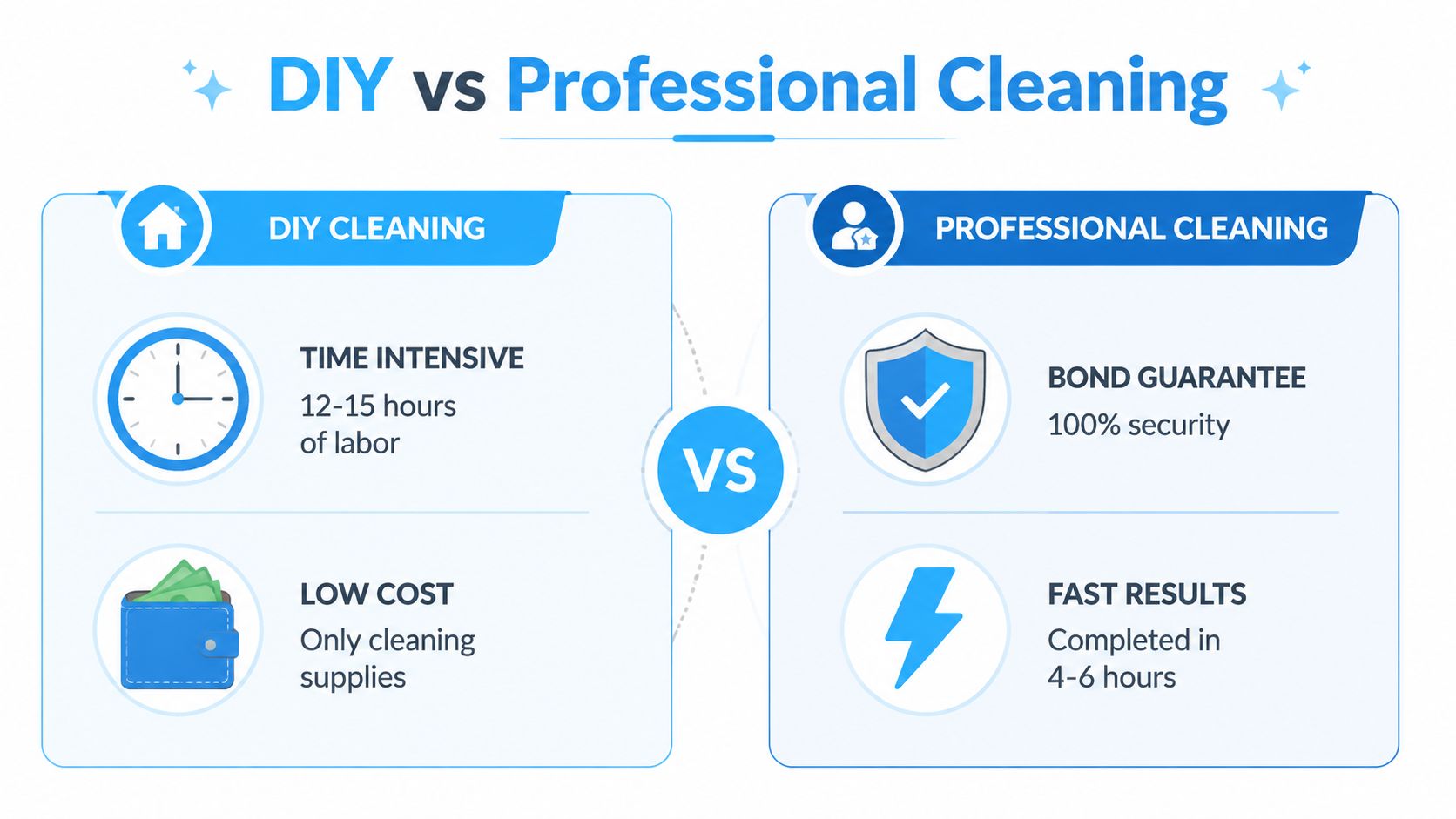
DIY can work if the property is small, well maintained, and you're organised enough to clean methodically after the place is empty. It usually suits tenants who've kept the home in very good condition and know how to clean ovens, shower screens, tracks, skirting, and appliance edges to inspection standard.
Professional cleaning makes more sense when the property has heavier use, multiple wet areas, pet hair, carpet issues, greasy cooking residue, or a tight handover window. It also helps if you do not want your last day in the property to turn into a full-scale scrub.
The money side
In Werribee, professional end-of-lease cleaning sits in a clear price range. Airtasker reports an average range of about $280 to $450 for end-of-lease cleaning in Werribee, with some package pricing such as $271 for a 1-bedroom property, according to Airtasker's Werribee end-of-lease cleaning page.
That gives you something concrete to compare against.
DIY looks cheaper because there's no labour invoice. But your cost isn't zero. You still need chemicals, cloths, bags, gloves, degreaser, glass product, bathroom product, mop gear, and enough time to do the job properly. If you miss items and have to go back, the actual cost climbs quickly.
A practical comparison
| Option | Usually works best when | Main downside |
|---|---|---|
| DIY clean | Property is already in good condition and you have the full day available | Easy to miss detail areas that trigger re-clean requests |
| Professional clean | Time is tight, the job is larger, or the property needs inspection-level detailing | Higher upfront cash cost |
| Hybrid approach | You handle light areas and book specialists for carpets or tougher work | Requires coordination and clear scope |
One version of the hybrid approach is common in Werribee. Tenants clean hard surfaces themselves, then book carpet work if the lease or property condition calls for it. If you're unsure whether that extra service is worthwhile, this article on steam cleaning for carpet helps frame the decision around lease terms and visible condition rather than guesswork.
What actually works
DIY works when you treat the clean like a compliance task and not a rushed tidy-up. It fails when you start late, clean before moving out, or skip the separate detail pass.
Professional cleaning works best when the provider is set up for vacate work specifically, not general house cleaning. That difference matters more than most tenants realise.
If you're already exhausted from the move, be honest about whether you'll still clean thoroughly at the end of the day. Most missed items happen when people run out of time, not because they don't care.
How to Book a Professional Cleaner and What to Expect
You hand the keys back, the agent walks through, then the email lands that night. Grease above the rangehood, soap film in the shower screen tracks, dust on top of the robes, marks inside the window channels. That is how many Werribee tenants end up paying for a re-clean they thought they had already covered.
A proper vacate cleaner asks more than the bedroom count because local agents do not inspect by room number alone. They inspect by risk points. In Werribee, that usually means the oven, shower screens, exhaust fans, skirting boards, sliding door tracks, inside cupboards, and any garage or alfresco area listed on the condition report.

When you request a quote, give the cleaner the details that change the job:
- Property type: House, unit, townhouse, apartment
- Property condition: Light touch-up, average wear, or heavy build-up
- Key problem areas: Oven, showers, blinds, walls, pet hair, garage floor
- Access and timing: Empty property, power connected, key pickup, inspection date
- Extras that may be needed: Carpet steam cleaning, external glass, pressure washing, rubbish removal
If a company quotes too fast without asking those questions, the price is often built on assumptions. That is how tenants get surprise add-ons on the day or find out later that some areas were never included.
Questions worth asking before you book
Ask for the scope in writing. A short phone quote is not enough if you want fewer arguments later.
Check these points before you lock anything in:
- What is included: Oven, rangehood, cupboards, internal windows, tracks, bathrooms, toilets, wardrobes, skirting, switches, and floors
- What is excluded: Mould treatment, full wall washing, exterior windows above ground level, blinds that need specialist work, pest control, and rubbish removal
- How re-cleans work: Whether they return for cleaning-related issues and how quickly they can attend
- Whether carpets are a separate service: Some tenants assume they are included when they are not
- What the property must be ready for: Empty rooms, running water, electricity, and safe access
Ask one more thing. Will they clean to the agent's final inspection standard or to a regular domestic standard? Those are different jobs.
What the service should look like on the day
A proper end of lease clean follows a set order. High dusting first. Cupboards and internals next. Wet areas after that. Glass, detail work, then floors last so nothing gets dirtied again.
You should expect the team to spend time on the fiddly areas that trigger Werribee re-clean requests. Tracks, hinges, around taps, toilet bases, splashback edges, and the lip around the laundry sink matter more than tenants expect. Good cleaners do not rush past those spots because they know property managers check them with the lights on and the windows open.
The property should be empty before the clean starts. If removalists are still working, or boxes are stacked in bedrooms, the result is usually patchy. Cleaners can only clean what they can reach.
What a guarantee actually means
A guarantee usually means the cleaner will return to fix cleaning items raised after inspection, if those items fall within the agreed scope. It does not cover damage, maintenance problems, old stains that cannot be removed, unpaid rent, or missing inclusions from the tenancy.
That is why the written checklist matters. It gives you something concrete to compare against if the agent raises an issue.
Before the cleaner leaves, do a quick walk-through yourself. Open the oven. Check inside drawers. Look at the shower screen from an angle. Run a finger along the top of door frames and robe shelves. Five minutes there can save a lot of back-and-forth after key return.
Frequently Asked Questions About Bond Cleaning
What if the agent says the clean isn't good enough
Many tenants get tripped up by marketing language.
Many bond-back guarantees don't explain the actual Victorian process. If the clean is disputed, the bond isn't automatically released because a cleaner promised it would be. The Residential Tenancies Bond Authority does not release bond funds without agreement from the parties, and a dispute may go to VCAT, as explained in this discussion of Werribee bond cleaning and dispute issues.
The practical response is:
- Keep dated photos: Take them after the clean and before key return
- Ask for the final inspection notes quickly: Don't wait for vague verbal feedback
- Separate cleaning from damage issues: They're not the same thing
- Contact the cleaner promptly if a re-clean applies: Time matters once the report comes through
Is carpet steam cleaning mandatory
Not automatically.
Whether carpet steam cleaning is required depends on the lease, the condition of the carpet, and issues like pets or visible staining. It isn't a blanket rule for every rental. The smarter question is whether your lease specifically requires it and whether the current condition would stand up at inspection.
If the carpets carry odour, traffic marks, pet hair, or visible staining, basic vacuuming may not be enough. If the carpet is already in fair condition and your lease doesn't require extra treatment, you may not need it. The decision should be based on the property, not pressure from a generic checklist.
What about mould in bathrooms and window tracks
Mould is where context matters. Light build-up from day-to-day moisture can often be cleaned as part of a proper wet-area detail. Heavier growth, ongoing damp problems, failed seals, or ventilation issues can become more complicated.
If it's surface-level and cleanable, deal with it before inspection. If it points to a building issue rather than poor housekeeping, document it carefully and compare it against your entry condition report.
A professional clean helps your position. It doesn't replace documentation, lease compliance, or common sense about what the dispute is really about.
Should I hand back the keys before the clean
No. Keep access until the property is empty, cleaned, checked, photographed, and ready. Once keys are returned, your control over the process drops sharply.
What do local agents notice first in Werribee rentals
In most inspections, they notice whatever shows poor finish fastest. That usually means glass streaks, oven grease, bathroom residue, dusty skirting, dirty tracks, marks around switches, and any grime hiding behind or under built-in areas. The cleaner the broad surfaces are, the more those details stand out. That's why the detail pass matters so much.
If you want the move-out clean handled by a team that works to vacate standards, End Of Lease Cleaning Melbourne is one option for Werribee tenants who need checklist-based end of lease cleaning, clear quoting, and help getting the property ready for final inspection.
