
A professional end of lease clean in Tarneit costs around $574 for a typical property. If you're in the middle of packing, juggling keys, utility transfers, and a final inspection date, that number gives you a realistic starting point for deciding whether to do it yourself or book help.
Most tenants don't stress about the clean until the house starts emptying out. That's when the marks behind furniture show up, the oven suddenly looks worse than it did all year, and the shower screen reminds you how stubborn hard water can be in Melbourne's west. In Tarneit, that pressure feels even sharper because many rentals are newer homes in fast-growing estates, where fine construction dust gets into tracks, vents, skirting boards, and every corner you thought you'd already wiped.
The good news is that passing the final inspection usually isn't about making the place look perfect. It's about cleaning the areas property managers specifically check, doing them properly, and documenting the result so there's no argument later.
Your Guide to a Stress-Free Move in Tarneit
If you're moving out of Tarneit right now, your last week probably looks the same as everyone else's. Boxes in the hallway. Half-empty pantry. Cleaning products on the bench. A property manager waiting for handover, and a bond sitting in the background that you don't want tied up in back-and-forth emails.
That final clean catches people out because it's bigger than regular housekeeping. A home can look tidy and still fail inspection. Floors might be vacuumed, but dust sits on the skirting boards. The bathroom might smell fresh, but there's soap film around the screen and mineral marks on the taps. The kitchen benches shine, yet the range hood filter still holds grease.
What moving tenants in Tarneit usually run into
Tarneit homes often share a few practical headaches:
- Fine red dust: New estates and ongoing development leave dust in window tracks, door frames, vents, and wardrobes.
- Hard water residue: Shower glass, chrome taps, and tiles can hold visible white buildup even after a standard wipe-down.
- Larger family layouts: More bedrooms, second living areas, garages, and alfresco spaces mean more surfaces to miss.
- Time pressure: Cleaning is typically attempted after the furniture is out, when exhaustion has already set in.
A clean that feels “good enough” to a tenant often isn't detailed enough for a final inspection.
What actually helps
The smoothest handovers usually come from a simple approach:
- Work from empty rooms only. Cleaning around boxes wastes time and leaves missed areas.
- Treat the oven, carpets, and bathrooms as priority zones. Those are the areas that most often cause trouble.
- Check the low, high, and hidden spots. Skirting boards, vents, light fittings, tracks, cupboard interiors.
- Take photos once it's done. Especially of the kitchen, bathrooms, inside appliances, and any existing wear and tear.
If you handle those properly, the rest of the clean becomes far more manageable. That's the difference between a stressful inspection and a routine one.
The Tarneit Standard What Landlords Actually Expect
You hand back the keys, thinking the place looks clean. Then the agent opens the oven, runs a finger through the window track, checks the shower screen in full light, and the problems start. That is how many bond disputes begin in Tarneit.
In Victoria, the standard is straightforward. The property needs to be returned reasonably clean and in the same general condition as the start of the tenancy, apart from fair wear and tear. Property managers do not assess that by gut feel. They use the entry condition report, their routine inspection habits, and a practical checklist built around what tenants usually miss.
In Tarneit, local conditions matter more than tenants expect. Homes near newer estates collect fine construction dust in tracks, frames, wardrobes, and vents, even after a general wipe-down. Hard water also leaves obvious marks on shower glass, tapware, and tiles. A tenant may feel the home is clean because the big surfaces look good. An agent will still mark it down if the detail areas show dust, scale, grease, or residue.
The areas that carry the most weight
From an operations point of view, three zones decide whether an inspection stays routine or turns into a back-and-forth.
- Kitchen appliances and grease points: oven interior, oven glass, stovetop edges, splashback, range hood filter
- Bathrooms: shower screen, grout lines, taps, toilet surrounds, vanity joins, exhaust fan covers
- Floors and soft surfaces: carpets with marks or odour, corners with built-up dust, garage and laundry floors with leftover grime
These are the areas where “clean enough” usually fails. Grease that looks light under warm kitchen lighting can stand out badly during inspection photos. Hard water haze on glass often reads as soap scum. Dust from nearby development settles in places tenants do not check twice.
What property managers in Tarneit notice fast
Property managers tend to form an early view within the first few minutes. They are looking for signs that the clean was detailed, not rushed.
The common triggers are simple:
- inside cupboards and drawers
- window tracks and sills
- fly screens
- light switches and door handles
- skirting boards
- exhaust fans
- laundry troughs
- the toilet base and behind the seat hinges
- sliding door tracks to alfresco areas
- garage edges and corners
If a fitting is touched during inspection, clean it. If a surface catches side light, check it twice.
Fair wear and tear versus cleaning
This distinction matters because it decides who pays. Faded paint, older carpet wear, small scuffs from normal use, and ageing silicone are not automatically cleaning faults. Dirt left over the top of those items is.
A worn shower screen can still pass if it is free of soap residue and mineral buildup. Older carpet can still pass if it is vacuumed properly and does not have fresh staining or odour. The goal is to remove every removable issue so the remaining conversation is about condition, not cleaning.
There is also a practical point here for supported households. If a tenant is using NDIS-funded cleaning support, the work still needs to match end of lease inspection standards, not just regular domestic cleaning standards. Those are different scopes. Routine help may cover general tidying and surface cleaning. Vacate cleaning usually involves inside appliances, detail work, wall marks, tracks, and heavier bathroom scale removal. In Tarneit, that gap catches people out.
The clean that passes is the one that holds up under close inspection, in bright light, with cupboards open and appliances checked inside. That is the Tarneit standard.
The Ultimate Tarneit End of Lease Cleaning Checklist
You pack the last box, do a quick wipe-down, and the place still fails on inspection because fine dust has settled back onto window sills and shower glass looks cloudy once it dries. That happens often in Tarneit, especially in newer estates where nearby building work leaves a film over every horizontal surface and local hard water leaves scale on taps, screens, and tiles.
A passing vacate clean needs to match those local conditions. The order of work matters. The products matter. So does knowing what a property manager will open, touch, and inspect closely.
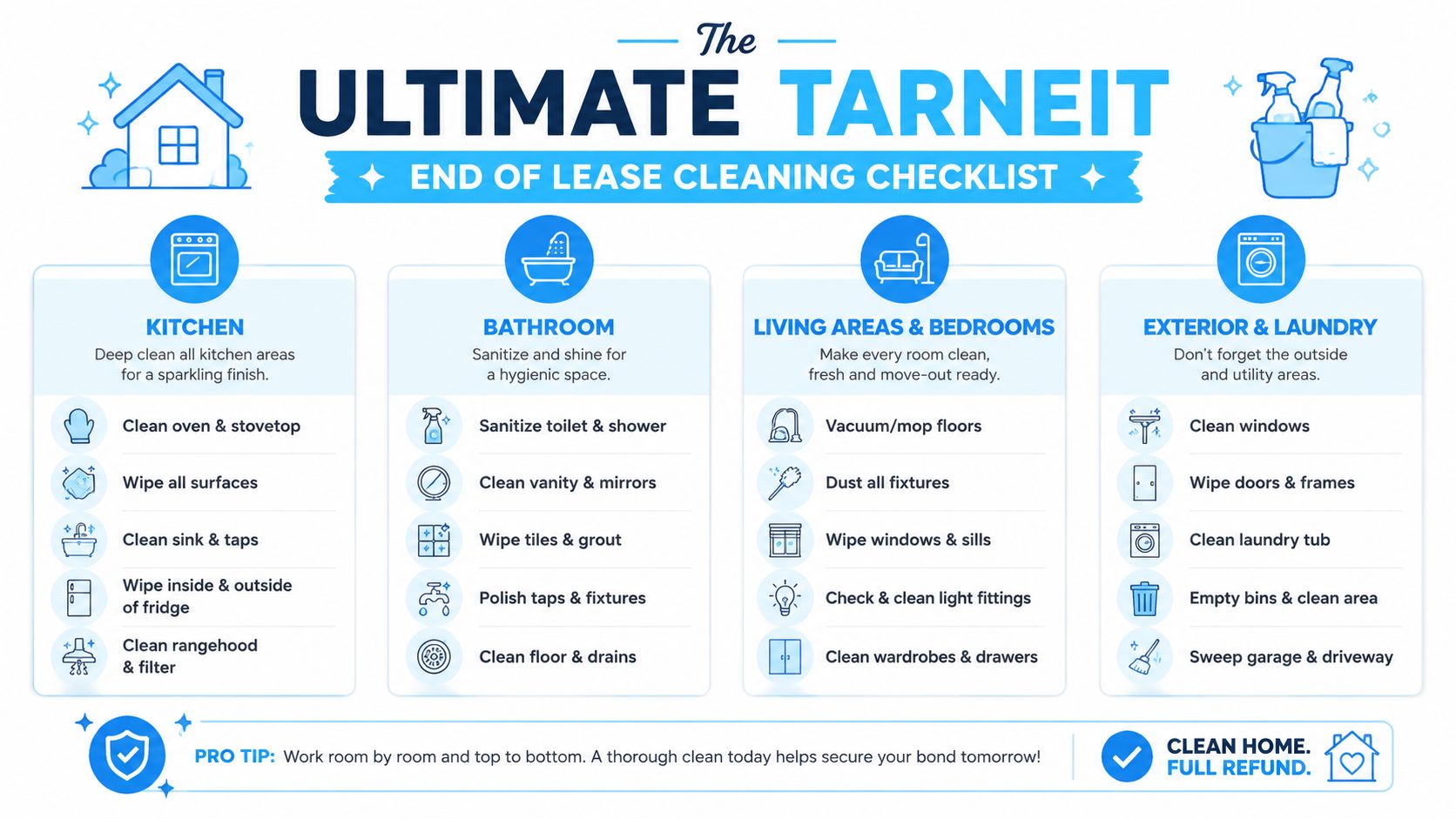
Start with dry dust removal before any wet cleaning. In Tarneit homes near active developments, wet wiping too early often turns fine dust into a paste on sills, frames, shelving, and blinds. Work top to bottom, then finish with floors last so you do not redo the same room twice.
Kitchen
Kitchens fail inspections for residue that spreads beyond the obvious spots. Grease settles on vertical surfaces, cupboard tops, and the outer edge of range hoods. Property managers check the finish, not just whether the bench looks tidy at first glance.
- Oven interior: Remove racks, trays, and side supports. Clean carbon buildup from corners, door edges, and the inner glass.
- Stovetop and splashback: Lift burner caps where possible. Remove grease around control knobs and along grout or silicone lines.
- Range hood: Degrease the outer cover and clean the filter properly. If the filter still feels sticky, it is not ready for inspection.
- Cupboards and drawers: Wipe inside, outside, underneath handles, and along top edges where cooking residue settles.
- Benches and sink: Remove scale around taps, clean the sink overflow, and dry the steel so it does not show water marks.
- Fridge cavity if included: Clean shelves, seals, crisper drawers, and the floor and wall behind the appliance position.
Bathrooms and toilets
Tarneit's hard water shows up fastest in these areas. A bathroom can smell clean and still fail because the shower screen dries cloudy, chrome has white spotting, or tile edges hold a line of soap residue.
- Shower screen: Use a mineral remover suited to hard water stains. Let it sit, rinse well, then buff dry with a clean microfibre cloth.
- Tiles and grout: Focus on lower wall tiles, corners, and around mixers where buildup thickens.
- Vanity and mirror: Remove toothpaste spots, cabinet dust, and product residue around the basin.
- Toilet: Clean the bowl, seat, hinges, cistern, outer sides, and the floor around the pan.
- Taps and chrome: Dry them after cleaning. Water spots left to air-dry are a common re-clean issue.
If the bathroom only looks good while wet, keep going.
Living areas and bedrooms
In these rooms, inspectors notice settled dust, wardrobe grime, and flooring edges. Newer properties in Tarneit often collect very fine dust that sits on wardrobe shelves, door frames, blind slats, and inside tracks long after the room looks clean from the doorway.
- Wardrobes: Wipe shelves, rails, corners, and tracks.
- Doors and frames: Clean fingerprints near latch height and dust from the top edge.
- Window glass: Remove hand marks, dust film, and any residue left by cheap spray cleaners.
- Window tracks and frames: Vacuum first, then wipe out compacted dirt.
- Blinds or shutters: Dust each slat and wipe any greasy marks near openings.
- Floors: Vacuum edges slowly before mopping hard floors. If carpets are required under the lease, book professional carpet steam cleaning before your final inspection.
Place this video into your prep if you want a visual refresher on move-out cleaning standards:
Laundry, windows, garage, and outdoor areas
These spaces decide a lot of final inspection reports because tenants leave them until last and run out of time.
- Laundry sink and cabinet: Remove detergent residue, lint, and scale around taps.
- Internal window sills: Wipe away dust that settles after windows have been opened during the move.
- Fly screens: Dust or wash them lightly if they are removable and safe to handle.
- Garage floor: Sweep properly, including along walls and around the roller door line where dust gathers.
- Alfresco or balcony: Clear leaves, cobwebs, and surface dirt from rails and corners.
- Bins area: Check lease terms and leave the area free of spills and rubbish.
A Tarneit method that saves rework
Use a two-pass approach. First pass, remove dry dust from high ledges, frames, wardrobes, and tracks. Second pass, do wet cleaning on kitchens, bathrooms, glass, and floors. That order cuts down call-backs.
For hard water, use a dedicated descaler on shower glass, tapware, and tile edges. For construction dust, use a vacuum with brush attachments before microfibre wiping. Mixing those jobs up wastes time and leaves streaks.
One more point for supported households. If you are arranging NDIS-funded cleaning support, confirm whether the provider handles vacate-level detail cleaning or only routine domestic tasks. In Tarneit, I see this missed regularly. General support cleaning may keep a home comfortable day to day, but final inspections usually require inside appliances, heavier scale removal, detailed glass work, and cupboard-by-cupboard checks.
DIY vs Professional Cleaning A Tarneit Cost Analysis
By the time tenants reach this stage, the truck is booked, keys are due back, and someone is still scraping grease out of the oven at 9 pm. That is usually the point where DIY stops being the cheaper option.
In Tarneit, the actual cost is not just spray bottles and cloths. It is time, carpet equipment, extra trips back to the property, and the bond risk if hard water marks, construction dust, or missed cupboards show up at the final inspection. Newer estates often look clean at first glance, then fine dust appears again on skirting boards, tracks, and window sills after you thought the job was done.
A professional vacate clean is usually priced as a package based on property size, condition, and extras like carpets, windows, blinds, wall spot cleaning, balconies, or garages. DIY looks cheaper on paper, but only if you already have the right gear and enough time to do the work properly after the property is empty.
Cost and effort breakdown
| Factor | DIY Cleaning | Professional Service |
|---|---|---|
| Upfront spend | Lower if you already own supplies. Higher if you need to buy chemicals, cloths, scraper tools, mop heads, or hire equipment | Quoted upfront based on bedrooms, bathrooms, and add-ons |
| Time | Often takes a full day or a full weekend, especially if you are cleaning after moving out | Usually done in one booking window by a team |
| Oven cleaning | Slow, messy, and easy to leave carbon or residue behind | Usually handled with the right degreasers and detail tools |
| Carpet cleaning | May need machine hire or a separate contractor | Often quoted together with the vacate clean |
| Hard water and shower glass | Easy to under-treat or scratch with the wrong product | Better results if the cleaner knows how to descale without damaging surfaces |
| Construction dust in newer Tarneit homes | Common to miss in tracks, ledges, wardrobes, and garage edges | Easier to control with a systematic top-down clean |
| Inspection risk | Higher if you run out of time or miss detail areas | Lower if the cleaner works from a vacate checklist |
| Stress level | High during an already tight move | Lower because one job covers the full scope |
When DIY makes sense
DIY can work in a small unit or well-kept townhouse where the place has been maintained properly during the lease. It also suits tenants who can clean after the property is fully empty, with power and water still on, and enough time set aside to do a proper second pass.
The best DIY candidates are simple jobs. No heavy oven build-up. No shower screen scale. No pet hair embedded in carpet. No garage full of red dust or fine build-up from nearby works.
Carpets are often the tipping point. If your agent expects steam cleaning, read what is involved before hiring a machine or booking that item separately. This guide on steam cleaning for carpet explains what to check.
When professional cleaning usually wins
Professional cleaning usually makes more financial sense when the property is larger, the timeline is tight, or the condition has drifted beyond routine weekly cleaning. That is common in Tarneit family homes, especially where multiple bathrooms, carpeted bedrooms, and outdoor areas all need attention on the same day.
It is also the better choice if the property has the local problems I see all the time. Mineral staining on tapware and shower glass. Fine dust settling back onto surfaces in newer estates. Marks on walls from furniture moves. Grease in ovens that has baked on over months, not days.
NDIS-funded households need to check this carefully as well. Routine support cleaning and vacate cleaning are not the same service. If support funding is involved, confirm whether the approved provider can handle inspection-level detail work, or whether a separate end of lease clean is needed. That question saves a lot of last-minute confusion.
The simplest test is this. If you have to finish the clean under deadline pressure, return hire equipment, patch together separate carpet and oven bookings, and still face a strict property manager inspection, professional cleaning is usually the cheaper decision once you count the risk and the rework.
Hiring Professionals What to Expect in Tarneit
You book a cleaner, hand back the keys, and then the agent emails photos of dusty tracks, shower glass haze, and crumbs inside drawers. That is the situation tenants want to avoid.
In Tarneit, a proper end of lease clean starts before the team arrives. Good operators ask the right questions early because the local problems are predictable. Fine dust from nearby construction zones settles in window channels and skirting edges. Hard water marks on shower screens and tapware often need more than a quick wipe. If the home has been supported under an NDIS cleaning arrangement, the provider also needs to confirm whether they are quoting routine domestic help or inspection-level vacate work. Those are different jobs.
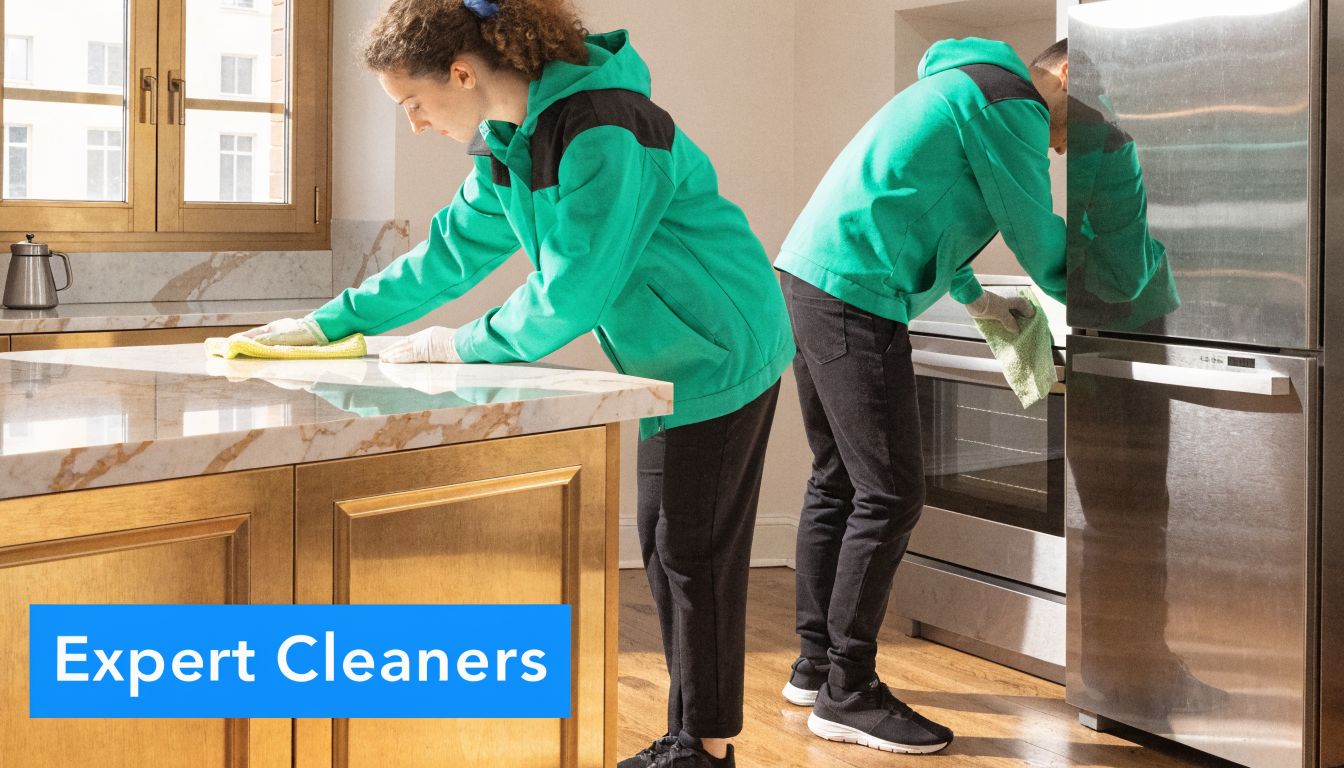
A good vacate clean in Tarneit usually runs best when the property is empty and the power and water are still on. That lets the team test appliances, rinse products properly, and pick up fine dust after the detail work is done instead of chasing it around furniture.
What the booking process should feel like
A proper quote should sound specific. The company should ask for the number of bedrooms and bathrooms, flooring types, whether the oven needs degreasing, whether there are roller blinds or shutters, and whether the garage, balcony, or exterior windows are part of the handover.
You should expect:
- A quote matched to the property and condition, not a flat figure with no scope
- A written inclusion list covering kitchens, bathrooms, floors, cupboards, and detail areas
- Clear answers about extras such as carpets, wall marks, blinds, windows, and outdoor spaces
- A re-clean process explained before you pay
- Arrival timing and access instructions confirmed in writing
If the person quoting cannot explain what happens in the kitchen, bathrooms, and high-touch detail areas, the job is being sold too loosely.
What experienced cleaners do on site
The difference is usually process, equipment, and inspection awareness. Teams that handle vacate work every week clean in an order that avoids re-soiling finished areas. They start high, work into detail zones, and leave floors until the end. They also know which marks are cleanable and which ones are wear and tear, which matters when an agent tries to treat age-related deterioration as a cleaning issue.
Many operators, including our team, use low-residue products and hot water extraction where suitable because it helps remove soil effectively without leaving heavy chemical odours behind. That matters in family homes, pet-related jobs, and accessibility-sensitive households where strong product residue can create problems after the clean.
On the day: leave the property empty, keep utilities connected, and remove all rubbish and personal items before the team arrives. Cleaners lose time when they have to work around bags, leftover food, or items that should have been cleared out.
What to ask before you confirm
Ask direct questions and listen for direct answers:
- Are carpets handled in the same booking or through a separate technician?
- Is oven cleaning included in the base quote or charged separately?
- Do they clean inside cupboards, drawers, tracks, vents, and exhaust covers?
- How do they handle hard water staining on shower glass and tapware?
- What happens if the property manager requests touch-ups after inspection?
- Have they worked in newer Tarneit estates where construction dust settles back quickly?
- If the household uses NDIS-funded support, is this quote for standard domestic cleaning or full vacate cleaning?
If carpets are part of your handover, compare methods before you book. This guide to local carpet cleaning options near you gives a useful starting point.
A well-run service should reduce your decisions, not create more of them. By the time the booking is confirmed, you should know exactly what is being cleaned, what is excluded, how long it should take, and what support is available if the agent wants a minor return visit.
Common Mistakes That Cost Tarneit Tenants Their Bond
Most bond issues don't come from dramatic neglect. They come from small misses that stack up. A place can smell clean and still fail because the overlooked details tell the property manager the job was rushed.
Mistake one: cleaning what's visible and ignoring what's touched
Tenants usually wipe open surfaces and forget functional ones. Cupboard interiors, drawer runners, door handles, wardrobe tracks, light switches, and exhaust fan covers all collect residue. These are the surfaces managers interact with during inspection, so they shape the result quickly.
Mistake two: leaving dust in tracks and vents
This is a common Tarneit problem. Fine dust from surrounding development settles in window channels, sliding door tracks, skirting edges, and return air vents. If you only mop and vacuum the centre of the room, the property still reads as dusty.
A better approach is to vacuum the detail areas first, then wipe them, then clean the floor last.
Mistake three: underestimating bathroom finish work
A bathroom can be disinfected and still fail on presentation. Streaky mirrors, cloudy shower glass, residue around the drain, and mineral marks on taps all stand out under inspection lighting.
If grout and tile edges are part of the problem, this guide on how to clean floor tile grout helps clarify what's realistic to remove and what needs more than a quick surface scrub.
Many tenants stop when the bathroom smells fresh. Property managers stop when the glass, grout, chrome, and corners are clean.
Mistake four: doing the oven last minute
Ovens punish late decisions. Baked-on grease needs time, repeat passes, and proper removal from racks, trays, seals, and glass edges. If you leave it until the night before handover, you're likely to rush it and leave residue behind.
Mistake five: forgetting the handover evidence
This one isn't cleaning, but it matters. If there's any disagreement, your photos matter. Take clear shots of:
- Inside the oven
- Bathrooms after drying
- Inside cupboards and wardrobes
- Window tracks
- Floors in empty rooms
- Existing wear and tear that was not caused by the clean
Mistake six: assuming outdoor and utility areas don't count
Garages, laundries, balconies, bin areas, and entry doors are often part of the inspection path. Cobwebs, leaves, lint, and grime in these areas can turn an otherwise solid clean into a partial callback.
The safer mindset is simple. If the tenant used the space, the manager expects it to be cleaned for handover.
Final Steps for a Smooth Handover and Securing Your Bond
It is usually the last hour that creates the problem. The unit looks clean, the keys are ready, then daylight hits the ensuite mirror, dust shows up on the skirtings, or the laundry floor is still damp and hiding hair in the corners. In Tarneit, that final check matters because newer estates often carry fine construction dust, and hard water marks can reappear on taps and shower glass once surfaces dry.
Finish the clean early enough that the property can fully dry, air out, and be checked with the curtains open. A rushed handover causes avoidable disputes.
The final handover routine that works
Do one calm, methodical pass before you return the keys:
- Check each room is completely empty, including cupboards, drawers, the fridge, and outdoor areas
- Remove leftover rubbish, food, hooks, and adhesive strips that were missed during packing
- Test windows, sliding doors, and wardrobes so you can catch dirty tracks or grit before the agent does
- Look from the doorway of each room because that is how many property managers do their first visual scan
- Photograph the result room by room, with extra shots of the oven, bathrooms, inside storage areas, and any pre-existing wear
- Keep invoices and receipts for pest control, carpet cleaning, or any professional cleaning you booked
Clean first. Let it dry. Photograph it properly. Then hand over the keys.
For NDIS households, the handover can need more coordination than a standard move-out. Some tenants need low-fragrance products, extra time on site, support worker access, or clear booking windows that line up with transport and care schedules. The official NDIS website outlines how disability-related supports and service agreements work, which helps households and coordinators confirm what is appropriate to arrange through a provider: NDIS.
That part is often missed by generic move-out advice. In Tarneit, where many households are in newer homes and larger family properties, accessible end of lease cleaning is not a niche issue. It is a practical one. If a tenant needs an NDIS-supported service, ask early whether the cleaner can handle access requirements, product sensitivities, communication needs, and documentation. A standard bond clean booking does not always cover that.
The best handovers are usually straightforward. The property is dry. The high-risk areas are checked again in natural light. The tenant has photo evidence, receipts, and enough time to fix a small issue before the inspection.
If you'd rather hand the whole job to a team that already knows what Tarneit property managers look for, End Of Lease Cleaning Melbourne offers end of lease, bond, deep, and NDIS-supported cleaning across Melbourne with vetted cleaners, eco-friendly products, flexible bookings, and clear communication from quote to final clean.
